The Homeowner’s Guide To Professional Paver Sealing On Long Island
Good sealing starts long before the sealer comes out. Here's what a proper Long Island job involves, when to book it, and how to vet the crew.
Share:
Summary:
Your pavers looked great the year they went in. Now the joints are thin, weeds are poking through, and the color has gone flat after a few Long Island winters of freeze-thaw and plow salt. You’ve probably searched “paver sealing” and found plenty of contractors who all say roughly the same thing.
Here’s what most of them skip. The sealer is the last step, and the work before it decides if you get a rich, even finish or a cloudy mess you’ll pay to fix. We’re Paver Savers, a family-owned company in West Babylon, NY, and we’ll walk you through what a proper job looks like so you can judge any quote, ours included. First, the basics.
What Professional Paver Sealing Involves On Long Island
Paver sealing means applying a protective coating over your pavers and the sand between them. The coating holds joint sand in place and, depending on the product, either keeps your color close to what it is now or deepens it. Plan on repeating it every three to five years, though shade and sun exposure can move that number around.
Here’s something plenty of contractors won’t say out loud: pavers don’t need sealer to do their job. Manufacturers like Unilock say as much. Sealing helps with color, joint sand and stain resistance, but it can’t fix a patio that’s sinking or a driveway that holds water. If the base is the problem, no coating will save it, and we tell you that before you spend a dollar.
What Happens Before The Sealer Goes On?
Most sealing jobs that go wrong, go wrong before the sealer comes out. White haze, peeling, and joints that look like failing grout lines usually trace back to rushed prep. We’ve seen it happen across Long Island, and it’s completely preventable.
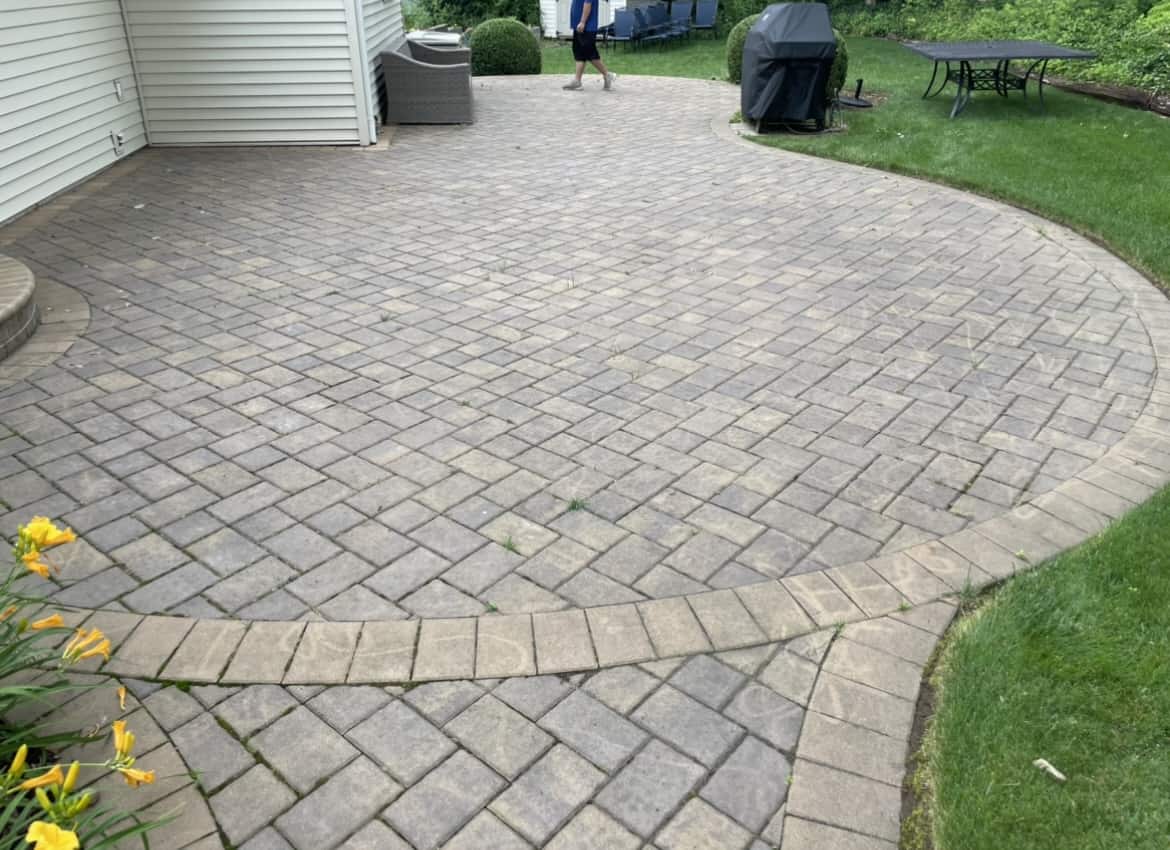
A proper job starts with a deep clean of the paver faces and the joints. We use commercial-grade equipment, including hot-water pressure cleaning, because a hardware-store washer rarely pulls algae and ground-in grime out of the joints. If you have efflorescence, that chalky white film that shows up on pavers, it gets treated at this stage. It’s cosmetic and doesn’t hurt the pavers, but it needs to come off before anything is sealed over it.
Next comes the joint sand. After cleaning, the joints usually need fresh polymeric sand, and every bit of excess has to be blown off the surface. Leave it behind and the sealer bonds to it, which is how you end up with wide white lines between pavers.
Then the pavers need time to dry, usually a couple of days. Seal over damp pavers and the moisture gets trapped under the coating, which shows up as a cloudy haze. That’s why you’ll often see us clean on one day and come back a few days later to seal. If a contractor offers to clean and seal in the same afternoon, ask how the pavers dried.
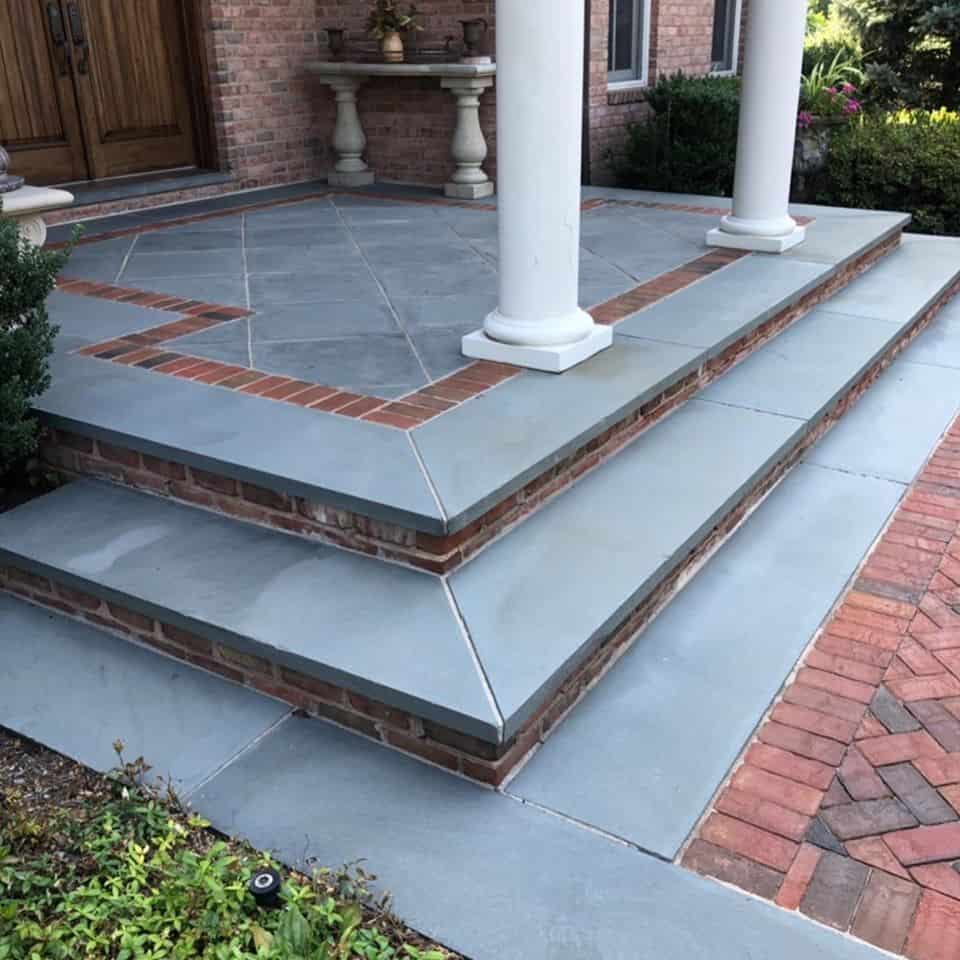
Last is matching the sealer to the stone. Concrete, brick, bluestone and travertine don’t react the same way, and a product that works on concrete can etch or discolor natural stone. That’s why we ask what you have before we talk about product.
Natural Finish Or Wet-Look: Which Is Right For Your Long Island Patio, Pool Deck, Or Driveway?
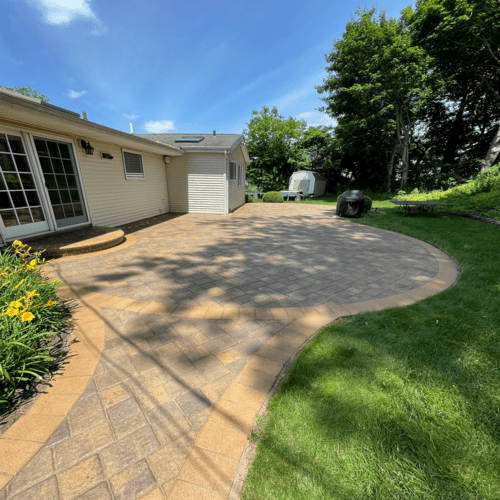
Once the prep is done, you choose how it looks. A natural finish stays close to the look of unsealed pavers, just cleaner and a little richer. A wet-look finish deepens the color and adds shine, the kind of glossy look you see in showroom photos.
Neither one is better. Sealing can change a paver’s natural color, and wet-look does it more than natural. Glossy surfaces can also feel slicker when wet, so think hard about it for pool decks, steps and anywhere kids run barefoot. Natural is usually the easier finish to live with if you’re unsure, and it’s smart to ask us to seal a small test spot first and let it dry before you commit.
Your property matters too. A patio under tree cover in Old Bethpage fights moss and organic staining, so it needs more cleaning work than an open driveway. Along the Great South Bay in Bayport, NY, or out on Fire Island, salt air and storms are part of the deal. Waterfront villages like Saddle Rock and Island Park have their own conditions, and older South Shore homes in places like West Bay Shore often have brick or bluestone mixed in with concrete. Each of those gets handled differently, which is why a one-size sealing plan should make you nervous.
When To Seal Pavers On Long Island
Timing does a lot of the work here. The window we recommend runs from September through early November. Summer heat can make sealer dry too fast on the surface, and once overnight temperatures approach freezing, the window closes.
Sealing in the fall also gets your joint sand locked in before freeze-thaw cycles and plow season start working on it. Spring is a good time for cleaning after winter, but if you’re looking at tired pavers in October, waiting means a full winter of exposure first.
Book early in the season. Weather delays are part of this job, and a good schedule leaves room for a rainy week without rushing the drying time.
How To Check A Paver Sealing Contractor’s License In Nassau Or Suffolk County
This surprises many homeowners: New York has no statewide home improvement license. It’s handled county by county, and in a couple of East End towns, town by town. A contractor licensed in one place isn’t automatically licensed in the next.
In Suffolk County, NY, a home improvement license is required, and you can call the Suffolk Office of Consumer Affairs at 631-853-4600 to confirm one and check for complaints. That license requires at least $500,000 in general liability insurance, a workers’ comp certificate and a written exam. Southampton and East Hampton reportedly require their own licenses on top of that. In Nassau County, NY, the Department of Consumer Affairs licenses home improvement contractors, so that’s where you verify. Ask for the license number, then check it yourself.
The paperwork matters too. New York law and Suffolk County code call for a written contract for home improvement work, and in Suffolk it should include the license number. A good written scope spells out the prep steps, number of coats, drying time and what happens if it rains. If your quote is a single number in a text message, keep looking.
We’re fully licensed and insured in both Nassau and Suffolk, and we’re glad to be checked. You’ll also know who’s running your job by name, which counts for more than most people expect.
How Much Does Paver Sealing Cost On Long Island, And Is Restoration Worth It?
Nobody honest can price your pavers without seeing them. For context, paver sealing on Long Island typically runs about $1.50 to $4.00 per square foot with cleaning and re-sanding included, with most driveways landing between $600 and $1,600 per application. The spread comes mostly from prep. A driveway that’s never been sealed, or has years of grime and weeds in the joints, takes more work than one on a three-year cycle.
Now compare that with replacement. Tearing out and relaying pavers on Long Island runs $8,000 to $12,000 or more, and restoration costs a fraction of that. We’ve had customers tell us their 10-year-old and even 20-year-old pavers look brand new after cleaning, re-sanding and sealing. The exception is a failed base. Restoration won’t hold on one, and we’ll tell you if that’s what we find.
Can you do it yourself? You can, but sealing is extremely time consuming and detail oriented, and a rushed weekend with a rented washer is exactly how haze and white joints happen.
Some jobs take extra planning. When we work in ferry-access communities like Ocean Beach and Lonelyville on Fire Island, we coordinate equipment around the Bay Shore ferry schedule. Financing is available if you’d rather spread out the cost of a larger project.
Ready For Paver Sealing Done Right On Long Island?
Good paver sealing comes down to what happens before the sealer goes on: a real clean, treated efflorescence, fresh joint sand, enough drying time, and a product that suits your stone. Book in the September-to-early-November window if you can, and check any contractor’s license with Nassau or Suffolk County before you sign.
Contact Paver Savers today to schedule your free consultation and let our family-owned team restore your Long Island pavers to a brilliant, protected finish.

Article details:
- Published by:
- Paver Savers
- Published to:
- Last modified:
- October 29, 2026
Share:
Continue learning: