Storm Damage Prevention for Long Island Pavers
Long Island storms are hard on pavers. Here's what Nassau County homeowners should know before the next one hits.
Share:
Summary:
If you live in Nassau County, you already know what storms can do. You’ve seen the flooded streets in Freeport, the washed-out driveways in Long Beach, the cracked walkways that somehow looked fine going into October and fell apart by March. What most homeowners don’t realize is that a lot of that damage was preventable — not by luck or timing, but by what was done to those pavers before the storm ever arrived. This page walks you through the real risks, the preparation steps that actually matter, and how to assess what you’re dealing with after the storm passes.
Paver Storm Damage: What Nassau County Homeowners Are Actually Up Against
Nassau County doesn’t get one kind of storm — it gets several. South Shore communities from Long Beach to Massapequa face Atlantic storm surge that can push seawater across driveways, patios, and pool surrounds in a matter of hours. North Shore towns like Great Neck, Oyster Bay, and Port Washington take nor’easters head-on as they churn down Long Island Sound, bringing wind gusts near 60 mph and saltwater spray that works its way into every unsealed surface.
Then there’s winter. Long Island averages 30 to 40 freeze-thaw cycles every season. Each time water gets into an unprotected paver — through an open joint, a hairline crack, a worn surface — and freezes, it expands by about 9%. That pressure builds from the inside. Over time, it cracks concrete, shifts brick, and loosens the base material underneath. By spring, what looked like minor wear has become a structural problem.
Hurricane Sandy is the obvious reference point — 74,736 Nassau County structures were flooded, damaged, or destroyed, and Long Beach alone sustained $150 million in damage. But the more common threat is cumulative. It’s the nor’easter in February, the heavy rain in September, the salt you spread on your driveway every December. Those are the events that quietly take years off your pavers’ life.
How Storms Physically Break Down Pavers Over Time
The damage rarely looks dramatic at first. It usually starts with the joints. The sand between your pavers — assuming it’s still there — holds the entire system together. When a storm pushes water across a paved surface with enough force, it pulls that sand out. Once the joints are compromised, the pavers begin to shift. They rock underfoot, create uneven surfaces, and let water pool in low spots rather than drain away. From there, the base material starts to erode, and settling becomes a real problem.
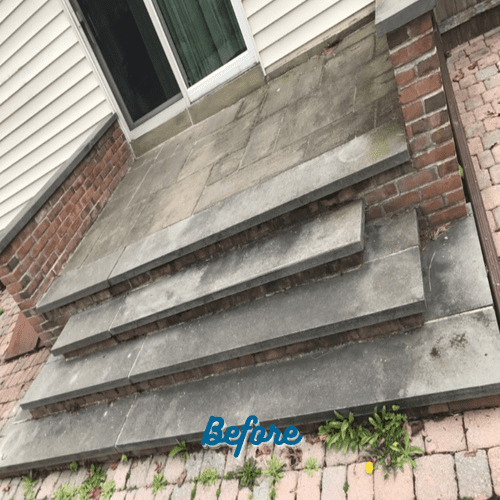
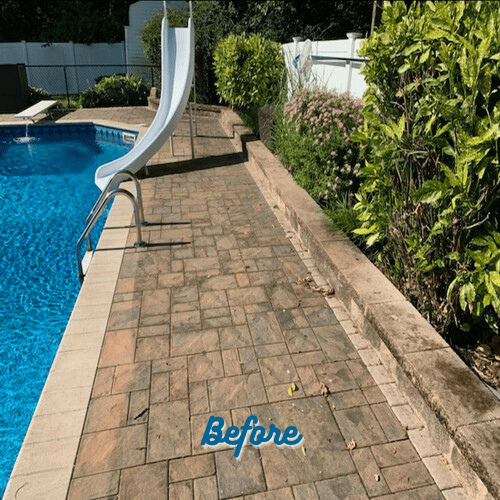
On the South Shore, storm surge adds another layer of damage. Saltwater is corrosive. It gets into paver pores, leaves behind mineral deposits, and accelerates the breakdown of both the surface and the joint material. Efflorescence — that chalky white residue you sometimes see on brick or concrete — is often a sign that water has been moving through the paver and depositing minerals on the way out. It’s not just cosmetic. It’s a signal that moisture is getting in somewhere it shouldn’t.
Freeze-thaw damage tends to show up differently. You’ll see spalling — small chips or flakes on the surface of the paver — or cracks that seem to appear out of nowhere after a cold stretch. What’s actually happening is that water infiltrated the paver during a wet fall, froze and expanded during winter, and physically fractured the material from the inside. By the time you see the crack, the process has been happening for months.
De-icing salt makes all of this worse. It’s one of the most destructive agents for pavers, and it gets used heavily across Nassau County every winter. Salt draws moisture into the paver surface, lowers the freezing point of that moisture in a way that actually increases freeze-thaw cycling, and chemically degrades concrete over time. Unsealed pavers absorb it directly. Sealed pavers repel it.
Understanding how the damage actually works is the first step toward preventing it. The second step is acting before the storm arrives — not after.
Pre-Storm Paver Preparation: What to Do Before a Nor'easter or Hurricane
The most effective storm damage prevention happens in the weeks and months before a storm is even in the forecast. But there are also practical steps worth taking in the 24 to 48 hours before a major event.
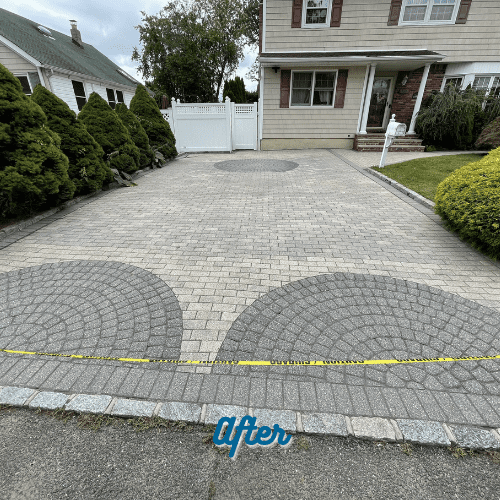
The single most important long-term step is sealing. A quality professional sealer creates a barrier across the paver surface that repels water before it can infiltrate. That means less freeze-thaw damage in winter, less salt absorption in storm season, and less staining from debris and runoff. Professional-grade sealers — the kind we apply with proper surface preparation and polymeric sand joint stabilization — typically last three to five years under Nassau County conditions. That’s three to five winters of freeze-thaw cycles, three to five hurricane seasons, three to five rounds of de-icing salt, all without the water getting in.
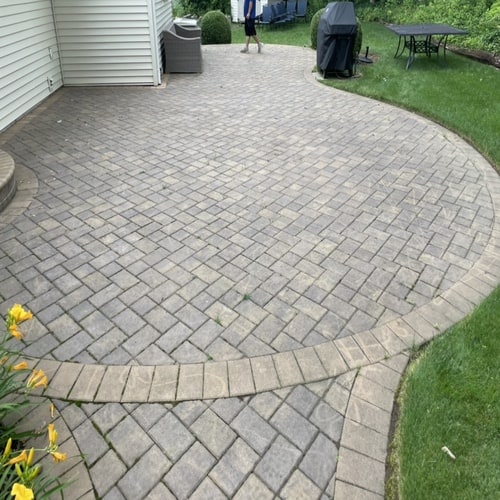
Polymeric sand deserves its own mention here. It’s the material that fills the joints between your pavers, and it’s not interchangeable with regular sand. When properly applied and activated, polymeric sand hardens into a firm, erosion-resistant joint that holds pavers in place even under heavy water flow. Regular sand washes out. Polymeric sand doesn’t. If your pavers were last serviced without polymeric sand — or if the joints are visibly depleted — that’s a vulnerability going into storm season.
In the immediate run-up to a storm, the practical steps are straightforward. Move or secure any furniture, planters, or decorative elements sitting on or near your paved surfaces — wind-driven objects cause direct impact damage to pavers and can break the surface or dislodge individual stones. Check your drainage. Make sure downspouts aren’t directing water onto your paved areas, and that any drains in or around your patio or driveway are clear of debris. If you have any pavers you already know are loose or rocking, note their location so you can assess them after the storm.
None of this replaces professional preparation, but it reduces the variables you’re dealing with when the storm arrives.
Winter Paver Care in Nassau County: More Than Just Cold Weather
Winter on Long Island isn’t just cold — it’s wet, salty, and relentless. The combination of coastal humidity, road salt runoff, and repeated freeze-thaw cycling creates conditions that wear down pavers faster than almost anywhere else in the Northeast. Winter paver care in Nassau County isn’t a single task you check off in November. It’s a season-long discipline that starts with what you do before the first freeze.
The fall window — roughly September through November — is the most important time to seal your pavers if you haven’t already. Sealer needs dry conditions and temperatures above a certain threshold to cure properly. Once you’re into December, the window closes. A properly sealed paver going into winter is in a fundamentally different position than an unsealed one.
Drainage Paver Systems: How Water Management Prevents Storm Damage
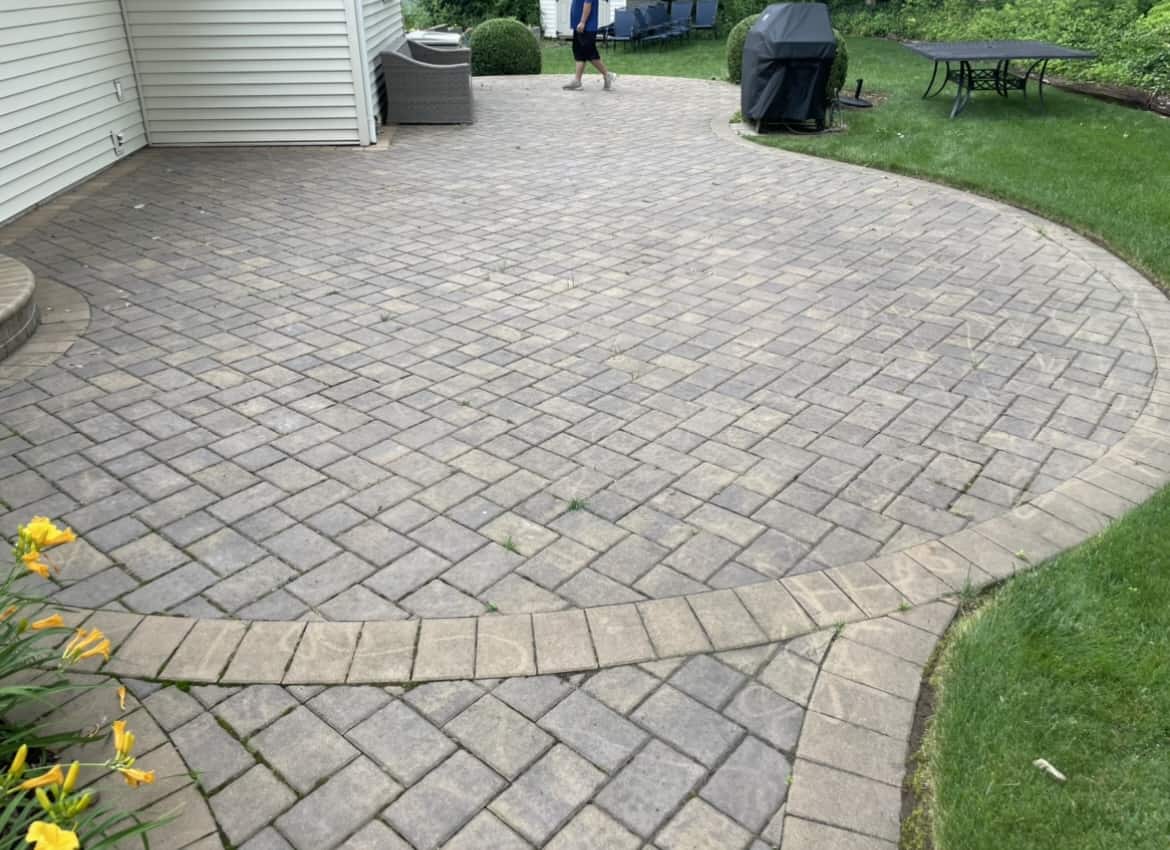
One of the most overlooked aspects of paver storm protection is what happens to the water after it lands. Pavers don’t exist in isolation — they sit on a base, they’re surrounded by landscaping and structures, and they connect to a larger drainage system. When that system isn’t working, water has nowhere to go except into and under your pavers.
Interlocking pavers, when properly installed and maintained, allow some water to infiltrate through the joints and into the base material beneath. That’s actually a feature, not a flaw — it reduces runoff and keeps water from pooling on the surface. But it only works when the joints are intact and the base is stable. When joint sand is depleted and the base has settled or eroded, water infiltration becomes water damage.
In Nassau County, drainage is a particular concern because of the county’s relatively flat topography and the volume of impervious surface in dense suburban neighborhoods. Water that can’t drain off a property quickly tends to pool. In South Shore communities near the bay, that pooling can combine with rising groundwater during storm surge events, creating prolonged saturation that undermines paver bases from below.
Proper drainage around a paved area involves a few things working together. The surface itself should have a slight slope — typically about a quarter inch per foot — that directs water away from structures and toward intended drainage points. The base material beneath the pavers needs to be compacted and stable so it doesn’t shift under water pressure. And the area surrounding the paved surface should direct water away, not toward it. Downspouts that empty onto a patio, for example, concentrate a significant volume of water in one spot with every rain event.
If you’ve noticed water pooling on your pavers after rain, or if you can see that certain areas are lower than they used to be, those are signs that the drainage system isn’t functioning as it should. Sometimes the fix is straightforward — re-leveling sunken pavers and restoring the proper slope. In other cases, the base needs to be addressed more thoroughly. Either way, it’s worth understanding before the next storm arrives.
Post-Storm Paver Damage Assessment: When to Handle It Yourself and When to Call Someone
After a nor’easter or a significant rain event, it’s worth walking your paved surfaces carefully and noting what you see. Some things are cosmetic and can wait. Others are signs of structural issues that will get worse if they’re not addressed before the next storm — or before the ground freezes.
Washed-out joint sand is the most common post-storm finding, and it’s also one of the most important to address. Visible gaps between pavers, pavers that rock or shift when you step on them, or low spots where sand has clearly migrated — all of these indicate that the joint system has been compromised. Left unaddressed through a winter, those gaps become channels for water infiltration and freeze-thaw damage. The fix is joint sand replacement with polymeric sand, done properly by someone who knows how to activate it correctly.
Cracked or broken pavers are a more serious finding. A single cracked paver can sometimes be replaced individually, but if you’re seeing multiple cracks or if the cracking follows a pattern across a section of the surface, that often indicates base movement rather than surface damage. In that case, replacing the cracked pavers without addressing the base is a temporary fix at best.
Settled or sunken areas — where a section of paving has dropped relative to the surrounding surface — are a clear sign that the base material has shifted or eroded. This creates both a drainage problem and a tripping hazard, and it tends to accelerate because water now pools in the low spot and continues to erode the base further.
For Nassau County homeowners, one additional consideration is documentation. If you have homeowners insurance that might cover storm damage, photographs taken immediately after the storm — showing the condition of your pavers and any visible damage — are valuable. Flood damage from storm surge is typically covered only under separate flood insurance, but wind-driven damage may fall under your standard policy depending on how it’s written. Knowing what you have before you file a claim is worth the time it takes to review your policy. A professional assessment of the damage, documented in writing, also strengthens any claim you make.
If you’re unsure whether what you’re seeing is cosmetic or structural, the honest answer is that a professional eye makes a real difference. What looks like surface staining is sometimes efflorescence signaling moisture infiltration. What looks like a few loose pavers is sometimes a failing base. Getting an accurate assessment early — before winter freeze-thaw cycles make the damage worse — is almost always the better call.
Protecting Nassau County Pavers Before the Next Storm Costs Less Than Fixing Them After
The pattern plays out the same way for a lot of Long Island homeowners. The pavers look fine, the season changes, a storm comes through, and suddenly there’s damage that feels like it appeared overnight. But it didn’t. It built up over time — through depleted joints, unsealed surfaces, compromised drainage, and winters that did their work quietly.
The good news is that most of this is preventable, and most storm damage — even damage that looks severe — is restorable rather than replaceable. The key is acting before conditions deteriorate to the point where the base itself is compromised.
If your pavers haven’t been sealed recently, if the joints are visibly worn, or if you’ve noticed settling or pooling after rain, now is a reasonable time to have someone look at them. We’ve been working with Nassau and Suffolk County homeowners for nearly 50 years combined, and we’re familiar with exactly what Long Island’s storm seasons do to paved surfaces. Reach out for an assessment — it’s a straightforward conversation, and it starts with understanding what you’re actually dealing with.
Article details:
- Published by:
- Paver Savers
- Published to:
- Last modified:
- October 1, 2026
Share:
Continue learning: