Protecting Your Investment: How Paver Sealing Stops Long Island Weeds and Moss
Weeds and moss don't stand a chance when paver sealing meets polymeric sand. Learn how this powerful combination protects Long Island patios from organic growth.
Share:
Summary:
Why Weeds and Moss Love Your Long Island Pavers
Long Island’s climate creates the perfect environment for everything you don’t want growing on your patio. Summer humidity levels averaging 65-70% keep paver surfaces constantly damp. Shaded areas never fully dry out. And when joint sand washes away during heavy spring rains, you’re left with gaps that become ideal homes for weed seeds and moss spores.
Weeds don’t actually grow up from underneath your pavers—that’s a common misconception. Wind and birds deposit seeds directly into those gaps between stones. Give them a little moisture and sunlight, and they germinate fast. Moss is even worse because it retains moisture against the paver surface, accelerating deterioration while creating slippery, hazardous conditions.
The real problem isn’t the weeds or moss themselves. It’s what happens when organic growth takes hold. Plant roots create pressure that shifts pavers out of alignment. Moss holds water against the surface, leading to freeze-thaw damage during winter. And once established, these organisms continue damaging your paver installation even if you pull visible growth.
How Missing Joint Sand Creates the Problem
That sand between your pavers isn’t decorative—it’s structural. Joint sand locks pavers in place, prevents shifting, and fills the spaces where weeds would otherwise take root. When it’s doing its job properly, there’s simply no room for organic material to establish itself.
But regular sand doesn’t last. Long Island gets hit with heavy rainfall that washes sand out of joints. Freeze-thaw cycles break it down. Even normal foot traffic gradually displaces it over time. Once those joints start opening up, you’ve got gaps. And gaps mean problems.
Here’s what most homeowners don’t realize: manually pulling weeds or spraying herbicide doesn’t address missing sand. You might clear the visible growth, but you’re leaving the perfect environment for new weeds to germinate. Without proper joint material, you’re fighting a battle you can’t win. The weeds will always come back because the conditions that allow them haven’t changed.
This is where understanding the difference between regular sand and polymeric sand becomes critical. Regular sand just sits in the joints—it doesn’t bond or harden. It washes out easily and provides minimal resistance to weed growth. Polymeric sand, on the other hand, contains binding agents that activate with water. Once activated, it hardens to create a solid, mortar-like barrier that stays put and blocks weed seeds from finding purchase.
The sealing process takes this protection even further. When you apply professional-grade sealer over properly installed polymeric sand, you’re essentially creating an impenetrable cap. The sealer soaks into the top layer of sand, hardening it even more while creating a water-resistant surface. This combination—polymeric sand plus sealing—is what actually stops organic growth for years, not just weeks.
Long Island's Climate Makes Everything Worse
That sand between your pavers isn’t decorative—it’s structural. Joint sand locks pavers in place, prevents shifting, and fills the spaces where weeds would otherwise take root. When it’s doing its job properly, there’s simply no room for organic material to establish itself.
But regular sand doesn’t last. Long Island gets hit with heavy rainfall that washes sand out of joints. Freeze-thaw cycles break it down. Even normal foot traffic gradually displaces it over time. Once those joints start opening up, you’ve got gaps. And gaps mean problems.
Here’s what most homeowners don’t realize: manually pulling weeds or spraying herbicide doesn’t address missing sand. You might clear the visible growth, but you’re leaving the perfect environment for new weeds to germinate. Without proper joint material, you’re fighting a battle you can’t win. The weeds will always come back because the conditions that allow them haven’t changed.
This is where understanding the difference between regular sand and polymeric sand becomes critical. Regular sand just sits in the joints—it doesn’t bond or harden. It washes out easily and provides minimal resistance to weed growth. Polymeric sand, on the other hand, contains binding agents that activate with water. Once activated, it hardens to create a solid, mortar-like barrier that stays put and blocks weed seeds from finding purchase.
The sealing process takes this protection even further. When you apply professional-grade sealer over properly installed polymeric sand, you’re essentially creating an impenetrable cap. The sealer soaks into the top layer of sand, hardening it even more while creating a water-resistant surface. This combination—polymeric sand plus sealing—is what actually stops organic growth for years, not just weeks.
How Paver Sealing and Polymeric Sand Work Together
The key to stopping weeds and moss isn’t just one product or process—it’s the combination of polymeric sand installation and professional sealing working together. Each element serves a specific purpose, and when done correctly, they create a barrier that organic growth simply can’t penetrate.
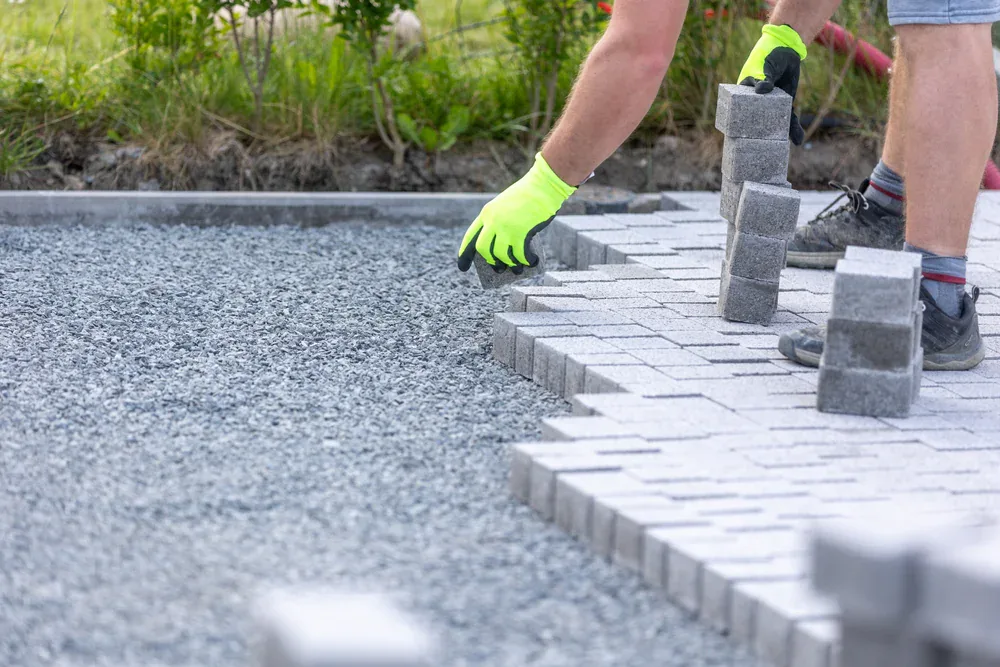
Polymeric sand is engineered specifically for paver joints. It’s a mixture of fine sand particles and polymer additives. When you sweep it into the joints and activate it with water, those polymers bind the sand particles together. The result is a hardened, stable joint that resists erosion, blocks weed seeds, and prevents the shifting that creates gaps.
Think of polymeric sand as creating the foundation of your defense. It fills joints completely, leaving no space for seeds to settle. The hardened surface makes it extremely difficult for plant roots to establish themselves. And because the sand stays locked in place, you don’t get the gaps and voids that regular sand creates as it washes away.
The Sealing Process Completes the Protection
Sealing takes the protection that polymeric sand provides and amplifies it. When professional-grade sealer is applied to your pavers, it penetrates the surface and soaks into the top layer of joint sand. This creates several protective effects that work together to stop organic growth.
First, the sealer hardens the joint sand even further. That top layer becomes almost concrete-like, creating a cap over the joints that blocks moisture and prevents weed seeds from finding any way in. Even if a seed lands on the surface, it can’t penetrate through the sealed layer to reach soil or moisture.
Second, sealing creates a water-resistant barrier across the entire paver surface. This is critical for preventing moss growth. Moss needs consistent moisture to thrive. When water beads up and runs off sealed pavers instead of soaking in, you eliminate the damp conditions moss requires. Shaded areas that would normally stay wet for days after rain dry much faster when properly sealed.
Third, the sealer inhibits organic growth through its chemical properties. Quality paver sealers contain additives that actively resist mold, mildew, and algae formation. This isn’t just a physical barrier—it’s chemical protection that makes the surface hostile to organic growth.
The sealing process also addresses the aesthetic issues that come with organic growth. Sealed pavers maintain their color vibrancy and don’t develop the staining that moss and algae cause. If any organic material does land on the surface, it doesn’t adhere or penetrate—it just sits on top where it’s easy to rinse away during routine cleaning.
Professional application matters here. The sealer needs to be applied evenly, at the right coverage rate, and under proper weather conditions. Too much sealer creates a thick film that can look hazy or peel. Too little doesn’t provide adequate protection. Temperature and humidity during application affect how the sealer cures. This is why DIY sealing often fails—homeowners don’t have the experience to judge these factors correctly.
Why the Combination Lasts Years, Not Months
The reason professional paver sealing with polymeric sand provides long-term results comes down to how these materials interact. Polymeric sand alone offers good protection—it’s significantly better than regular sand. But it’s still vulnerable to surface erosion over time. Water, UV exposure, and traffic gradually wear down the top layer.
When you add sealing to the equation, you’re protecting the polymeric sand itself. The sealer creates a shield that prevents UV degradation of the polymer binders. It stops water from gradually dissolving the surface layer. And it provides abrasion resistance that helps the sand withstand foot traffic without breaking down.
This is why properly sealed pavers with polymeric sand can go 3 to 5 years before needing attention, while unsealed pavers might need sand replacement annually. You’re not just protecting the pavers—you’re protecting the protection system itself. The sealer preserves the polymeric sand, and the polymeric sand provides a stable base for the sealer. They work together to create durability that neither could achieve alone.
The climate protection aspect is particularly important for Long Island properties. Our freeze-thaw cycles would normally break down joint sand and create openings for organic growth. But sealed polymeric sand resists this damage. The hardened surface doesn’t allow water penetration that would freeze and expand. The sealed joints don’t develop the cracks and gaps that winter weather creates in unsealed installations.
Long-term effectiveness also depends on proper installation. The pavers need to be thoroughly cleaned before polymeric sand application—any dirt or debris prevents proper bonding. The sand must be swept in completely, filling joints to the proper depth. Activation requires the right amount of water—too much washes away the polymers, too little doesn’t activate them fully. Then the sand needs time to cure before sealing, typically 30 days.
When professionals handle this process, they understand these requirements and execute each step correctly. The result is a system that actually performs as intended—stopping weeds and moss for years while protecting your paver investment from Long Island’s harsh climate conditions.
Getting Professional Results That Protect Your Investment
Your pavers represent a significant investment in your property. Whether it’s a patio where you entertain, a driveway that handles daily traffic, or walkways that define your landscape, these surfaces deserve protection that actually works. Professional paver sealing with polymeric sand installation isn’t just about stopping weeds and moss—it’s about preserving the beauty and structural integrity of your outdoor spaces for years to come.
The difference between DIY attempts and professional service shows up in longevity. Homeowners who try to handle sealing themselves often see weeds returning within months. The polymeric sand doesn’t harden properly. The sealer looks streaky or develops a haze. Meanwhile, professional installations provide years of protection because every step is executed correctly with commercial-grade materials and equipment.
For Long Island properties specifically, working with contractors who understand regional climate challenges makes a real difference. We bring nearly 50 years of combined experience working with pavers in Nassau and Suffolk Counties. We know how coastal humidity, salt air, and freeze-thaw cycles affect different paver materials. That expertise translates into sealing solutions designed specifically for the conditions your pavers face.
Article details:
- Published by:
- Paver Savers
- Published to:
- Last modified:
- March 14, 2026
Share:
Continue learning: