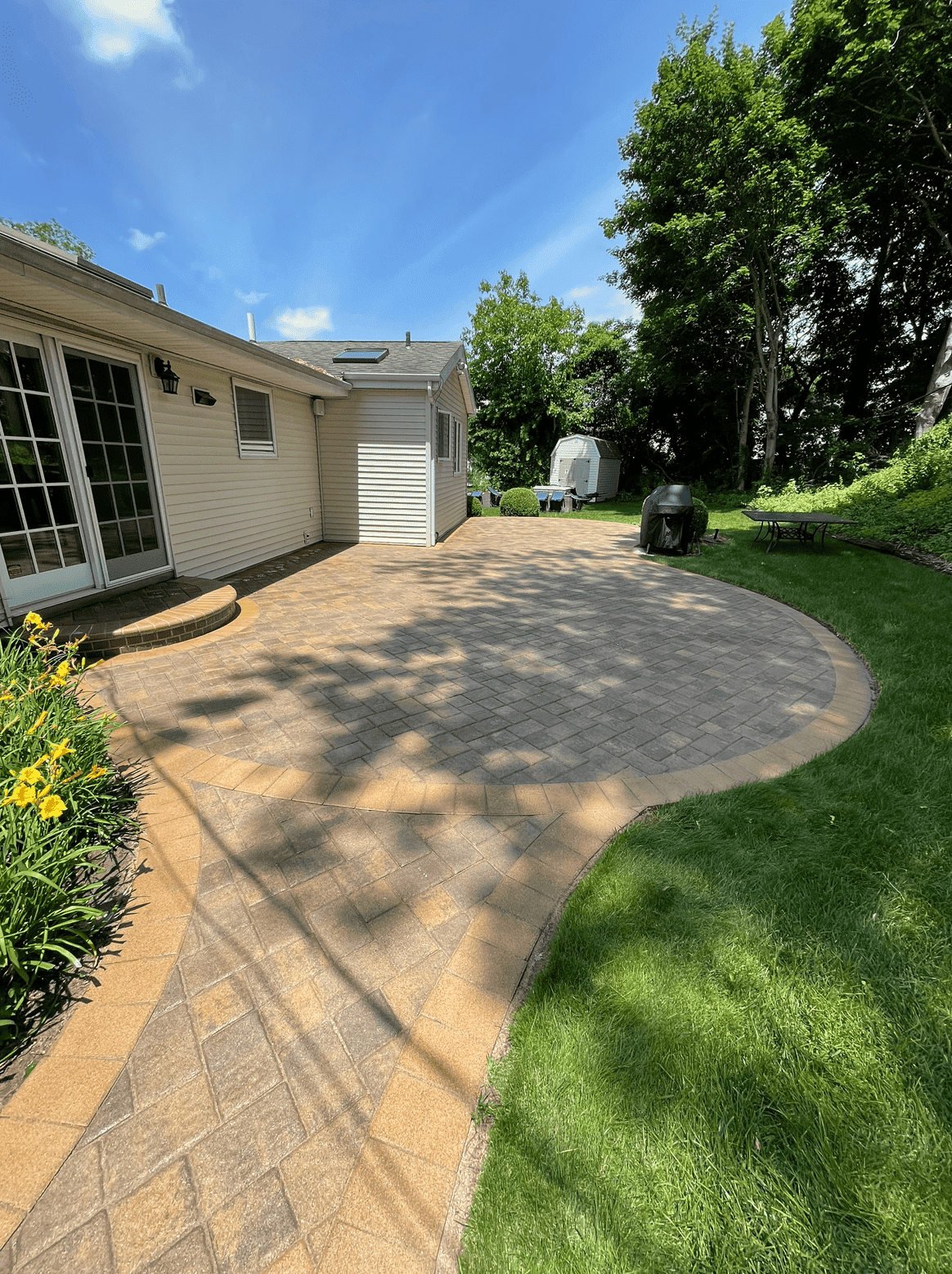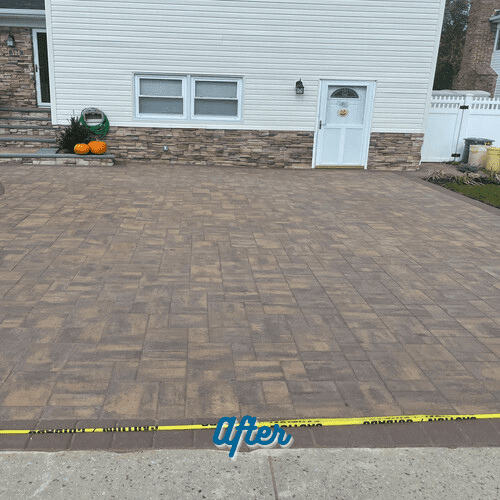
Paver Sealing And Restoration On Long Island: Restore Your Pavers Instead Of Replacing Them
Before you pay to replace a tired patio or driveway, here's how cleaning, re-sanding, leveling and sealing can bring Long Island pavers back, and when the timing is right.
Share:
Summary:
Type “paving” into Google from anywhere on Long Island and you’ll mostly get asphalt crews, parking lots and road work. That’s probably not what you meant. You’re more likely standing on a patio, walkway or driveway made of pavers that has gone dull, sprouted weeds in the joints, or started to sink in one corner, and you’re wondering if it’s time to rip it all out. Often it isn’t.
Before you ask anyone for a quote on new paving, it helps to know what can be saved, what the work involves, and what a full replacement would cost you.
Replace Your Long Island Pavers Or Restore Them?
Here’s the short version. If your pavers are concrete, brick or natural stone and the stones themselves are still sound, most of what bothers you lives in the surface and the joints. Dirt, moss, white mineral haze, washed-out joint sand and a few settled sections can all be fixed without digging anything up.
The money matters too. On Long Island, a full paver replacement runs $8,000 to $12,000 or more, depending on scope and material. Restoring the pavers you already have costs a fraction of that, and the results surprise most people.
We’re Paver Savers, a family-owned company in West Babylon, and we clean, repair and seal pavers for homeowners and businesses across Nassau and Suffolk counties. We work on pavers, not asphalt, so if you want a blacktop driveway, we’re not the right call.
How Do You Restore Old Pavers On A Long Island Patio Or Driveway?
The order of the work decides how it turns out, so it’s worth knowing the sequence before you hire anyone.
It starts with cleaning, and not the rented pressure washer kind. We use hot-water systems and pre-treat the surface, which lifts oil, moss and algae without blasting the sand out of your joints. If your pavers have a white, chalky haze, that’s efflorescence—mineral salt rising to the surface. It has to be treated, and the pavers have to dry completely, before anything gets sealed over it, because sealer traps whatever is underneath.
A Lake Ronkonkoma customer had stubborn efflorescence removed and told us afterward that hiring a professional was worth the cost.
Next comes repair. Sections that have sunk or shifted get leveled, which fixes the tripping hazard and the low spots where water collects. The old joint sand comes out and polymeric sand goes in. It hardens when it’s activated with water, so it holds the pavers in place and makes it much harder for weeds to push through.
Only then does the sealer go on, chosen for your material and the look you want.
Does this work on pavers that have been out there a while? Our customers have told us their 8-year-old, 10-year-old and even 20-plus-year-old pavers look brand new, and one said the patio looks better than when it was first installed. A Mount Sinai homeowner had more than 2,200 square feet sealed and plans to keep up with it every year. A job that size is far easier to maintain than to rebuild.
Why Do Pavers Age Differently Across Long Island?
Long Island isn’t one climate, and your pavers know it. What’s wrong with your patio depends a lot on where the house sits.
Near the ocean in Sagaponack, pavers that would hold up four or five years inland show real wear in about half that time. In Poquott and Oyster Bay, harbor air, humidity and freeze-thaw work on the joints and surface all year. Down on the South Shore in West Sayville and West Gilgo Beach, salt-laden bay moisture tends to leave mineral deposits, and the older cottages there often have pavers worth keeping for their character alone.
Inland has its own issues. In Lake Ronkonkoma, the lake feeds the water table, which speeds up moisture damage. In Munsey Park and other villages with mature trees, shade and falling leaves bring moss, algae and stains from leaf tannins. In North Valley Stream, much of the housing is older and the cost of living is high, so people think hard before tearing out a patio that only needs attention.
All of that matters because the schedule that suits a shaded Munsey Park walkway isn’t the one for an oceanfront patio. When we look at your pavers, we check where you are, what’s growing, where water sits and how the joints are holding. That tells us more than the patio’s age does.
For most Long Island properties, we suggest cleaning every one to two years and resealing every two to three, then adjusting once we see how yours behaves.
Is Paver Sealing Worth It On Long Island? An Honest Answer
Some contractors will tell you every paver has to be sealed. Others say never seal, and they have a point. Pavers are built to hold up without it. Unilock, a major paver manufacturer, describes sealing as more about looks than necessity and suggests resealing every three to five years when you do it.
Done badly, sealer can leave a cloudy film or a slick surface.
Here’s where we land. Sealing is optional for the structure of your patio. It’s worth doing when you want stains to wipe up, joint sand to stay put and color to look the way it did when the pavers were new. Because sun, salt exposure and foot traffic shorten the interval on Long Island, we recommend resealing every two to three years for most properties. That’s our judgment call, and if your patio isn’t ready for it yet, we’ll tell you.
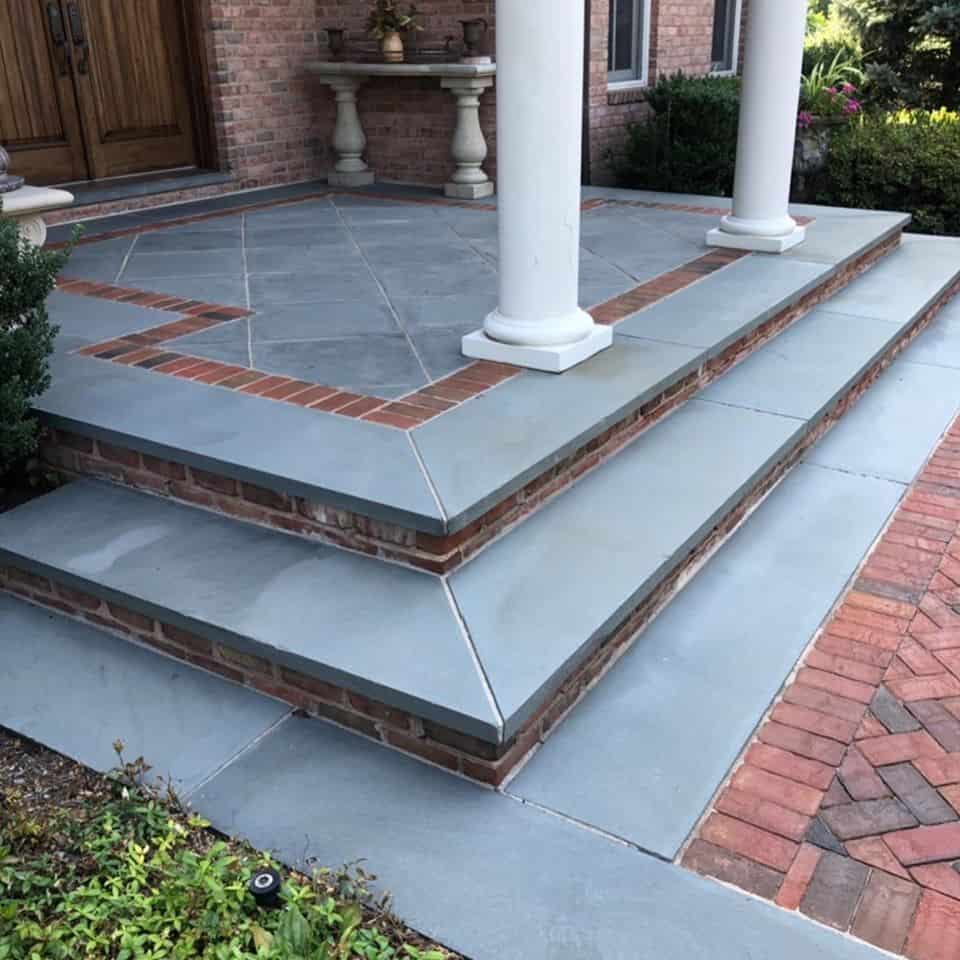
When Is The Right Time To Seal Pavers On Long Island?
Not whenever the weather first feels nice. Sealer needs a dry surface, temperatures above 50°F and no rain in the forecast. Apply it to damp pavers, in the cold, or ahead of a shower and it won’t bond correctly, and you’ll see the result later as cloudiness.
That’s why we don’t say now is the perfect time without checking the forecast first.
Spring is when most Long Island homeowners call. Winter has left grime, moss and washed-out joint sand, and you want the patio ready for the first cookout. Early summer works too, as long as the pavers are fully dry. Fall is a second window, but a narrower one. A single cold snap can push temperatures under 50°F and cancel a job we’d planned for November, so we don’t promise late-fall sealing. If you want it done before winter, book earlier rather than later.
New pavers are a different story. Unilock advises waiting for efflorescence to clear before sealing, usually two to three months and sometimes up to a year. Seal too early and you lock that white haze under the finish. If your patio is new and you’re itching to seal it, the wait is usually worth it.
Once the snow is gone, take a walk across your patio. Look for weeds in the joints, sand that has washed down, any section that has sunk, and white or green patches. If you see more than one of those, you’ve probably moved past a simple cleaning and into re-sanding and leveling. Any other time, we’ll tell you the day the crew arrives and how long the job should run.
Questions Long Island Homeowners Ask Before Sealing Pavers
These are the questions we hear most, usually in about this order.
Will sealing make my pavers cloudy? It can, when the surface wasn’t fully dry or leftover polymeric sand stayed on the paver faces. Long Island homeowners swap stories about white haze and white joints that look like failing grout, and that’s almost always a prep problem rather than a sealer problem. Clean, treat, dry, remove the residue, then seal.
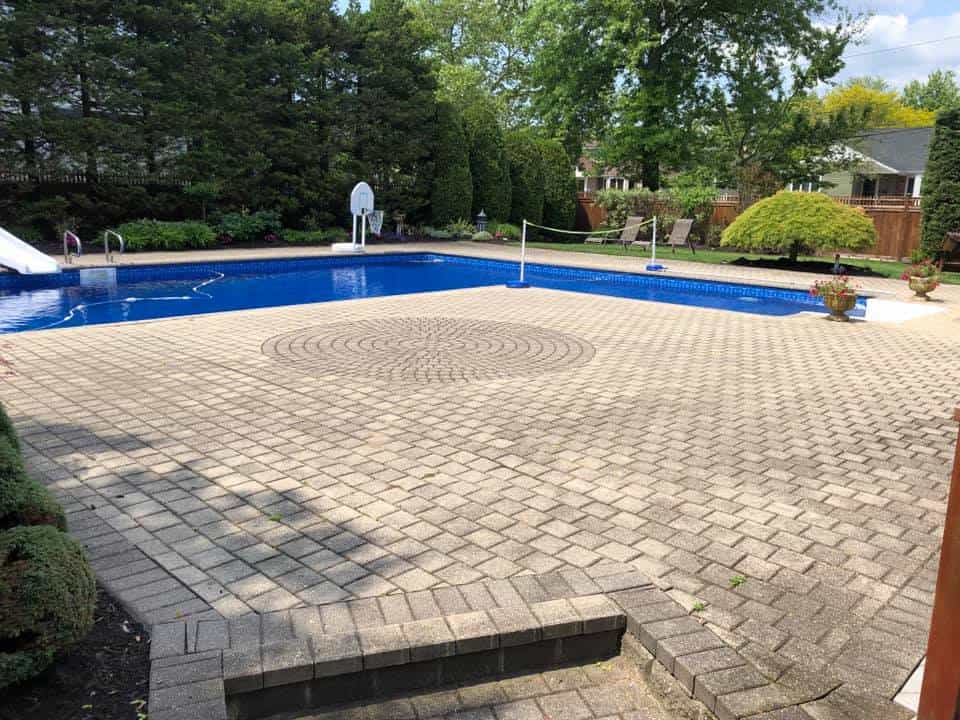
Will they be slippery? Some high-gloss finishes get slick when wet. Around a pool deck, a matte or lower-sheen finish is usually the safer choice. We’ll walk you through natural-look and color-enhanced options before we start, so the finish is your decision.
Can’t I just rent a pressure washer? You can, and some people do fine. But it’s easy to blast out joint sand, mark the surface or seal over haze you didn’t know was there. A Long Island forum post goes as far as warning against DIY sealing, and against hiring a landscaper to do it.
Is the contractor licensed? Home improvement contractors must be licensed in Nassau and Suffolk counties, and Suffolk County Consumer Affairs points out that an unlicensed contractor may not carry liability insurance. Ask for the county license number and proof of insurance, and get a written estimate that lists the scope and the products. We’re licensed and insured, and we’re glad to be asked.
What will it cost, and can I finance it? We give free estimates, and we offer financing, which helps when a big patio would otherwise get put off another year. Set against $8,000 to $12,000 or more for replacement, restoring what you have is an easier decision for many homeowners.
Ready To Restore Your Long Island Pavers?
If your pavers are dull, weedy or hazy, they’re probably not finished. Cleaning, leveling, fresh polymeric sand and a well-timed seal can bring most of them back for a fraction of what replacing them would cost, and a dry, mild window is what makes the sealer last.
Sealing is optional, but when it’s done in the right order and the right weather, it keeps stains, weeds and sinking joints from coming back as fast. Ask any contractor for a license number, proof of insurance and a written scope before you agree to anything.
If you’d like someone to look at your patio, walkway or driveway and tell you straight what it needs, reach out to Paver Savers today to schedule your free estimate and honest consultation.
Article details:
- Published by:
- Paver Savers
- Published to:
- Last modified:
- November 26, 2026
Share:
Continue learning: