Extending The Life Of Your Long Island Driveway: Paving And Paver Sealing
Before you price out a new driveway, read how cleaning, leveling, joint sand, and sealing can stretch the life of the pavers you already have.
Share:
Summary:
Your pavers went in looking sharp. Now, a few Long Island winters later, the joints have thinned out, weeds are poking up near the garage, and one corner by the walkway has sunk just enough to catch your toe. Somebody tells you it’s time to rip it all out.
Before you accept that, know that a lot of tired driveways don’t need replacing. They need the right work, done in the right order. That’s also where many sealing jobs go wrong, and where the good ones separate themselves. Let’s start with what you are deciding between.
Can You Restore A Paver Driveway Instead Of Replacing It?
Full paver replacement on Long Island runs $8,000 to $12,000 or more, so it’s worth knowing what else is on the table. In many cases the pavers themselves are fine. What’s failing is everything around them: joint sand that has washed out, a few sections that have settled, and a surface carrying years of dirt, algae, and salt residue from Nassau and Suffolk winters.
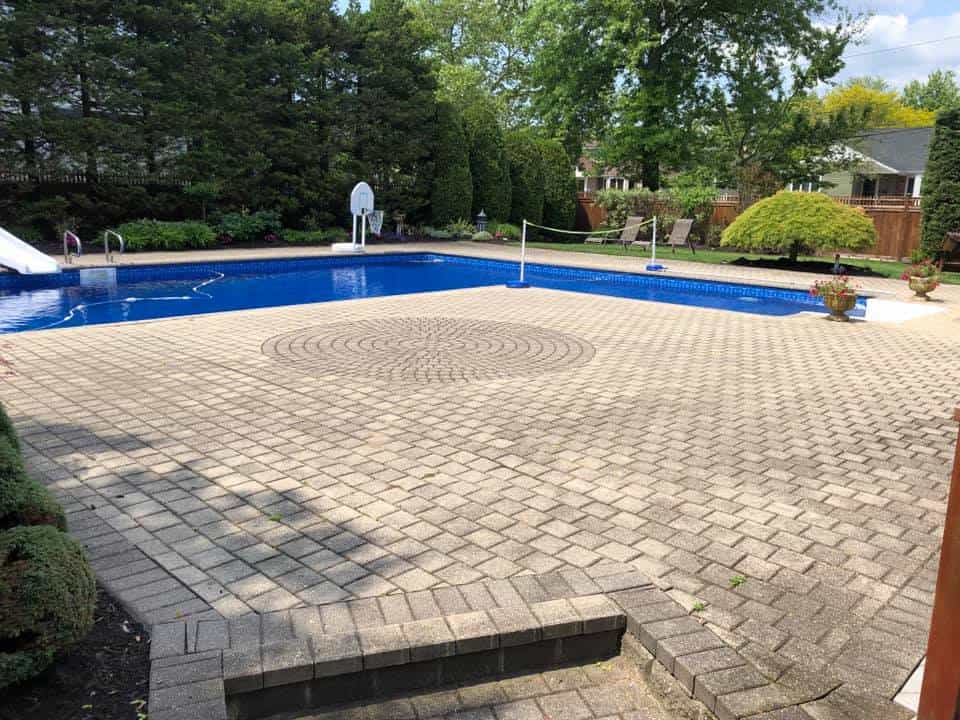
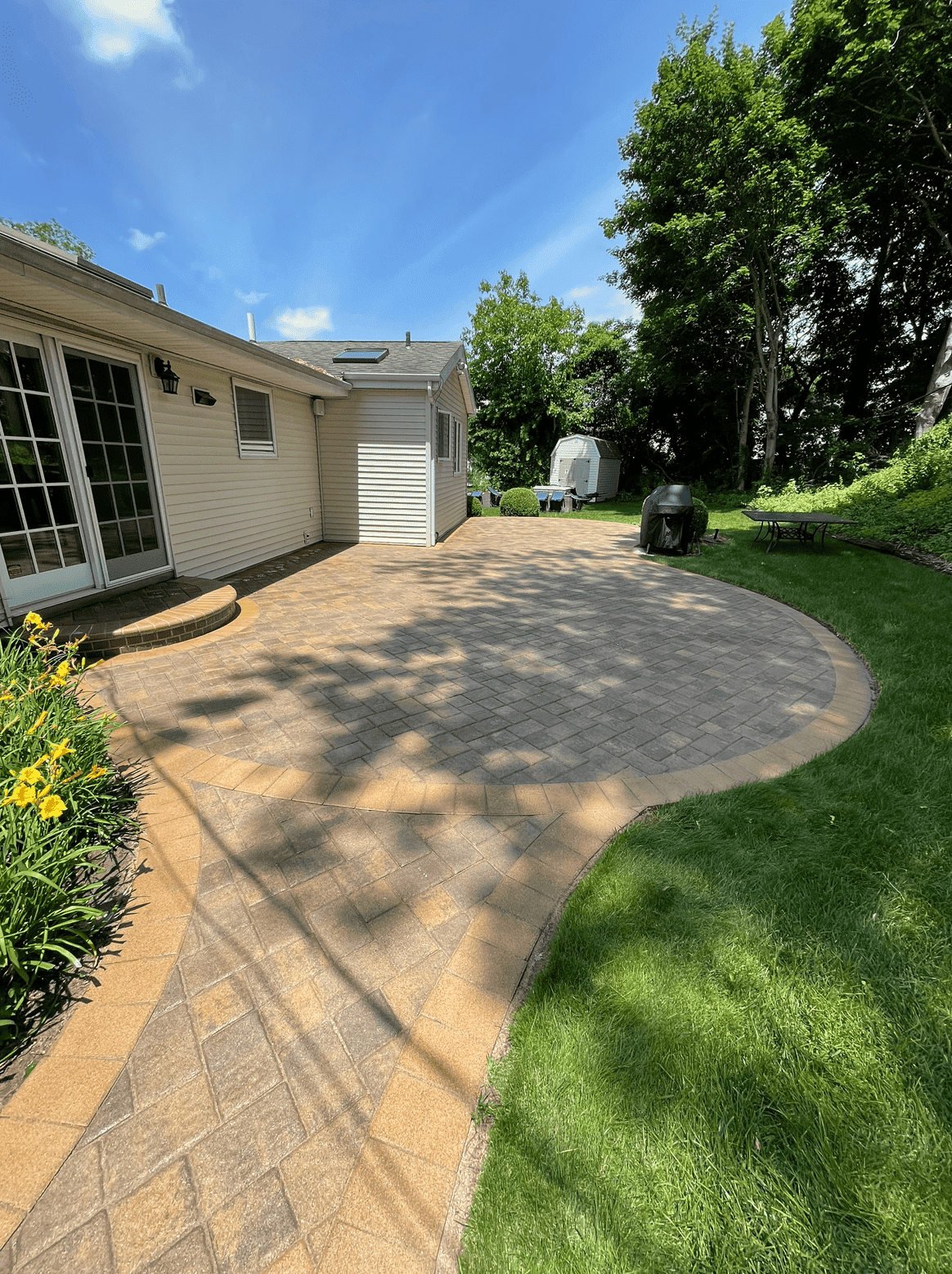
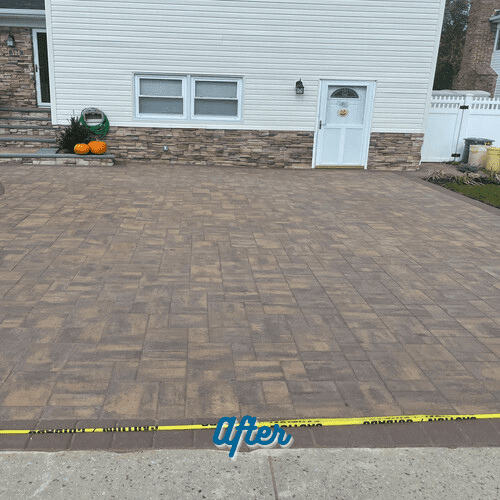
That’s the work we do at Paver Savers. We clean the surface, repair and level the sunken spots, refill the joints with polymeric sand, and seal the whole thing. Done in that order, a driveway that looked ready for the dumpster can keep earning its place.
The exception is a failing base underneath. Sealer won’t fix that, and we’ll tell you if that’s what we’re seeing.
What Does Paver Sealing Involve, Step By Step?
The order is what decides if sealer holds up, so here’s how a full restoration usually unfolds.
Day one is cleaning. We pre-treat the surface, then power wash the pavers and the joints, because sealer locks in whatever is sitting underneath it. Algae, oil, and old dirt that get sealed in don’t go anywhere. After cleaning, the pavers need time to dry completely. Sealing over damp pavers is one of the most common reasons a job turns cloudy, and a quick pass with a leaf blower doesn’t count as dry.
Day two is where the paving work happens. We repair and level any sections that have sunk or shifted, then fill the joints with polymeric sand and clear every bit of residue off the surface. Sand left on the face of the pavers is a classic cause of white haze once sealer goes over it. Then comes the sealer itself, applied when the surface is dry, the air is above 50°F, and no rain is in the forecast. Sealer put down in the wrong conditions won’t bond properly.
Two coats is typical, and commercial-grade products like Covertec provide good coverage at roughly 175 to 200 square feet per gallon. More isn’t better, though. Over-applying leaves a sticky or peeling finish.
How long all this takes depends on the condition of your pavers, any stains or mineral deposits, drainage, and the weather. A straightforward job can take as little as four hours. A full restoration with repairs can stretch to two or three days. Through all of it, you’ll get updates from us, because nobody should have to wonder what’s happening in their own driveway.
How Do Long Island Winters, Road Salt, And Bay Humidity Change The Sealing Decision?
A driveway in a mild climate and one in Nassau or Suffolk County are fighting different battles. Here, the big one is freeze-thaw. Water works into joints and pores, freezes, thaws, and repeats all winter. The question for any sealing job is if the joint sand and the sealer will make it through another season in good shape.
Road salt adds to it. Driveways and front walks take de-icing salt for months, and by spring you can see the residue eating into the surface. On the South Shore, bay-side humidity feeds algae, moss, and mildew, which is why pavers near the water can go green and black faster than expected. On the North Shore and in wooded neighborhoods, shade and tree cover tend to keep surfaces damp and bring organic staining.
Material matters too. Newer concrete pavers are common across Long Island, but around Great Neck and University Gardens we work on older Tudor and Colonial homes with brick, bluestone, and natural stone, some of it dating to the 1930s. Those materials don’t all take the same sealer. Porous concrete needs a breathable product, for example, and a non-breathable film can trap moisture and haze.
Then there’s the look. A natural, matte finish keeps your pavers as they are, while a color-enhancing wet look deepens them. You choose. As a general benchmark, plan on resealing about every three to five years, and sooner on pool surrounds and heavily used surfaces.
When Is The Best Time To Seal Pavers On Long Island?
Spring through early fall is the working window here, and September through early November is often the best stretch for sealing. You get the sealer cured before road salt and freeze-thaw take over. Spring is better for cleanup, when Long Island winters have left behind weeds, algae, salt residue, and thinned-out joint sand.
The real rule is conditions, not the calendar. Pavers need to be dry, the air needs to be above about 50°F, and rain can’t be in the forecast. A contractor who promises a date no matter what the weather does is promising something sealer can’t deliver. We reschedule when the weather asks us to.
If fall gets away from you, nothing is lost. Book an estimate over the winter and get on the spring list. One more timing note: brand-new pavers should wait about 30 days before sealing, so mineral salts can work their way to the surface first.
How Do You Choose A Paver Sealing Contractor In Nassau Or Suffolk County?
Start with the license. Home improvement contractors have to be licensed in both Nassau and Suffolk counties, and individual towns and villages can add their own registration rules. Ask for the license number and proof of general liability insurance. An unlicensed contractor may not carry insurance at all, which leaves you exposed if something goes wrong on your property. We’re fully licensed and insured, and we’re glad to provide documentation on request.
Next, get it in writing. New York law and Suffolk County code require a written contract for home improvement work. The contract should list the license number, materials, quantities, and brands. A clear scope also protects you when you’re comparing bids.
That brings up the price trap. Two quotes for the same driveway can look wildly different because one includes stain treatment, joint sand, and two coats while the other doesn’t. Ask each contractor what product they’ll use, how many coats, how long the pavers dry between cleaning and sealing, what happens if it rains, and whether repairs to sunken sections are included. If the answer on drying time is “we wash and seal the same day,” keep looking.
You may also be tempted to hand the job to a landscaper you already trust. Plenty of them are good at what they do, but sealing takes specific training, and Long Island homeowners who’ve dealt with a failed job often trace it back to skipped prep or sealer applied over damp pavers. Our approach is simple: a clear estimate up front, a defined scope, and steady communication until the work is done.
Will Sealing Stop Weeds Or Turn My Pavers White? Straight Answers For Long Island Homeowners
Will sealing stop weeds from coming back? It helps, mostly because polymeric sand locks the joints, but no honest contractor can promise zero weeds. Seeds blow in and settle on top of pavers, and Long Island’s humidity gives them plenty to work with. Expect far fewer, not none.
Can sealer turn white or cloudy? Yes, when it goes down on damp pavers, gets applied too thick, or covers leftover polymeric sand. Those are prep and timing problems, which is why we don’t rush them. If it does happen, the fix generally means stripping the sealer and redoing the work, so avoiding it beats correcting it.
Will it be slippery or change the color? A matte, natural finish stays close to what you have now, and a wet-look sealer deepens the color. Non-slip options exist, and they’re worth asking about if you have a pool deck or surround in your backyard.
Do you even need to seal? Not always. It depends on the paver, how much sun, shade, salt, and moisture it sees, and the look you want. Sealing adds cost and needs reapplying every few years, so it’s a fair question. For driveways and walks facing Long Island salt and freeze-thaw, it usually earns its place, but we’ll tell you honestly if yours doesn’t need it.
Can you do it yourself? You can buy sealer at a big-box store, but we use commercial-grade products, and the cleaning, drying, and joint work is where DIY jobs fall apart. A sealer applied wrong has to be stripped before anyone can fix it.
Can older brick or natural stone be restored? In most cases, yes, with the right cleaning method and sealer for the material. And if the cost of the work is what’s holding you back, financing is available.
Get Your Long Island Pavers Sealed And Restored The Right Way
A paver driveway on Long Island doesn’t have to be replaced just because it looks tired. Cleaning, leveling, joint sand, and sealing, done in that order and in dry weather, can extend the life of the surface you already own. And the license, written scope, and product questions will tell you who’s worth hiring.
Contact Paver Savers today to schedule your free estimate and let our family-owned team restore and protect your Long Island driveway.
Article details:
- Published by:
- Paver Savers
- Published to:
- Last modified:
- November 19, 2026
Share:
Continue learning: