How Commercial Paving And Paver Sealing Protect Nassau County Properties
Search "paving" on Long Island and you get asphalt. Here is what protects paver walkways, plazas and patios in Nassau County, and when sealing is worth it.
Share:
Summary:
Search “paving” anywhere on Long Island and you’ll get asphalt: parking lot crews, driveway milling, sealcoating. That’s useful if your lot is blacktop. It’s not much help if your storefront walkway, condo courtyard, restaurant patio or pool deck is made of pavers, brick or natural stone.
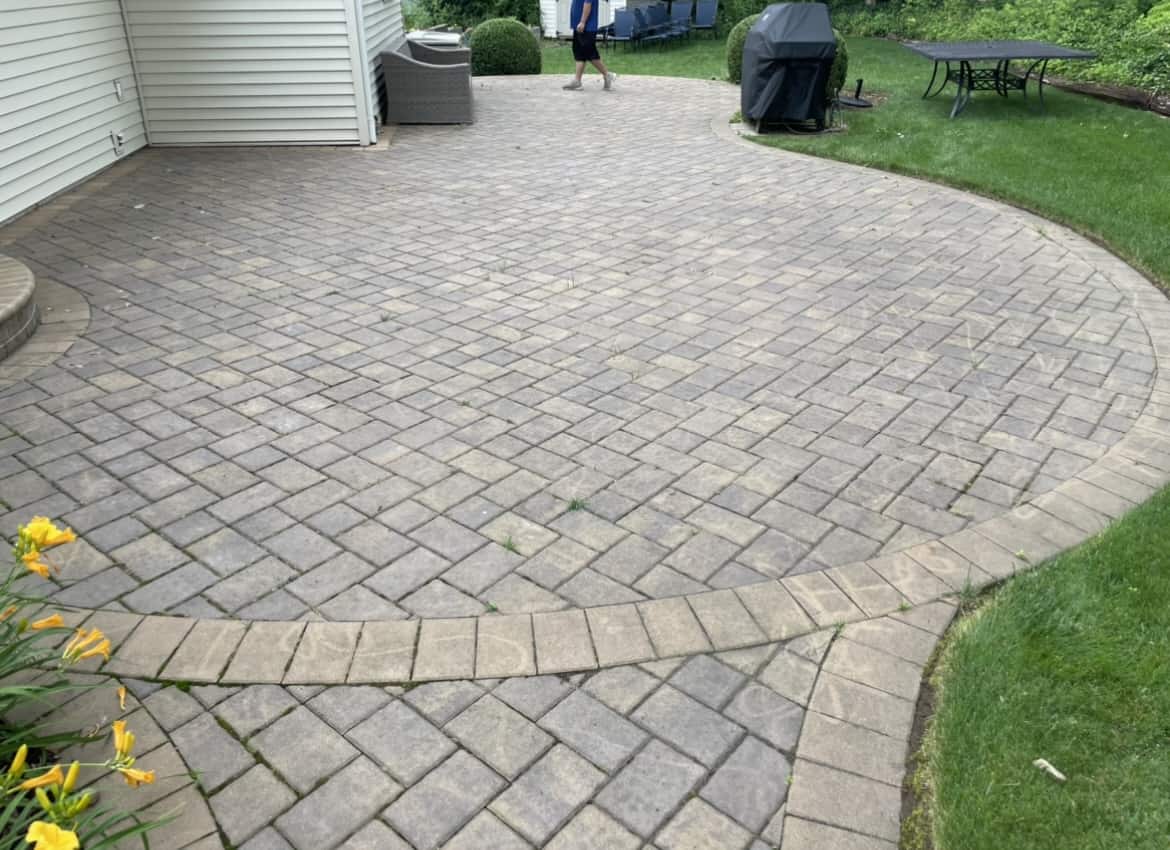
Those surfaces age differently, and they need different care. If you manage property in Nassau County, you’ve probably noticed the dull color, the weeds in the joints, the white chalky film. You may also be wondering if someone is about to tell you it all has to come out. Here is what protects paver surfaces on Long Island, and how to tell good work from bad.
What Does Paving Mean When Your Surface Isn’t Asphalt?
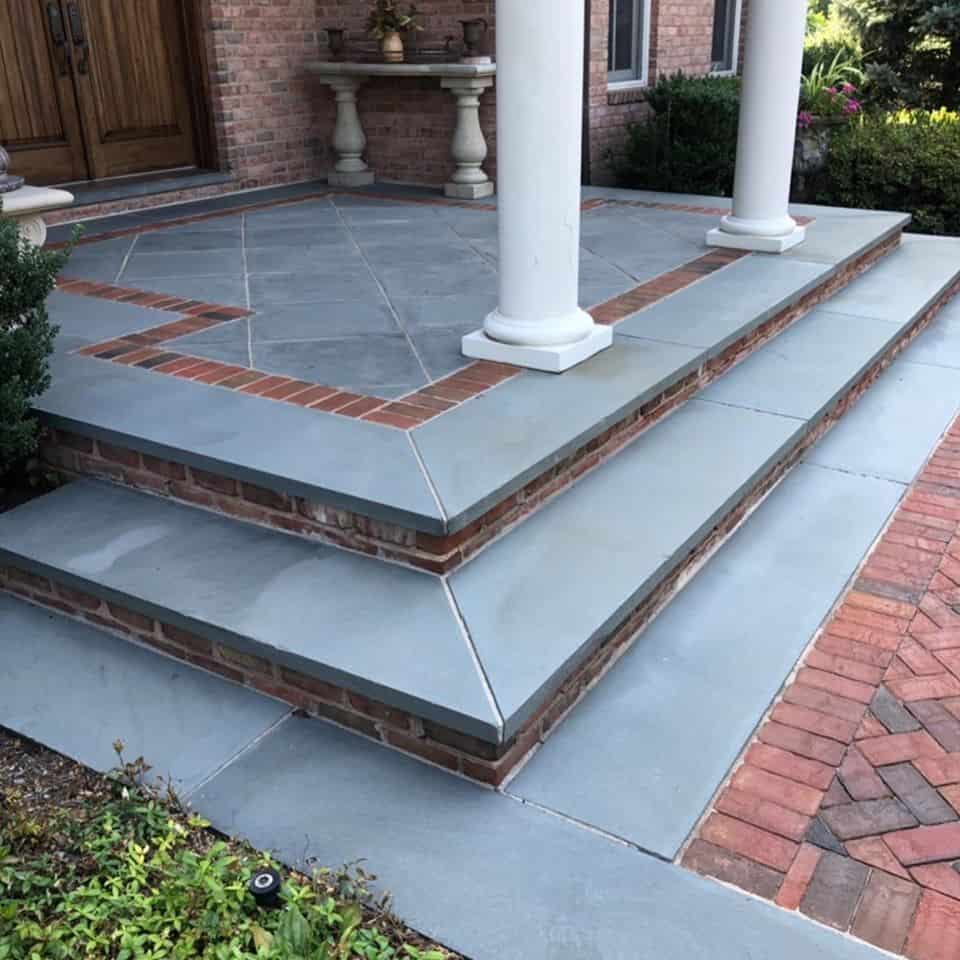
Paving just means a hard surface built to walk or drive on. Asphalt is laid down and rolled as one continuous layer. Pavers are individual pieces of concrete, brick or natural stone, such as bluestone, set on a compacted base with sand packed into the joints. If you can see seams between separate units, that’s what you have.
The difference matters because the care is completely different. Asphalt gets patched and sealcoated. Pavers get cleaned, re-sanded and sealed. We don’t do asphalt, and we’d rather say so up front. What we do is look after the surfaces the asphalt crews don’t touch: pavers, brick, natural stone and concrete, at homes and commercial properties across Nassau and Suffolk, working out of West Babylon.
Why Pavers On Long Island Commercial Properties Wear Out So Fast
Long Island is hard on hardscape. From November through March, water seeps into the pores of the paver, freezes, expands and chips the surface from the inside. Then it thaws and the whole thing repeats. In summer, UV bleaches unprotected concrete pavers in just a few seasons.
Salt air makes it worse. It comes off the Sound in places like Port Washington and Sea Cliff, and off the bays and the Atlantic along the South Shore in Island Park and Seaford. Then winter brings de-icer. Storefront walkways, office entrances and plaza steps get salted heavily, and not every de-icer is equally kind to paving. Concrete-industry guidance says sodium chloride is the gentlest of the common options, while magnesium and calcium chloride are the ones to avoid.
Trees add their own trouble. On shaded, leafy properties like many we see in Old Bethpage, moss, algae and organic stains creep across the surface and make it look neglected, and slick besides. Restaurant patios pick up grease and spills. Plazas take cart wheels and constant foot traffic. Pool decks stay wet.
None of this means you did something wrong. It’s what a paver surface sees here, and it’s why a courtyard that looked fine three years ago suddenly looks tired. For a commercial property, that matters beyond looks. A stained patio where customers eat, a mossy entrance or a courtyard full of weeds is the first thing people notice. The good news is that most of this starts at the surface, and the surface is the part you can fix.
Do Pavers Really Need To Be Sealed On Long Island, Or Can You Skip It?
Honest answer: not always. Pavers stay put because of the base underneath, the edge restraint around them and the sand in the joints. Sealer isn’t what holds them together, and plenty of installations go unsealed for decades. Sealing is a choice about how the surface looks, how it handles stains, how well the joints hold and how easy it is to clean.
Where it earns its keep is in the spots that take punishment: entrances salted every winter, patios under trees, sunbaked walkways, dining areas where grease and drinks land. A good sealer limits how much water and staining the pavers soak up, helps lock the joint sand so weeds have a harder time, and slows efflorescence, the white mineral film that rises to the surface. It can’t fix a bad base or poor drainage, though.
On Long Island we commonly see resealing every two to three years, a bit sooner than the three to five you’ll read about in other parts of the country, because of the salt air and freeze-thaw. Don’t just mark a calendar. Check the surface. When water stops beading and soaks in, that’s your signal. It’s a simple test concrete-industry guidance uses for sealed concrete, and it works as a quick check on pavers too.
Sealing done wrong is worse than skipping it. Seal over moisture and you trap a milky haze. Seal over stains and you lock them in. Leave extra polymeric sand on the paver faces and it ends up as white residue under the sealer. A glossy finish can get slippery, which matters at entrances and pool decks. That’s why the prep matters more than the product.
How We Clean, Repair And Seal Pavers Across Nassau And Suffolk
Our order of operations is simple, and skipping any step is where most problems start. We pre-treat the surface for moss, algae and stains, then power wash it. Next we repair and re-level any sections that have settled, refill the joints with polymeric sand, and finish with a sealer chosen for your material and the look you want.
Material matters. Concrete, brick and natural stone aren’t treated the same, and what works on concrete can etch or discolor natural stone. The sequence is the same for a patio in Plainview or a walkway in Rockville Centre, but the products and methods change with what’s underfoot. Our team has nearly 50 years of combined experience behind that call, and we’re a family-owned company, not a franchise sending whoever’s available.
Can Weathered Pavers Be Restored Instead Of Replaced?
Often, yes. Pavers that look beat up aren’t always beat up. We see hazy, stained, weedy surfaces that are structurally sound, and if the base is stable and the pavers aren’t cracked through, restoration is usually the smarter move. Full paver replacement on Long Island can run $8,000 to $12,000 or more. Restoration is a fraction of that, which is why it’s worth knowing which situation you’re in before anyone calls your surface “shot.”
So what does restoration fix? Moss, algae, oil and organic staining come off during pre-treatment and cleaning. Efflorescence gets its own treatment, and one customer told us it was worth the cost compared with trying to tackle it themselves. Weeds and grass in the joints get cleared out, and the joints are refilled with polymeric sand so they hold. Shifted or sunken sections are lifted and re-leveled. Then the sealer goes on, in a natural, enhanced or wet-look finish depending on what you want.
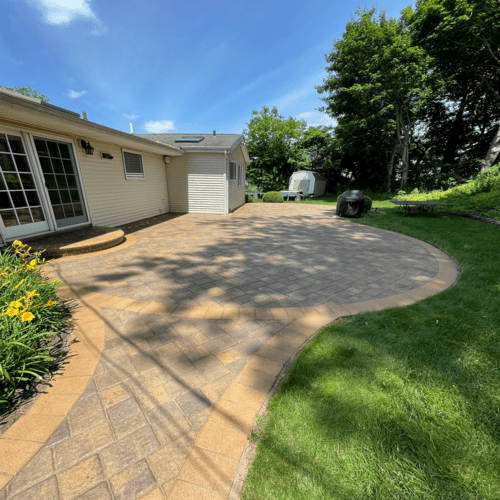
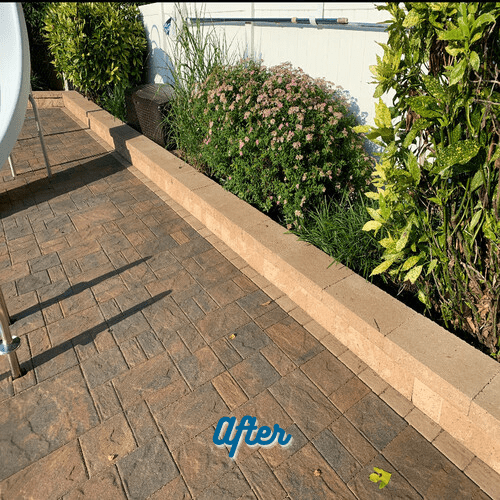
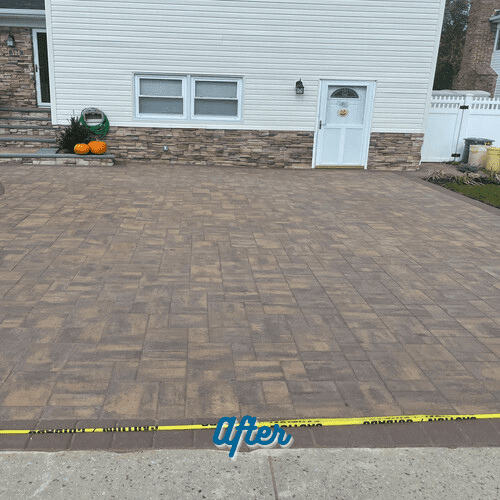
The results can be striking. One customer wrote that their pavers were well over 20 years old and looked brand new. Another said theirs looked brand new after 10 years. That’s the kind of before-and-after we’re aiming for, not a shiny coat over a dirty surface.
When is replacement the honest answer? When the base has settled across large areas, when drainage is pushing water under the pavers, or when units are cracked through. Sealer can’t fix any of that, and we’ll tell you so rather than sell you a coat of it. The only way to know is to look at the surface in person, which is why our estimates are free.
Paver Sealing Questions Long Island Property Owners Ask Before Hiring
Do I need a licensed contractor to seal pavers in Nassau County? Nassau County requires a home improvement license for residential work, and the county’s own FAQ says contractors who work only on commercial buildings don’t need one. Even so, you should expect liability insurance and workers’ comp from anyone working on your commercial property. If something gets damaged or someone gets hurt, you don’t want that landing on you. We’re fully licensed and insured, and you should ask any contractor to prove the same.
How much does paver sealing cost on Long Island? It depends on the size of the area, its condition, the finish and whether cleaning, joint sand or repairs are part of the job. A mossy walkway with washed-out joints is a different project from a clean courtyard that needs a fresh coat. We price after seeing the surface, and the estimate is free. Financing is available too, which helps on larger jobs or when several areas need attention.
Can my landscaper do it? Maybe, but residue and timing are where it goes wrong. Leftover polymeric sand and sealing before the pavers are fully dry are the usual causes of haze on Long Island jobs, and untrained work can damage the pavers outright. Ask any contractor how they handle residue, drying time and different materials.
When’s the best time to seal? Sealer needs dry pavers, several dry days and temperatures above the label’s minimum, so spring and early fall are the usual windows. If you want protection in place before the November-to-March freeze-thaw cycle hits Nassau County, plan for early fall rather than squeezing it in during cold, wet weather.
Will it make the surface slippery? It can, depending on the finish. We talk through natural versus wet-look options, especially for entrances and pool decks.
Paver Cleaning And Sealing In Nassau County: What To Do Next
Paving on Long Island doesn’t have to mean asphalt, and a worn-looking paver surface isn’t automatically a replacement job. Freeze-thaw, salt air and de-icer take a toll on pavers in Nassau County. Cleaning, fresh joint sand and the right sealer, done in the right order, keep them looking good and holding up. Sealing is optional rather than structural, and it pays off most where the exposure is highest.
Contact Paver Savers today to schedule your free estimate and let our experienced team protect and restore your Nassau County commercial property pavers.
Article details:
- Published by:
- Paver Savers
- Published to:
- Last modified:
- November 3, 2026
Share:
Continue learning: