Long Island Brick Restoration Cost Analysis
Wondering what brick restoration actually costs on Long Island? Here's an honest breakdown — by service type, scope, and what Nassau County homeowners are really dealing with.
Share:

Summary:
If you’ve noticed crumbling mortar, stained brick, or pavers that have started to sink and shift, you’re probably wondering two things: how bad is it, and what’s this going to cost me? Those are fair questions — and the frustrating reality is that most of the pricing information online is either too vague to be useful or based on national averages that don’t reflect what contractors in Nassau County actually charge. Long Island has its own climate, its own housing stock, and its own labor market. The numbers here reflect that. Here’s what you actually need to know.
Brick Cleaning Cost: What Professional Service Actually Involves
Professional brick cleaning runs roughly $0.40 to $0.68 per square foot, depending on the surface condition, the type of brick, and what’s on it. That might sound like a narrow range, but the actual invoice can shift significantly based on square footage, how much organic growth or staining is present, and whether efflorescence — that white, chalky residue that forms when water pulls salts through the masonry — needs to be treated separately.
What separates professional cleaning from a standard pressure wash isn’t just the equipment. It’s the technique, the products, and the understanding of what each surface can actually handle. Using too much pressure on older brick or deteriorating mortar joints can cause more damage than the dirt you’re trying to remove. That’s a common outcome when someone grabs a consumer pressure washer and goes to work on a 60-year-old stoop in Massapequa or a brick walkway in Port Washington.
Why Nassau County Brick Gets Dirtier Faster Than Most Markets
Nassau County’s geography puts your brick and paver surfaces under a specific kind of stress that homeowners in inland markets simply don’t deal with to the same degree. The county is bordered by the Atlantic Ocean to the south and the Long Island Sound to the north. That means salt air is a constant presence — and salt doesn’t just sit on the surface. It works its way into mortar joints and brick faces, accelerating the breakdown of both over time.
Add to that Nassau County’s annual rainfall of roughly 45 to 50 inches, and you have a recipe for persistent moisture infiltration, algae growth, and the kind of deep staining that a garden hose isn’t going to touch. Surfaces near the water — think the south shore communities from Valley Stream out to Massapequa, or the north shore villages around Port Washington and Glen Head — tend to show accelerated deterioration compared to properties further inland.
Then there’s the age factor. A significant portion of Nassau County’s housing stock was built during the post-World War II suburban expansion of the 1940s through the 1960s. Levittown, East Meadow, North Merrick — these neighborhoods are filled with homes that have brick stoops, walkways, and retaining walls that are now 60 to 80 years old. That’s well past the point where surface-level cleaning alone is enough. By that age, most brick features have been through decades of freeze-thaw cycles, and the mortar joints have often softened or cracked in ways that aren’t always visible until you look closely.
The practical takeaway is this: if your brick hasn’t been professionally cleaned and assessed in several years, there’s a reasonable chance you’re dealing with more than surface dirt. A thorough cleaning is often the first step in figuring out what else needs attention — and doing it right means using the right pressure, the right cleaning agents, and equipment built for the job. We use a commercial-grade 20-inch surface cleaner specifically because it delivers consistent, even results without the joint damage that comes from a standard residential pressure washer.
Masonry Restoration Pricing: What Full-Scope Projects Cost on Long Island
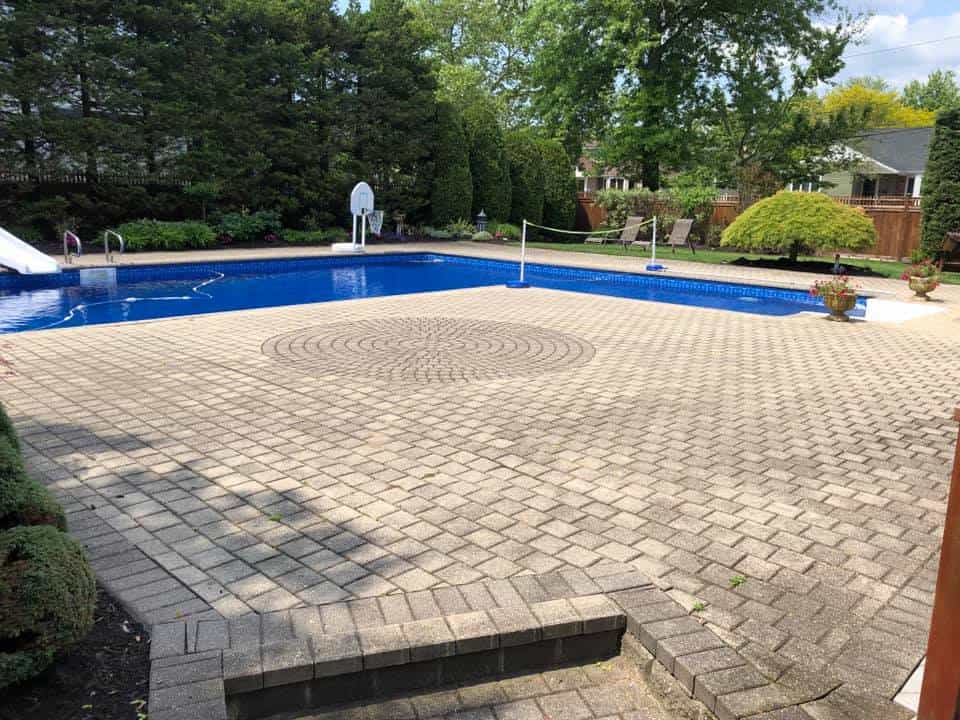
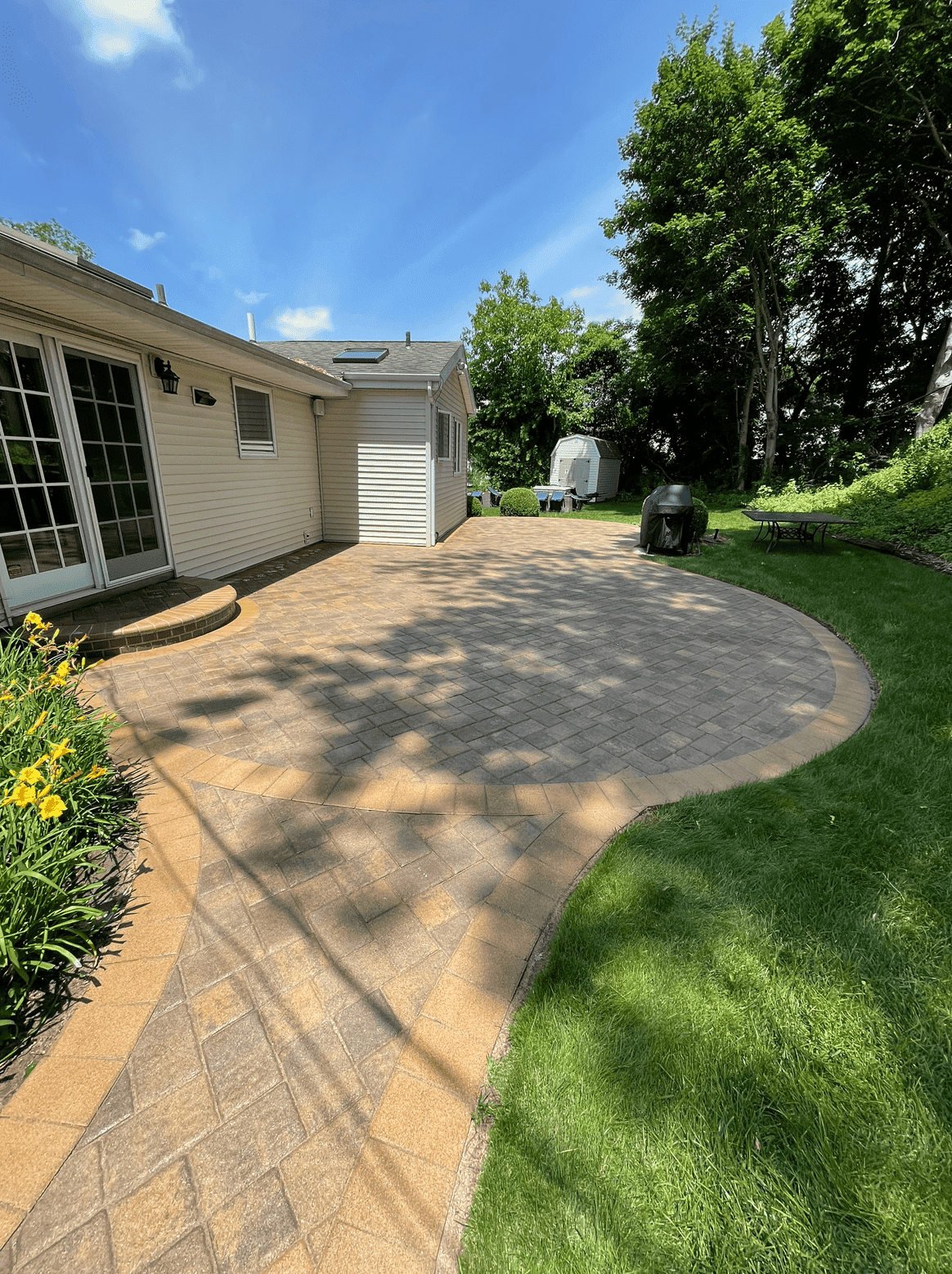
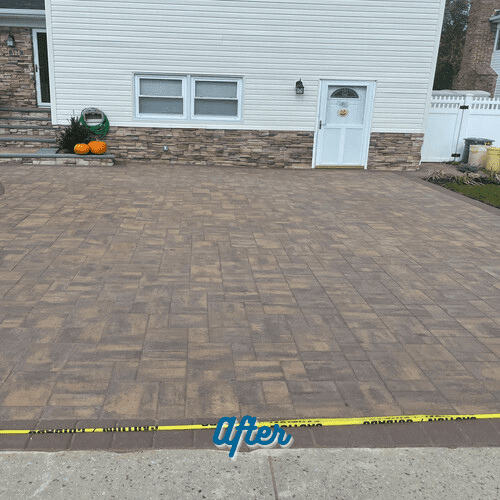
When the conversation moves beyond cleaning into actual restoration — repairing the base, removing and resetting damaged pavers, replacing deteriorated mortar, regrouting with polymeric sand, and sealing the finished surface — the price range expands considerably. Full brick restoration projects in Nassau County typically run between $8,000 and $35,000 given local labor rates and the condition of most properties in the area.
The scope of work is the biggest cost driver. A small brick stoop with minor mortar deterioration is a very different project from a 600-square-foot paver patio that has settled unevenly, lost its base integrity, and developed widespread joint erosion. Both are “restoration projects” in the general sense, but the labor hours, materials, and complexity are worlds apart.
What a complete restoration actually involves — at least the way we approach it — starts with a thorough assessment of the structure, not just the surface. If the base has failed, no amount of surface work is going to hold. From there, it means systematically removing damaged pavers, pulling out old base material, compacting, adding fresh base, re-laying the pavers, regrouting the entire surface with quality polymeric sand, and then cleaning and sealing the finished result. Skipping any of those steps produces a result that looks fine for a season and then starts deteriorating again.
Sealing alone runs $2 to $10 per square foot depending on the sealer type and the condition of the surface going in. We carry a range of high-quality sealers from reputable manufacturers — not one-size-fits-all products — because the right sealer for a concrete paver patio in North Wantagh is not necessarily the right sealer for a natural stone walkway in New Hyde Park. Using the wrong product, or sealing over a surface that hasn’t been properly dried and prepared, is one of the most common reasons homeowners end up calling us to redo work that was done just a few years prior.
Brick Repointing Cost: What Mortar Repair Runs in Nassau County
Repointing — the process of removing deteriorated mortar from the joints between bricks and replacing it with fresh mortar — is one of the most common and most misunderstood masonry services. The cost typically runs about $3 to $15 per square foot depending on the scope, the height of the work, and the complexity of the pattern.
For a standard patio or walkway repointing job in Nassau County, most homeowners are looking at somewhere in the $450 to $2,000 range for a 12-by-12 area. Larger surfaces, elevated work, or structures with non-standard brick sizes can push that number higher — sometimes by 50% or more when specialty materials or intricate patterns are involved.
How Do You Know If Your Brick Needs Repointing or Full Restoration?
This is the question most Nassau County homeowners are really asking when they start researching brick restoration costs. The honest answer is that you often can’t tell from a visual inspection alone — at least not a casual one. Mortar that looks intact from a distance can be soft, recessed, or failing at the joint depth in ways that only become apparent when you probe it.
The general rule of thumb is that mortar joints typically need repointing every 20 to 30 years. In Nassau County’s climate — with its freeze-thaw cycling through winter and persistent salt air exposure in coastal areas — that timeline can compress. Water infiltrates the joints, freezes, expands, and cracks the mortar from the inside. By the time you’re seeing visible gaps or crumbling, the process has usually been underway for a while.
Repointing addresses the joints. It’s the right call when the brick itself is structurally sound and the mortar is the primary issue. Full restoration is necessary when the base has failed, when significant settling or shifting has occurred, or when the damage is widespread enough that piecemeal repairs would just be a temporary fix. A good contractor will tell you honestly which one you need — and if someone is pushing full replacement when targeted restoration would do the job, that’s worth a second opinion.
One thing that’s worth knowing: quality repointing requires mortar that matches the existing material in both composition and color. Mismatched mortar is a tell-tale sign of rushed or inexperienced work, and it can actually cause damage to older brick by creating stress differentials in the joints. Getting it right means taking the time to analyze what’s there and match it properly — not just grabbing whatever’s available.
When properly executed, repointing lasts 20 to 40 years. That longevity is the whole point. Done right, it’s one of the better investments a Nassau County homeowner can make in the long-term integrity of their property.
Is Brick Restoration Worth It, or Is Replacement the Better Call?
This comes up constantly, and the answer is almost always the same: restoration wins on cost, and usually on quality too. A new paver patio installation runs $10 to $17 per square foot. Professional repointing runs $3 to $15 per square foot. Even a comprehensive restoration — cleaning, base repair, regrouting, and sealing — typically comes in well below what full replacement would cost for the same area.
The case for replacement is narrower than most people assume. If the brick itself is structurally compromised beyond repair, if the base has failed so completely that restoration would be building on a bad foundation, or if the homeowner simply wants a completely different look, then replacement makes sense. But for the vast majority of Nassau County properties where the brick is aging but structurally viable, restoration is the more cost-effective path — and the result, when done properly, is a surface that looks genuinely renewed and is protected against the next decade or more of Long Island weather.
There’s also a practical financial consideration worth raising. Comprehensive restoration projects — especially those running into the several-thousand-dollar range — don’t have to be paid all at once. We offer financing options specifically because we know that a $10,000 to $15,000 restoration is a real number for most families, and spreading that out makes the decision easier without compromising the quality of the work. It’s worth asking about when you’re getting quotes, because most contractors in this area don’t offer it.
One more thing that affects the cost equation: timing. Brick and mortar damage compounds. A joint that needs repointing today and gets ignored through another winter of freeze-thaw cycling is a more expensive repair next spring. The salt air on the south shore doesn’t take a season off. Waiting is rarely the cheaper option in the long run — and in a market like Nassau County, where property values are among the highest in the country, the cost of deferred maintenance tends to show up eventually.
Getting an Accurate Brick Restoration Estimate in Nassau County, NY
The price ranges on this page are a useful starting point, but the only number that actually matters is the one based on your specific surface, your specific damage, and your specific goals. Nassau County’s climate, the age of its housing stock, and the local labor market all factor into what a project actually costs here — and no online calculator is going to account for the condition of your base or the extent of your mortar deterioration.
What you’re really looking for is a contractor who will assess the structure honestly, explain what they find, and give you a clear picture of what the work involves before you agree to anything. That’s the standard you should hold any quote to.
If you’re in Nassau County and want a straightforward assessment of what your brick or paver surfaces actually need, we’ve been doing this work on Long Island for a long time. Reach out and we’ll take a look.
Article details:
- Published by:
- Paver Savers
- Published to:
- Last modified:
- October 27, 2026
Share:
Continue learning: