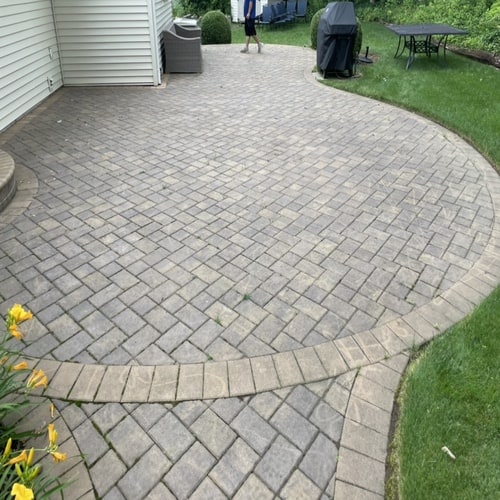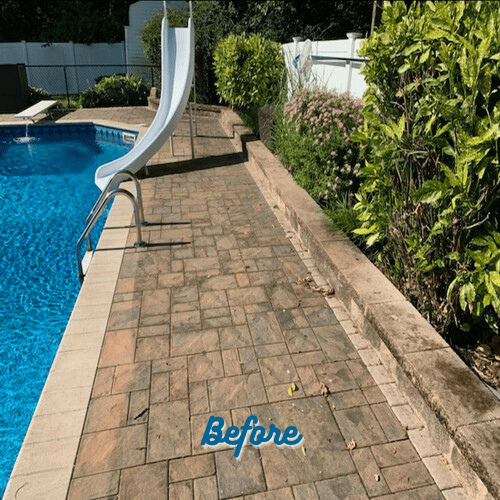
Essential Steps in Paver Restoration Process
Faded, weedy, or uneven pavers don't fix themselves. Here's what a real restoration process looks like — and why the details matter more than most people realize.
Share:

Summary:
If your pavers look nothing like they did when they were first installed, you’re not alone. Most Long Island homeowners notice the decline gradually — a little fading here, some weeds pushing through the joints, maybe a section that’s started to sink or shift. By the time it’s obvious, the damage has usually been building for a couple of seasons.
The good news is that restoration can bring most paver surfaces back to life without tearing anything out. But the process matters. Done right, the results last for years. Done wrong — or done cheaply — you’re back to square one before the next winter. Here’s what a proper paver restoration actually involves.
Understanding the Paver Restoration Process: What It Actually Involves
Paver restoration isn’t a single step — it’s a sequence, and each step depends on the one before it. It starts with a thorough assessment of the surface condition, the base, the joints, and the drainage. That last part matters more in Nassau County than most people expect. Clay-heavy soils don’t drain the way sandy or loam soils do, which means water sits longer, bases shift more, and pavers that look like a cleaning problem are sometimes a drainage problem underneath.
Once the assessment is done, the surface gets deep cleaned using professional equipment — not a consumer-grade pressure washer, but a commercial 20-inch rotary surface cleaner that covers the full surface evenly without etching or streaking. After that comes joint sand removal and replacement with polymeric sand, leveling any pavers that have shifted or sunk, and finally sealing with a professional-grade product matched to the specific material. That’s the full picture. Skip any of those steps and you’re not really restoring — you’re just delaying the same problems.
Why Nassau County's Freeze-Thaw Cycles Make Restoration More Urgent
Here’s something worth understanding about Long Island winters: Nassau and Suffolk counties don’t just get cold — they hover near freezing for extended stretches, which means the temperature crosses the freeze-thaw threshold repeatedly. We’re talking 30 to 40 freeze-thaw cycles in a single winter season. That number matters because water expands about 9% when it freezes. Every time moisture gets into an unprotected paver — through an open joint, a micro-crack, or a porous surface — that expansion works against the structure from the inside.
Over time, this is what causes pavers to crack, joints to open up, and edges to crumble. It’s not dramatic all at once. It’s cumulative. And unsealed pavers absorb significantly more moisture than sealed ones, which means the problem compounds with every season you wait.
The coastal geography of Nassau County adds another layer. Salt air from Long Island Sound to the north and the Atlantic Ocean to the south is corrosive to paver surfaces and sealers alike. Add in the road salt and ice melt that most homeowners use on driveways and walkways every winter, and you have a surface that’s under real chemical stress on top of the physical stress from freeze-thaw cycling. This is why restoration in Nassau County isn’t optional maintenance — it’s protective maintenance. Waiting until pavers look bad means the damage is already well underway.
Sealing creates the barrier that stops water infiltration before it starts. But the sealer has to be the right product for the material, applied in the right conditions. Temperature, humidity, and surface dryness all affect how a sealer bonds. That’s why weather-dependent scheduling isn’t just a scheduling preference — it’s a quality-control decision that determines whether the work holds up or fails within months.
Polymeric Sand and Leveling: The Steps Most Homeowners Don't Know to Ask About
Two parts of the restoration process get overlooked more than any others, and they’re both critical to how long the results last.
The first is polymeric sand. Standard joint sand washes out. Rain, pressure washing, foot traffic — it goes. And when it goes, the joints open up, weeds find their way in, and the structural stability of the paver surface starts to break down. Polymeric sand is different. It’s engineered to harden when it gets wet, binding the joints and creating a surface that weeds can’t penetrate and rain can’t erode. It also resists ant infiltration, which is a surprisingly common issue in Nassau County’s suburban neighborhoods. Without polymeric sand, a freshly sealed patio can look great in June and be full of weeds again by August.
The second is leveling. Nassau County’s clay soils shift with moisture — they expand when wet and contract when dry, which means the base beneath your pavers is never entirely static. Over time, this causes sections to sink, edges to heave, and surfaces to become uneven. Beyond looking bad, uneven pavers are a genuine trip hazard. Restoration that doesn’t address leveling is cosmetic at best. The right process involves lifting the affected pavers, re-compacting the base, correcting any drainage issues contributing to the movement, and resetting the pavers level before anything else happens.
These aren’t upsells. They’re part of what makes a restoration last. A company that cleans and seals without looking at the joints and the base is leaving the most important work undone.
Different Paver Types and What Restoration Looks Like for Each
Not all pavers are the same, and the restoration process isn’t either. The material determines which cleaning products are safe to use, which sealer is appropriate, how porous the surface is, and how vulnerable it is to freeze-thaw damage. Using the wrong product on the wrong material — a solvent-based sealer on a surface that needs water-based, for example — is one of the most common causes of white haze and sealer failure.
With nearly 50 years of combined experience across concrete, brick, natural stone, and porcelain pavers, we’ve worked with every material type common to Long Island. Understanding the differences isn’t just technical knowledge — it’s what separates a restoration that holds up from one that creates new problems.
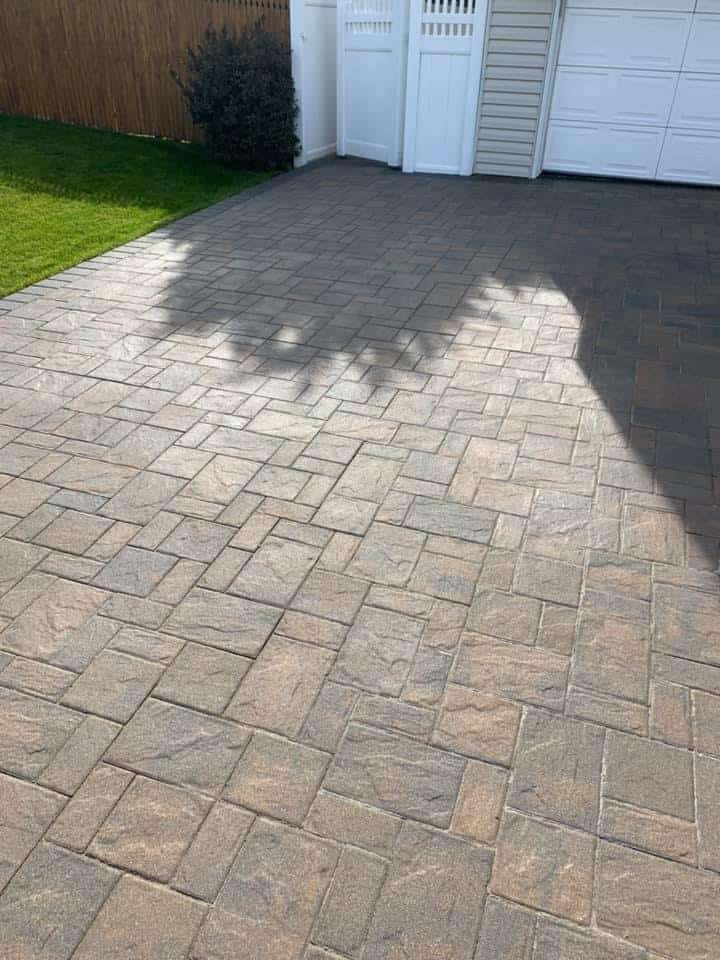
Concrete and Brick Paver Restoration: What Changes Between the Two
Concrete pavers are the most common material on Long Island driveways and patios, and they’re generally forgiving to work with — but they’re also highly porous, which means they absorb moisture readily and fade faster than denser materials. Unsealed concrete pavers can look washed out within seven years, eventually losing most of their original color. The restoration process for concrete typically involves deep cleaning to remove embedded dirt, algae, and efflorescence (the white mineral deposits that appear when water migrates through the surface), followed by polymeric sand installation and sealing with a UV-resistant product that restores and protects the color.
Brick paver restoration is a different conversation. Brick is a fired clay material, which makes it durable but also porous in a different way than concrete. It’s rated for temperatures down to about -20°C, but that rating assumes the brick is properly sealed and maintained — unsealed brick in Nassau County’s freeze-thaw conditions absorbs water and is vulnerable to spalling and surface cracking. Brick also tends to develop a specific kind of surface staining from iron oxidation, which requires a targeted cleaning approach rather than a generic pressure wash. The sealer selection for brick needs to account for the material’s natural texture and breathability — a film-forming sealer that traps moisture in brick can cause more damage than no sealer at all.
The key point with both materials is that the process has to match the material. What works on a concrete driveway in Levittown isn’t automatically the right approach for a brick walkway in Garden City. That’s not a minor distinction — it’s the difference between a restoration that looks great in year one and still looks great in year four, versus one that starts failing by the following spring.
Natural Stone Paver Restoration: Bluestone, Travertine, and Flagstone
Natural stone pavers — bluestone, travertine, flagstone, and similar materials — are common across Nassau County’s higher-end properties, particularly in Great Neck, Port Washington, Roslyn Heights, and similar communities where outdoor living spaces are built to last. They’re beautiful materials, and they can hold up for decades with proper care. But they’re also the materials most likely to be damaged by the wrong restoration approach.
Bluestone is a dense, durable stone that handles Long Island winters well, but it’s susceptible to surface flaking if moisture gets beneath a poorly applied sealer and freezes. The cleaning process for bluestone needs to avoid acidic products that can etch the surface, and the sealer needs to be specifically formulated for dense natural stone — not the same product used on concrete. Travertine is even more sensitive. It’s a calcium-based stone that reacts badly to acidic cleaners, which rules out a lot of standard paver cleaning products. It also has a naturally porous, textured surface that requires careful sealer selection to avoid trapping moisture or altering the appearance in ways the homeowner didn’t expect.
Flagstone varies more than any other category because it’s a broad term that covers several different stone types with different densities, porosities, and chemical compositions. Proper restoration starts with identifying exactly what you’re working with before any product touches the surface.
The common thread across all natural stone restoration is this: the margin for error is smaller than with concrete or brick, and the cost of getting it wrong is higher. These materials aren’t cheap to install, and they’re not easy to replace. Working with someone who has real experience across all of these materials — not just the most common ones — is worth the difference in price.
When to Schedule Paver Restoration in Nassau County
Timing matters more than most homeowners realize. Spring is the highest-demand window — after a winter of freeze-thaw cycles, the damage is visible and outdoor entertaining season is approaching. Fall is the second peak, and arguably the more strategic time to act: sealing before winter creates the protective barrier that prevents the next round of freeze-thaw damage before it starts. Once temperatures drop below 50°F consistently, sealing isn’t advisable, which makes fall the last window before another winter of unprotected exposure.
The full restoration process — assessment, cleaning, polymeric sand, leveling, and sealing — is typically completed in a single day for most residential projects. The surface needs 24 to 48 hours to dry before sealing, so the timeline from start to finished result is usually two to three days total, weather permitting.
If your pavers are overdue for restoration, or you’re not sure where they stand, the right move is a proper in-person assessment — not a phone quote. The condition of the base, the joints, and the drainage all affect what the project actually involves. We serve homeowners and businesses across Nassau County, from Valley Stream to Great Neck, and offer free estimates with clear, written breakdowns of exactly what the work includes.
Article details:
- Published by:
- Paver Savers
- Published to:
- Last modified:
- July 28, 2026
Share:
Continue learning: