Poolside Perfection: Why Your Long Island Pool Deck Needs Specialized Paver Sealing
Long Island pool decks face chlorine, salt, and moisture daily. Specialized paver sealing protects your investment while keeping surfaces safe for bare feet year-round.
Share:

Summary:
What Makes Pool Deck Sealing Different From Regular Paver Sealing
Not all paver sealing is created equal. What works for a front walkway fails around pools.
Pool decks sit in a chemical splash zone. Chlorinated water, saltwater systems, sunscreen, body oils, and constant moisture create conditions that standard sealers weren’t designed to handle. You need specialized products that resist chemical erosion while maintaining slip resistance for safety.
The barefoot factor changes everything. A driveway can have rough texture, but pool decks need grip without discomfort. That balance requires specific non-slip additives that work when surfaces are soaking wet, protecting families in Nassau County and Suffolk County from dangerous falls.
How Chlorine and Saltwater Damage Pavers Over Time
Chlorine keeps your pool clean, but it’s brutal on everything it touches. Every time someone exits the pool, chlorinated water drips onto your pavers. That water evaporates, leaving chemical residue that gradually breaks down the paver surface.
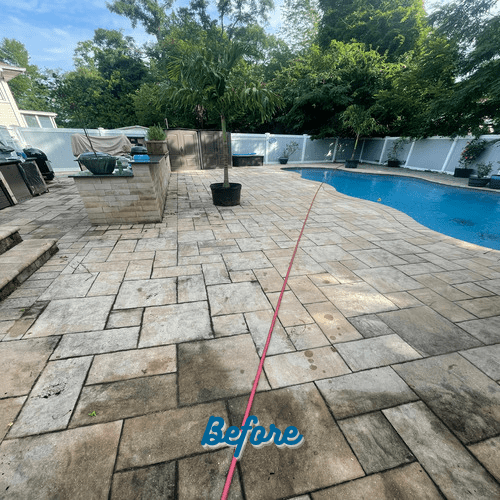
You’ll notice it first as discoloration. Pavers lose vibrant color and look washed out or spotty. Then the texture changes as chlorine eats away at the top layer, creating a rougher, more porous surface that traps dirt and stains faster.
Saltwater pools present an even bigger challenge. When saltwater evaporates, it leaves salt crystals that form inside the paver’s pores. As these crystals expand and contract with temperature changes, they create internal pressure leading to pitting, spalling, and that white powdery coating called efflorescence. The damage happens from the inside out.
Long Island’s coastal environment compounds the problem. You’re already dealing with salt air settling on surfaces, and if you have a saltwater pool, you’re getting hit twice. The combination accelerates deterioration in ways that inland properties never experience.
Without proper pool deck sealing, you’re looking at surface erosion, permanent staining, and structural weakening. Pavers become brittle and crack more easily. The joints break down faster. What started as cosmetic becomes a safety hazard and an expensive repair project.
Specialized sealers create a chemical-resistant barrier that repels chlorine and prevents salt penetration. They fill the pores in your pavers so chemicals can’t soak in and cause internal damage. This protection needs maintenance every 2-3 years as the sealer gradually wears down, but it’s far less expensive than replacing damaged pavers.
Why Slip-Resistant Pool Deck Sealer Is Non-Negotiable
Chlorine keeps your pool clean, but it’s brutal on everything it touches. Every time someone exits the pool, chlorinated water drips onto your pavers. That water evaporates, leaving chemical residue that gradually breaks down the paver surface.
You’ll notice it first as discoloration. Pavers lose vibrant color and look washed out or spotty. Then the texture changes as chlorine eats away at the top layer, creating a rougher, more porous surface that traps dirt and stains faster.
Saltwater pools present an even bigger challenge. When saltwater evaporates, it leaves salt crystals that form inside the paver’s pores. As these crystals expand and contract with temperature changes, they create internal pressure leading to pitting, spalling, and that white powdery coating called efflorescence. The damage happens from the inside out.
Long Island’s coastal environment compounds the problem. You’re already dealing with salt air settling on surfaces, and if you have a saltwater pool, you’re getting hit twice. The combination accelerates deterioration in ways that inland properties never experience.
Without proper pool deck sealing, you’re looking at surface erosion, permanent staining, and structural weakening. Pavers become brittle and crack more easily. The joints break down faster. What started as cosmetic becomes a safety hazard and an expensive repair project.
Specialized sealers create a chemical-resistant barrier that repels chlorine and prevents salt penetration. They fill the pores in your pavers so chemicals can’t soak in and cause internal damage. This protection needs maintenance every 2-3 years as the sealer gradually wears down, but it’s far less expensive than replacing damaged pavers.
Long Island's Climate Creates Unique Pool Deck Challenges
Long Island, NY isn’t Florida, and it’s not Arizona. The climate here hits pavers from multiple directions, and pool decks take the worst of it.
You’ve got coastal humidity that promotes algae growth and keeps surfaces damp longer. Salt air settles on everything, accelerating corrosion and chemical reactions. Winters bring freeze-thaw cycles that crack unsealed pavers when water seeps in and expands. Summers deliver intense UV exposure that fades colors and breaks down surface materials.
This combination is why pavers in Suffolk County and Nassau County need more frequent maintenance than in other regions. What works in drier or more temperate climates doesn’t hold up under Long Island conditions. Your pool deck needs protection designed for exactly these challenges.

Coastal Salt Air and Humidity Effects on Pool Pavers
Living near the coast means salt constantly settles on every outdoor surface. You notice it on your car, windows, and definitely on your pavers. This isn’t the same as having a saltwater pool—it’s environmental exposure affecting everyone in Nassau and Suffolk counties.
Salt is corrosive. It attracts moisture from the air, keeping surfaces damp even when it hasn’t rained. This constant dampness creates perfect conditions for algae, mold, and mildew growth. You’ll see it first in shaded areas or spots that don’t get direct sun to dry them out.
The humidity compounds everything. Long Island summers are humid, which means pavers stay wet longer after rain or pool splashing. That extended moisture exposure gives chemicals more time to penetrate the surface and cause damage. It also means organic growth happens faster and more aggressively than in drier climates.
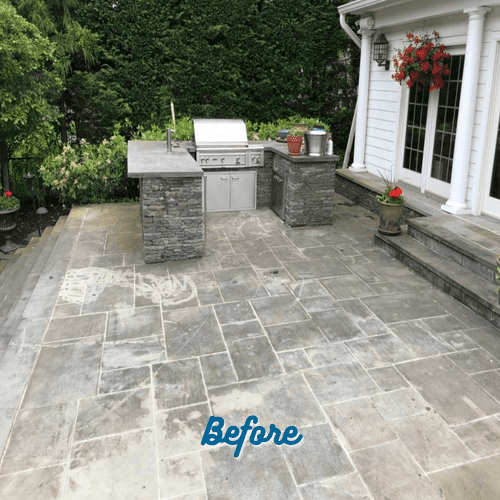
You might notice your pavers developing a greenish tint or dark spots in certain areas. That’s not dirt—it’s algae or mildew taking hold. Once it establishes itself, it spreads quickly and makes surfaces slippery. Regular cleaning helps, but pool deck sealing provides a barrier that makes it much harder for these organisms to attach and grow.
The salt-humidity combination also accelerates efflorescence, those white powdery deposits that appear on paver surfaces. This happens when salt draws moisture through the paver, dissolving minerals as it moves. When water evaporates at the surface, it leaves those minerals behind as white residue. It looks bad, and it indicates that moisture is moving through your pavers in ways that will eventually cause structural damage.
Metal elements around your pool—ladders, handrails, light fixtures—corrode faster in coastal environments. That corrosion can stain your pavers with rust marks that are incredibly difficult to remove. Sealing helps prevent these stains from penetrating the paver surface, making cleanup much easier when they do occur.
Equipment failure rates increase by about 40% in coastal areas due to salt air exposure. While that statistic refers to pool equipment, it illustrates how aggressive this environment is on materials. Your pavers face the same relentless exposure, day after day, season after season.
Professional paver sealing creates a protective barrier against both salt and moisture. It doesn’t make your pavers completely impervious, but it dramatically slows deterioration and makes routine maintenance far more effective. The sealer repels water and prevents salt from penetrating deeply into the paver material.
Freeze-Thaw Cycles and What They Do to Unsealed Pavers
Long Island winters might not be as brutal as upstate New York, but the freeze-thaw cycles do serious damage to pavers. The problem isn’t just cold temperatures—it’s the constant cycling between freezing and thawing that happens throughout winter and early spring.
Here’s what happens: Water seeps into the pores of unsealed pavers or into the joints between them. When temperatures drop below freezing, that water turns to ice and expands. Ice takes up about 9% more space than liquid water, creating tremendous internal pressure. This pressure causes cracks, chips, and spalling where the surface layer flakes off.
Then temperatures rise above freezing, the ice melts, and more water seeps into the newly created cracks. The next freeze expands those cracks further. This cycle repeats dozens of times over a winter, with each cycle making the damage worse.
Pool decks are especially vulnerable because they’re constantly exposed to moisture. Even if your pool is closed for winter, rain, snow, and humidity keep pavers damp. The area around the pool often has drainage issues that create standing water, giving freeze-thaw cycles plenty of moisture to work with.
You’ll notice the damage in spring. Pavers that looked fine in fall now have cracks, chips, or rough, flaking surfaces. The joints might have widened as pavers shifted. In severe cases, individual pavers become loose or sink as the base material underneath deteriorates from repeated freezing and thawing.
The damage isn’t always obvious at first. Small cracks might seem cosmetic, but they allow even more water penetration, accelerating the deterioration process. What starts as minor surface damage can progress to structural failure requiring complete paver replacement.
Pool patio restoration often becomes necessary after just a few winters without proper protection. Sealing prevents this damage by making pavers water-resistant. The sealer fills the pores in the material so water can’t penetrate deeply. When water can’t get inside the paver, it can’t freeze and expand to cause damage. This protection is especially critical in the joints between pavers, where water naturally collects.
Polymeric sand in the joints adds another layer of protection. Unlike regular sand, polymeric sand hardens when activated with water, creating a semi-rigid bond that prevents water infiltration and keeps pavers locked in place. This prevents the shifting and settling that often happens after freeze-thaw cycles.
The timing of sealing matters too. Pavers should be sealed when temperatures are consistently above 50°F and rain isn’t forecast for at least 24-48 hours. This gives the sealer time to cure properly before exposure to moisture or temperature extremes. Many Long Island homeowners seal in late spring or early fall when conditions are ideal.
We understand these climate challenges and use products specifically formulated for freeze-thaw protection. We’ll also inspect your drainage to ensure water isn’t pooling around your pool deck, which would undermine even the best sealing job.
Protecting Your Long Island Pool Deck Investment
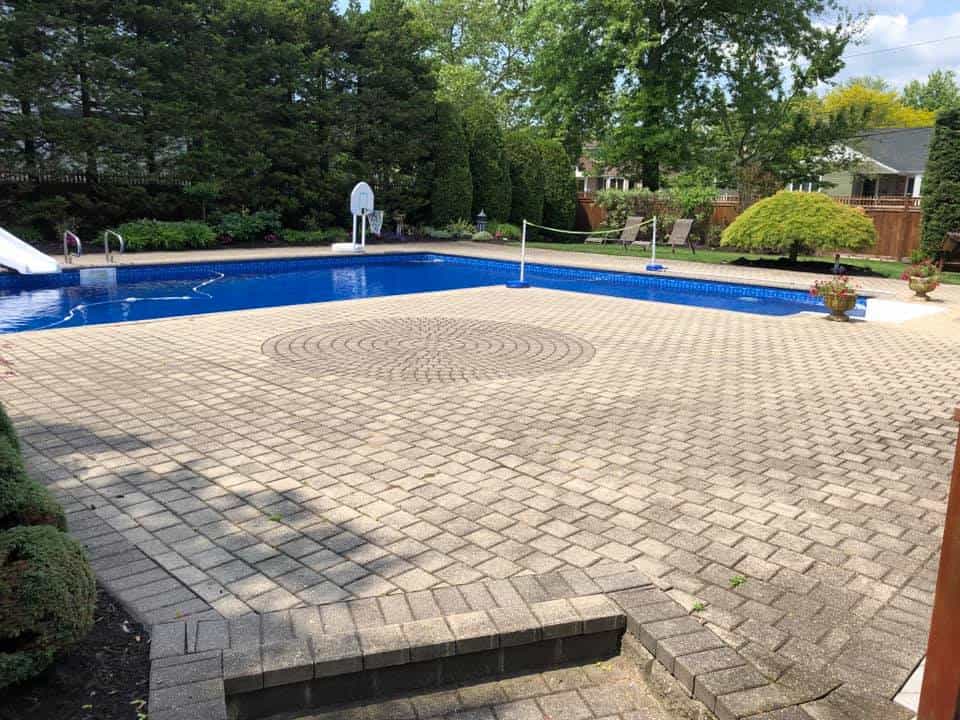
Your pool deck represents a significant investment in your property and your family’s enjoyment. Protecting it isn’t optional—it’s essential maintenance that prevents expensive repairs and safety hazards.
Specialized pool deck paver sealing addresses the unique challenges your pavers face: chemical exposure from chlorine or saltwater, constant moisture, Long Island’s coastal climate, and the need for slip-resistant surfaces safe for bare feet. Standard sealing products can’t handle this combination of stresses.
The right sealing approach includes thorough cleaning to remove existing damage and buildup, proper joint stabilization with polymeric sand, and application of chemical-resistant, slip-resistant sealers designed specifically for pool environments in Nassau County and Suffolk County. This work should be repeated every 2-3 years to maintain protection as the sealer gradually wears down.
We bring nearly 50 years of combined experience protecting pool decks across Long Island, NY. Our family-owned team understands exactly what this coastal climate does to pavers and how to prevent that damage before it becomes costly.
Article details:
- Published by:
- Paver Savers
- Published to:
- Last modified:
- July 10, 2026
Share:
Continue learning: