Pressure Washing Methods for Every Surface Type
The wrong pressure washing method can damage your pavers, void your sealer, or leave you with worse results than when you started. Here's how to get it right.
Share:
Summary:
Your pavers looked great when they were installed. Now they’re stained, faded, and growing things between the joints that definitely weren’t part of the plan. You’ve thought about renting a pressure washer, or maybe you’ve already hired someone who left streaks and blew out half the joint sand. Either way, you’re here because you want the real answer — not a sales pitch.
This page covers how pressure washing actually works, which method is right for which surface, what soft washing is and when it matters, and what Nassau County homeowners in particular should know before anything gets cleaned. By the end, you’ll know exactly what to ask for — and what to watch out for.
Soft Wash vs. High Pressure Cleaning: Why the Method Matters More Than the Machine
Most people think pressure washing is just about cranking up the PSI and blasting away whatever’s on the surface. That’s not how it works — and that mindset is exactly how pavers get damaged, joint sand gets destroyed, and natural stone ends up etched and dull.
There are two fundamentally different approaches to exterior surface cleaning: high pressure cleaning and soft washing. Both have their place. Using the wrong one on the wrong surface is where things go sideways. Understanding the difference is the single most important thing you can know before any cleaning project starts.
What Is Soft Washing — and When Should You Use It?
Soft washing uses low pressure — typically under 500 PSI — combined with biodegradable cleaning solutions to break down and remove organic growth like algae, mold, mildew, lichen, and moss. The chemistry does the heavy lifting. The water rinses it away. There’s no mechanical scrubbing force involved, which is exactly why it’s the right call for surfaces that can’t handle aggressive pressure.
Roofs are the clearest example. Pressure washing an asphalt shingle roof destroys the protective granules, voids manufacturer warranties, and can force water under the shingles — causing damage that isn’t immediately visible but absolutely shows up later. Soft wash cleaning removes the same biological growth without any of that risk. It’s also the correct method for painted wood, vinyl siding, stucco, and certain types of natural stone that are prone to surface erosion under high pressure.
Where soft washing really earns its place on Long Island is in Nassau County’s shaded, moisture-heavy environments. Communities like Oyster Bay, Manhasset, and Roslyn have mature tree canopies that keep large sections of patios and walkways in near-constant shade. That shade creates ideal conditions for algae and moss growth — the kind that looks like it’s permanently embedded in the surface. We remove it completely without touching the integrity of the stone or paver underneath.
It’s also worth noting that soft wash cleaning is not a lesser service — it’s a more targeted one. A company that only offers high-pressure cleaning and applies it to everything is not demonstrating expertise. It’s demonstrating a one-size-fits-all approach that doesn’t account for what different surfaces actually need.
Soft Wash Power Washing vs. High Pressure: How We Decide
The decision between soft wash power washing and high-pressure methods comes down to two things: the material you’re cleaning and the type of contamination you’re dealing with.
High-pressure cleaning — typically in the range of 1,500 to 3,500 PSI for most residential surfaces — is appropriate for durable, dense materials like concrete pavers, brick, and poured concrete flatwork. The mechanical force lifts embedded dirt, oil stains, and ground-in grime that chemical solutions alone won’t fully remove. When it’s applied correctly, with the right nozzle angle, the right distance from the surface, and the right equipment, it’s highly effective and completely safe.
The critical variable is equipment. A consumer-grade pressure washer from the hardware store might hit 2,000 PSI, but it lacks the GPM — gallons per minute — that actually dislodges embedded contamination. PSI measures force. GPM measures volume. You need both working together. More importantly, consumer equipment almost never includes a commercial surface cleaner — the rotating, flat-head attachment that covers a wide, even path across the surface. Without it, you’re cleaning with a wand, which creates uneven pressure patterns that leave streaks and “tiger stripes” across driveways and patios. We use a 20-inch commercial surface cleaner on every job for exactly this reason.
The other variable we account for is joint sand. Paver joints are filled with either regular sand or polymeric sand, and both can be partially or fully destroyed by a wand held too close at too high a pressure. Once joint sand is gone, weeds take over, ants move in, and the structural stability of the paver field starts to degrade. Knowing how to clean aggressively enough to get the surface genuinely clean — without blowing out the joints — is a skill that comes from experience, not from reading a how-to guide.
Types of Paving Stones and How Each One Gets Cleaned
Not all pavers respond to cleaning the same way. Concrete pavers, brick, bluestone, travertine, and flagstone each have different densities, surface textures, and tolerances for pressure and chemical exposure. Treating them all the same is one of the most common mistakes made by general exterior cleaning companies that haven’t spent years specifically working with hardscape materials.
Here’s how we approach the most common paver types for driveways, patios, pool surrounds, and walkways across Nassau County.
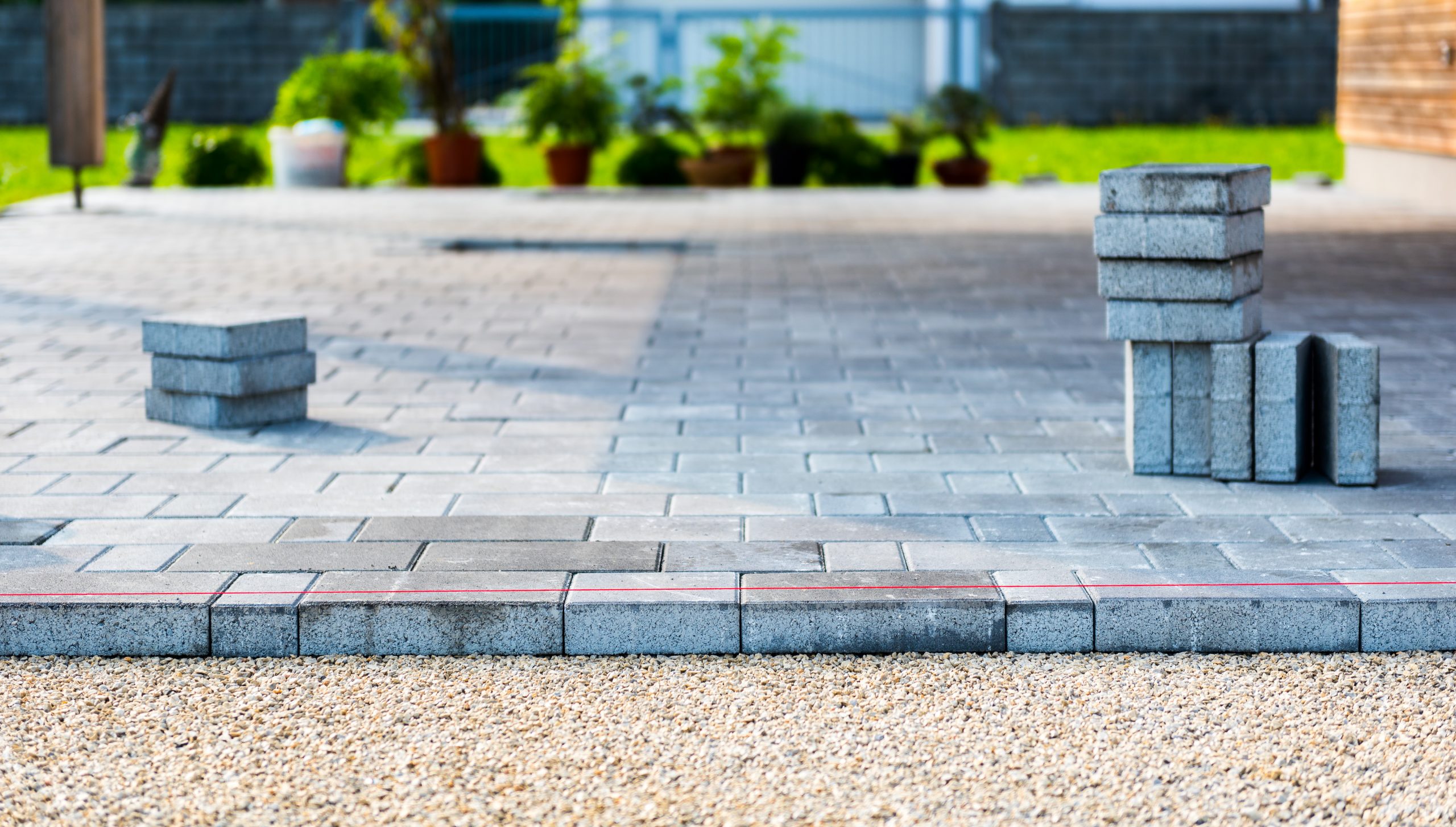
Cleaning Concrete Pavers: The Most Common Surface in Nassau County
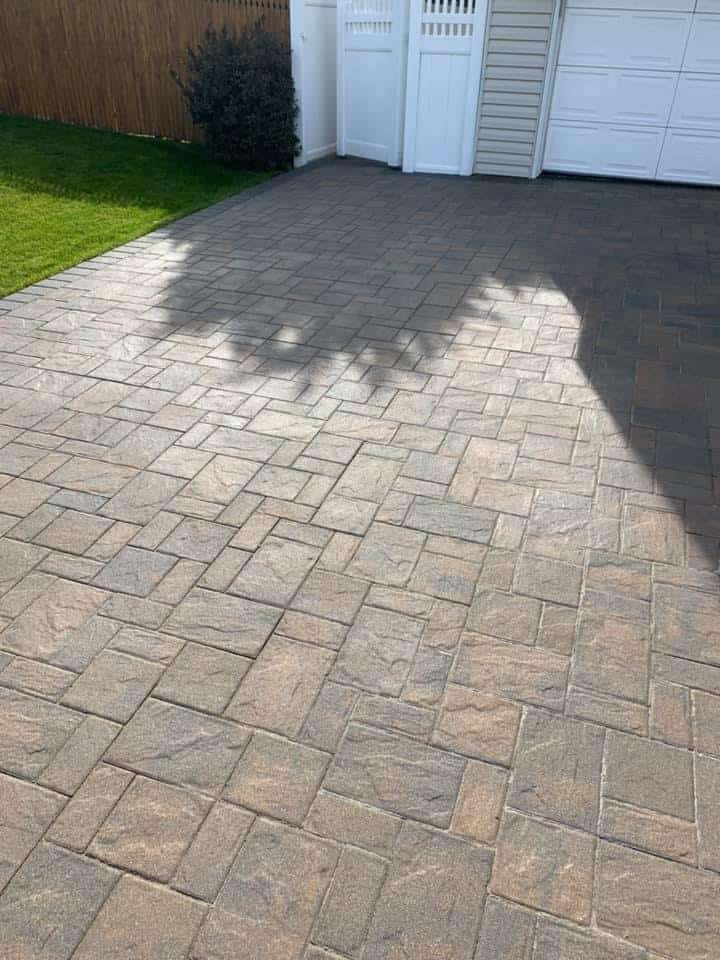
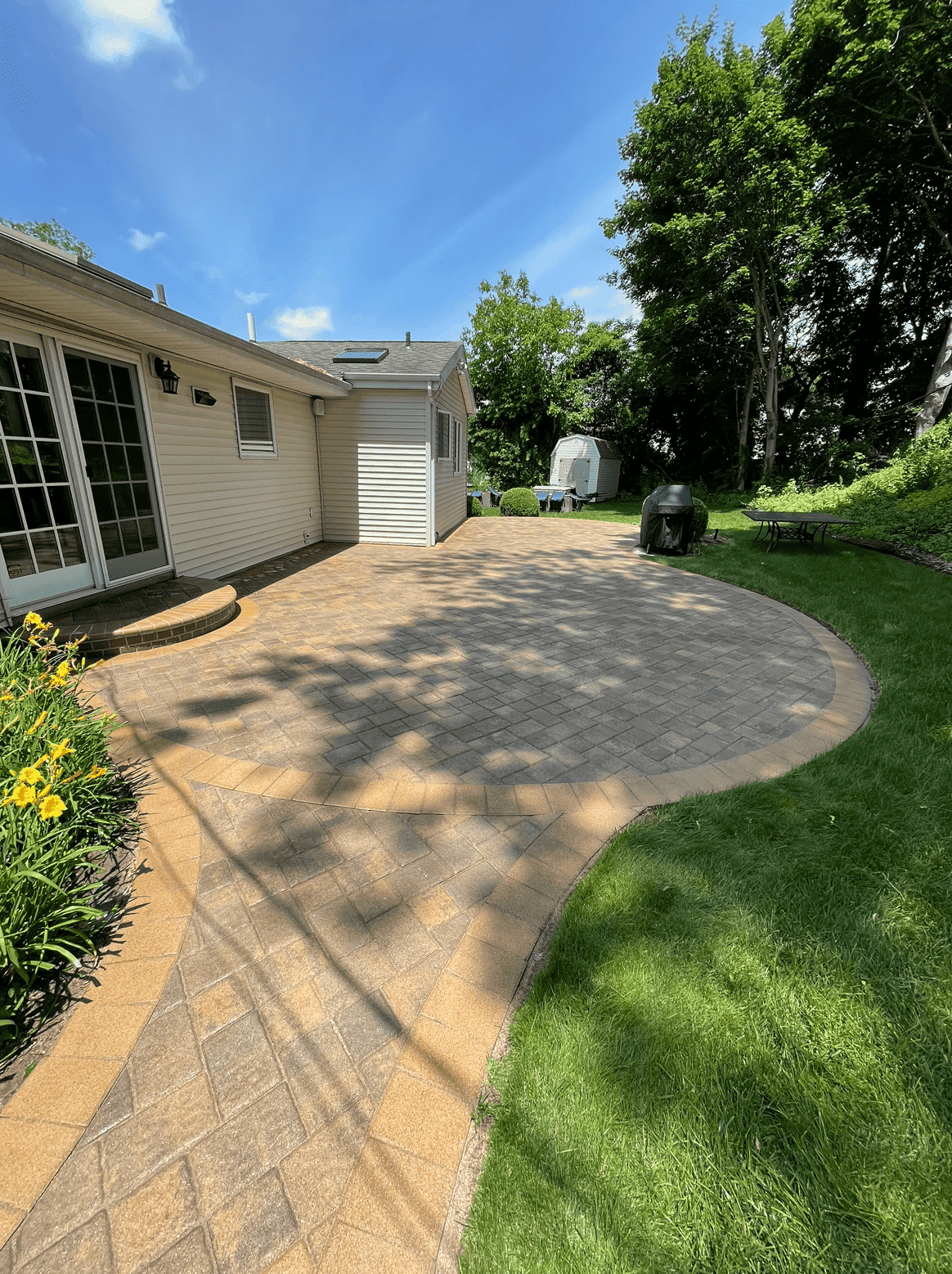
Concrete pavers are by far the most prevalent hardscape material in Nassau County. Drive through Massapequa Park, Plainview, Syosset, or Wantagh and you’ll see them everywhere — driveways, front walkways, pool decks, and patio surfaces. They’re durable, versatile, and available in dozens of colors and profiles, which is why builders and homeowners have relied on them for decades.
They’re also porous. That porosity is what makes them susceptible to oil staining, salt damage, and biological growth — and it’s what makes cleaning them properly a bit more involved than hosing down a concrete slab.
Effective concrete paver cleaning starts with pre-treatment. Stubborn stains — motor oil from a driveway, rust from outdoor furniture, organic staining from leaves and debris — need to be treated with appropriate cleaning solutions before pressure is ever applied. Skipping this step and going straight to pressure means you’re mechanically spreading the stain rather than lifting it. Once pre-treatment has had time to work, we clean the surface with a commercial surface cleaner at calibrated pressure, then thoroughly rinse it.
For Nassau County homeowners specifically, road salt and de-icing chemicals are a major contributor to concrete paver degradation. Those chemicals are tracked from the street onto driveways and front walks all winter long. Over time, they cause surface pitting, accelerate color fading, and break down the polymeric sand in the joints. Getting a thorough professional cleaning in early spring — after the last freeze and before outdoor season begins — removes that winter residue before it does permanent damage.
Cleaning Stone Pavers: Bluestone, Travertine, and Natural Flagstone
Natural stone is where the stakes get higher. Bluestone, travertine, and flagstone are all softer and more surface-sensitive than concrete pavers, and they require a noticeably different approach. Too much pressure and you’ll etch the surface, open up the pores, or — in the case of travertine — begin breaking down the cellular structure of the stone itself.
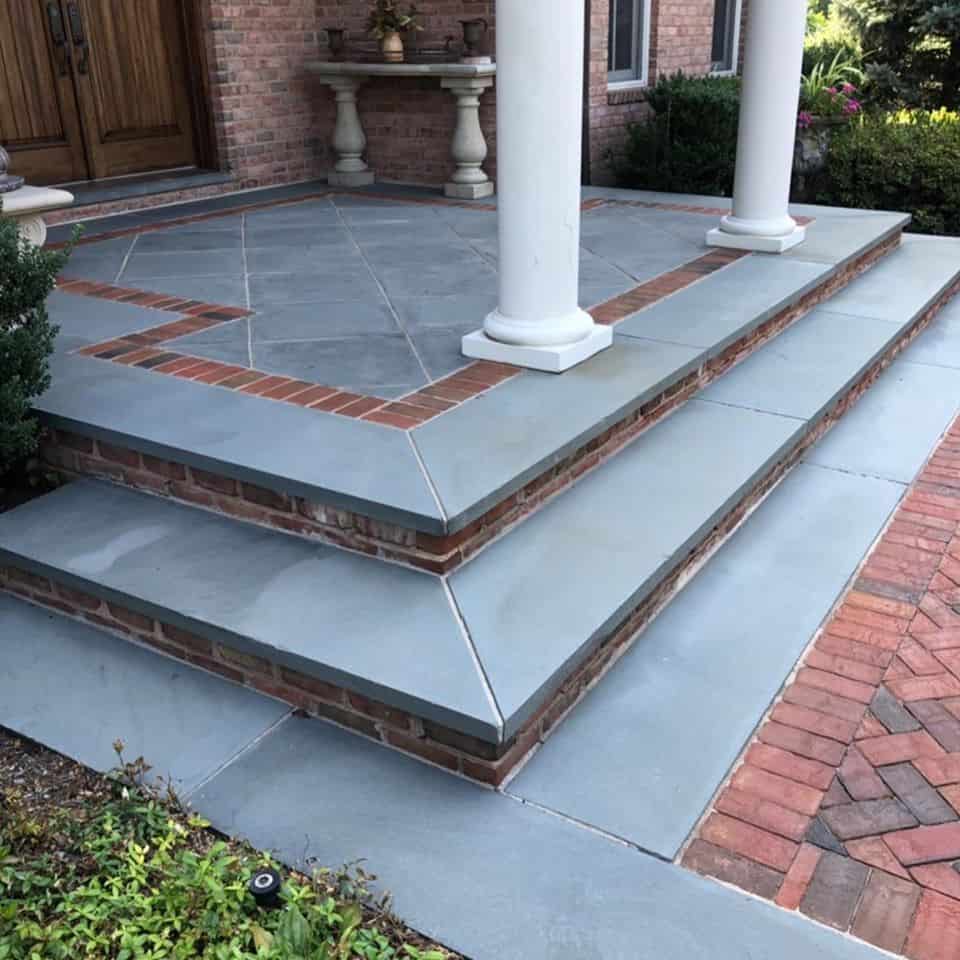
Bluestone is extremely common in Nassau County, particularly in older, established neighborhoods in communities like Garden City, Great Neck, and Port Washington. It’s a beautiful material with a natural, layered surface that looks great when it’s clean and properly sealed. It also absorbs moisture readily, which means algae and moss growth can be significant in shaded areas. The correct cleaning approach uses lower pressure and targeted pre-treatment, with careful attention to rinsing so cleaning solutions don’t linger in the stone’s surface.
Travertine — popular around pool decks and outdoor living areas in higher-end Nassau County homes — has a naturally pitted surface that traps dirt and organic material. Cleaning it requires patience and the right chemistry. High-pressure cleaning on travertine will widen those natural pits and permanently alter the appearance of the stone. Soft wash cleaning or very low-pressure cleaning combined with appropriate stone-safe solutions is the correct method.
Flagstone patios present their own challenge because the surface is often irregular — varying thicknesses, different stone types within the same installation, and wide joints that can hold significant organic growth. Cleaning paving slabs of this type requires adjusting technique across the surface rather than applying a single uniform approach.
The common thread across all natural stone: if you’re not sure what you’re working with, don’t guess. The cost of getting it wrong — etched stone, permanent discoloration, or structural damage — is far higher than the cost of hiring someone who knows exactly what they’re doing.
Pressure Washing and Paver Sealing: Why Cleaning Is Only Half the Job
Cleaning gets your surface back to a baseline. Sealing is what protects it from getting back to where it was. In Nassau County’s climate — coastal salt air, hard winters with repeated freeze-thaw cycles, humid summers that accelerate biological growth — unsealed pavers will re-contaminate within a single season and begin deteriorating structurally over time.
Our process always follows the same sequence: thorough cleaning, complete drying, then sealing with high-quality product selected for the specific surface material and the finish you want. Matte, satin, wet-look — the options are there. What’s not optional is the order. Sealing over a dirty or damp surface traps contaminants underneath, causes premature failure, and can leave you with bubbling or discoloration that requires stripping and starting over.
If your pavers haven’t been professionally cleaned and sealed in the last two to three years — or ever — that’s where to start. We serve homeowners and commercial properties across Nassau County, and we’re happy to walk you through exactly what your surface needs before any work begins.
—
**Frequently Asked Questions**
**What’s the difference between pressure washing, power washing, and jet washing services?** Pressure washing uses cold water at high pressure. Power washing uses heated water, which makes it more effective for heavy grease and commercial-grade grime. Jet washing services are largely a British term for the same process Americans call pressure washing — they refer to the same basic method. For most residential paver cleaning in Nassau County, cold-water pressure washing with the right equipment and technique gets the job done well.
**What is the average pressure washing cost for a driveway in Nassau County?** Costs vary significantly based on property size and condition. Nassau County properties tend to be larger and more complex than national averages, and driveways in communities like Garden City or Great Neck often require different approaches than those in other areas. The exact cost depends on the size of the surface, the material, the condition it’s in, and whether sealing is included. We don’t publish flat-rate pricing because a driveway in Levittown and a pool deck in Old Westbury are completely different jobs. We’re happy to take a look and give you a straightforward quote.
**What’s the best way to clean pavers without a pressure washer?** For light maintenance between professional cleanings, a stiff-bristle brush, warm water, and a paver-safe cleaning solution can handle surface-level dirt and minor staining. For anything deeper — oil stains, algae growth, efflorescence (the white mineral deposits common on Long Island pavers), or joints full of weeds and organic material — manual cleaning won’t get you to a truly clean surface. It also won’t address the underlying issue of failed or absent joint sand. Manual cleaning is fine for upkeep. It’s not a substitute for a professional cleaning when your pavers actually need restoration.
**Can you pressure wash a roof?** No — and this is worth saying clearly. Pressure washing an asphalt shingle roof strips the protective granules from the surface, voids most manufacturer warranties, and can force water under the shingles. Soft wash cleaning is the only correct method for roof cleaning. It removes algae, moss, and biological staining safely and effectively without any of the damage that pressure causes. If someone quotes you a pressure wash for your roof, that’s a reason to look elsewhere.
**How often should Nassau County homeowners clean and seal their pavers?** For most Long Island properties, professional cleaning every two to three years is the general guideline — though properties near the South Shore (Long Beach, Lido Beach, Atlantic Beach) that face direct salt air exposure, or driveways that take heavy road salt exposure each winter, may benefit from more frequent attention. Sealing extends the life of the cleaning and protects the surface between service visits. If your pavers have never been sealed, or if the sealer is visibly worn or peeling, that’s the more urgent priority regardless of when they were last cleaned.
Article details:
- Published by:
- Paver Savers
- Published to:
- Last modified:
- June 12, 2026
Share:
Continue learning: