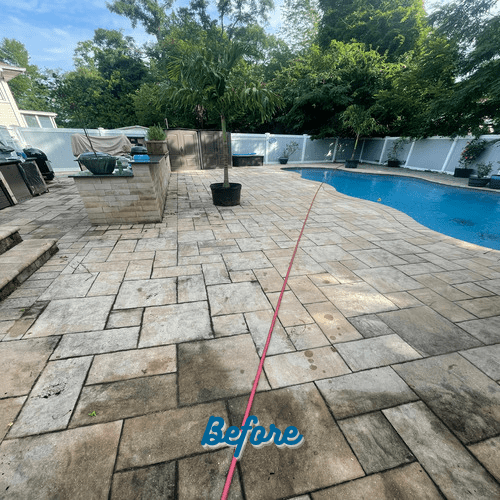
Concrete Paver Cleaning Methods That Actually Work
The method matters as much as the effort. Here's how to match the right cleaning approach to your concrete or stone pavers before you cause more damage than you fix.
Share:
Summary:
If your pavers are looking rough — green with algae, stained from winter salt, or just dull and tired after a few Long Island winters — you’ve probably already Googled “how to clean concrete pavers” and gotten a dozen different answers. Some say pressure wash it. Some say soft wash. Some say vinegar, bleach, or a rented machine from Home Depot. It’s a lot, and most of it skips the part that actually matters: the method has to match the material and the problem. Get that wrong and you can do real damage. Get it right and pavers that look like they’re ready for the dumpster can look like they were just installed. Here’s how to think through it.
Soft Wash Cleaning: When Low Pressure Does More Than High Pressure Ever Could
Soft washing uses low pressure — typically well under 500 PSI — combined with cleaning solutions designed to break down and kill organic growth at the source. It’s not just a gentler rinse. The chemistry is doing most of the work, penetrating into the paver surface to eliminate the algae, moss, and mildew that high-pressure water alone can’t reach.
For Nassau County homeowners, this matters more than it might in drier climates. Our region’s humidity, mature tree canopy, and coastal air create ideal conditions for organic growth — especially on shaded patios, north-facing walkways, and pool surrounds that stay damp. Soft washing treats the root cause rather than just blasting the surface, which means the results last significantly longer.
Cleaning Concrete Pavers with Soft Wash: What the Process Actually Involves
The process starts before any water touches your pavers. We assess the surface — identifying what type of growth or staining is present and what the paver material can tolerate — then apply a cleaning solution matched to that specific situation. For organic growth like algae and moss, that typically means a biocidal solution that kills the growth rather than just dislodging it. For general grime and surface buildup, a surfactant-based cleaner loosens the debris so it can be rinsed cleanly without needing aggressive pressure.
After the solution has had time to work, the surface gets a thorough rinse at controlled, low pressure. The goal is to remove everything the chemistry broke down without disturbing the joint sand or stressing the paver face. This is where technique matters — a careless rinse at the wrong angle can undo the careful work that came before it.
What most homeowners don’t realize is that soft washing is often the right first move even when the pavers look like they need something stronger. If algae has been growing on a patio for two or three seasons, it’s embedded. Hitting it with a high-pressure wand might clear the surface visually, but the spores remain and regrowth happens fast — usually within a season. Soft washing eliminates that cycle.
In Nassau County, where summers are humid and pavers near trees or pools can develop visible growth within months of cleaning, this distinction is genuinely important. A soft wash done correctly will keep pavers cleaner for longer, which means fewer cleanings over time and a surface that holds its appearance between professional visits.
When Is Soft Washing Not Enough for Concrete Pavers?
Soft washing handles organic growth exceptionally well, but it has limits. Oil stains from a car parked on a driveway paver, rust spots from metal patio furniture or an irrigation system, and efflorescence — that white chalky powder that migrates to the surface of concrete pavers — all require different chemistry and, in some cases, a more targeted mechanical approach.
Efflorescence is one of the most common complaints we hear from Nassau County homeowners, and it’s also one of the most misunderstood. It’s not dirt. It’s calcium and other minerals that were already inside the concrete, pulled to the surface when moisture moves through the paver during wet-dry cycles. You can’t soft wash it away because it’s not organic — it requires a specific efflorescence cleaner that dissolves the mineral deposit without damaging the paver face or the sealer beneath it.
Oil stains are similar. A degreasing alkaline cleaner applied with dwell time will break down the oil in a way that low-pressure water alone won’t. Skipping the right chemistry and just spraying harder doesn’t work — it spreads the stain and drives it deeper into the paver’s pores.
Most real-world paver cleaning jobs involve more than one approach. Organic growth on the surface, efflorescence along the edges, an oil stain near the garage — these all coexist on the same driveway. A professional assessment before any cleaning begins allows the right treatment to be applied to the right problem, rather than applying one method to everything and hoping for the best.
High Pressure Cleaning: What It Does Well and Where It Can Go Wrong
High-pressure cleaning — typically in the 1,000 to 1,500 PSI range for concrete pavers — is effective for removing stubborn surface grime, embedded dirt, and buildup that soft washing alone won’t lift. Used correctly, it’s a core part of professional paver cleaning. Used incorrectly, it’s one of the fastest ways to damage pavers that took years and real money to install.
The single most important variable isn’t the pressure itself — it’s the equipment and technique. A standard pressure washer wand, even at the right PSI, creates uneven cleaning patterns and directs concentrated force directly into joint lines, blasting out the sand that holds your pavers in place. A 20-inch rotary surface cleaner distributes pressure evenly across the surface, producing a consistent clean without the tiger-stripe effect and without destroying joint integrity.
What PSI Is Safe for Concrete Pavers — and What Happens When You Go Too High
Most concrete pavers can handle pressure in the 1,000 to 1,500 PSI range without surface damage, provided the nozzle angle and distance are correct. Industry guidance consistently points to a 40-degree nozzle as the safe standard — anything more aggressive and you’re risking surface etching, especially on older or softer concrete pavers that have already been through years of Long Island freeze-thaw cycles.
The freeze-thaw issue is worth understanding. When water gets into the pores of an unsealed paver and freezes, it expands and creates micro-fractures in the concrete. Over several winters, those fractures accumulate. A paver that looks solid from the outside may have a surface layer that’s more fragile than it appears — and hitting it with 2,500 PSI from a consumer rental machine can accelerate deterioration significantly.
This is one of the reasons why professional cleaning produces better results than most DIY attempts, even when the homeowner is careful and well-intentioned. We read the surface before choosing pressure settings. We’re looking at the paver’s age, condition, material density, and current seal status. That assessment takes about two minutes and changes the entire approach. A rented machine has one setting: whatever you point it at.
There’s also the joint sand issue. Most homeowners who’ve tried pressure washing their own pavers have noticed the sand between the joints disappearing. That’s not a minor cosmetic problem — joint sand stabilizes the paver structure. Once it’s gone, pavers shift, edges crack, and weeds move in. Restoring it requires polymeric sand, which hardens on contact with water and locks the joints back into place. It’s a straightforward step, but it’s one that almost never gets done in a DIY cleaning job because most people don’t know it’s necessary until the damage is already visible.
How We Approach Natural Stone vs. Concrete Paver Cleaning Differently
For natural stone, pressure comes down — typically in the 500 to 1,200 PSI range depending on the stone’s hardness and condition — and chemical selection becomes the most critical variable. pH-neutral cleaners are the standard for general cleaning on bluestone and travertine. They lift grime and organic deposits without reacting with the stone’s mineral composition. For more stubborn staining, a specialist cleaner matched to the specific stone type is used rather than a general-purpose product.
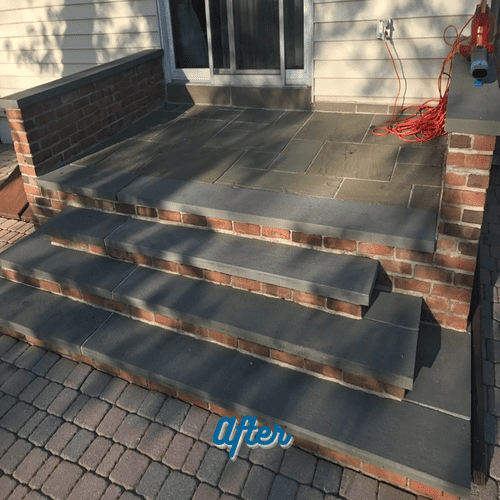
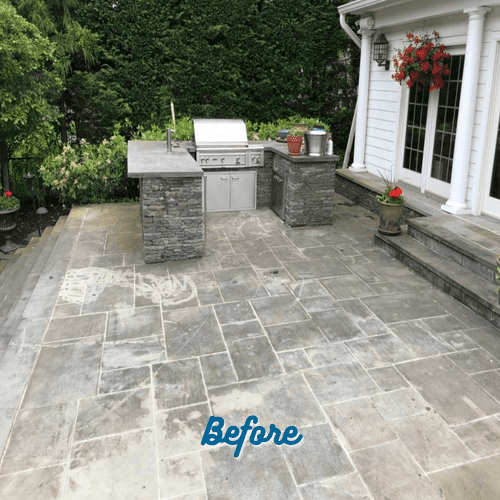
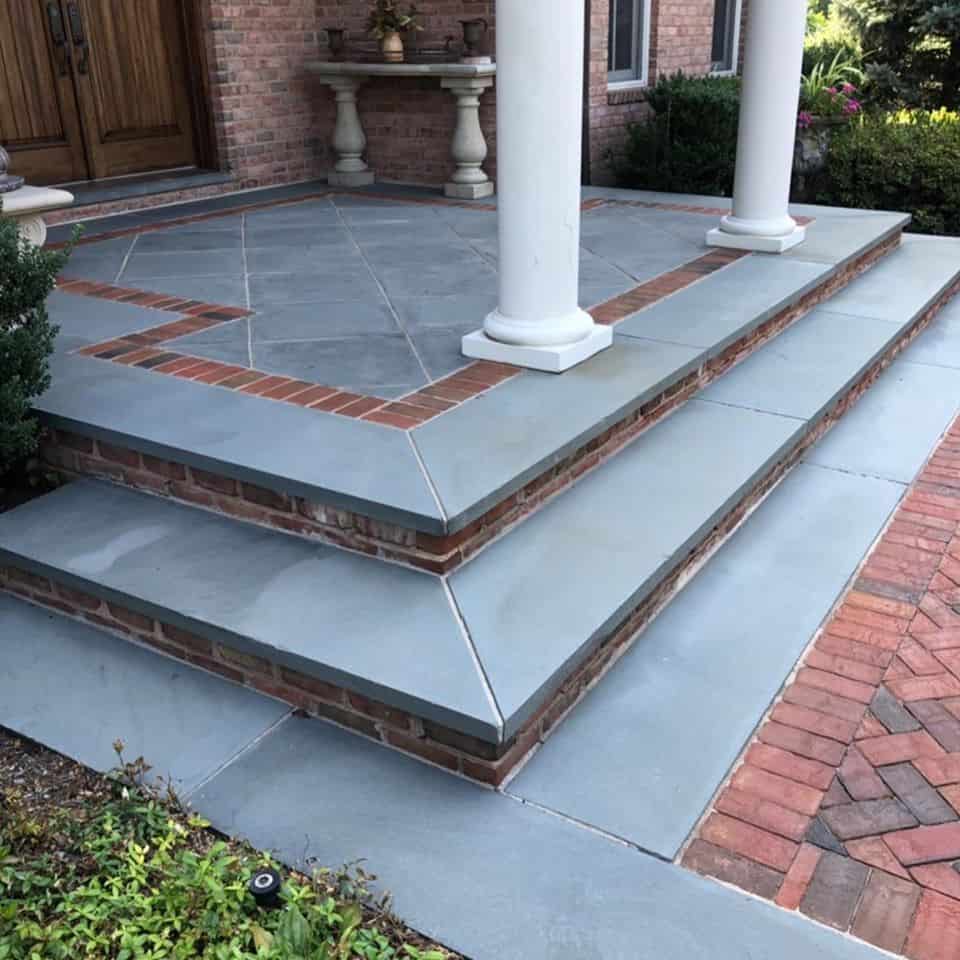
Bluestone in particular is something we see a lot of across Nassau County — on pool surrounds in Merrick and Oceanside, on front walkways in Port Washington and Plainview, on patios throughout East Meadow and Garden City. It’s beautiful material, but it shows wear and organic staining quickly, especially in shaded settings. The cleaning approach has to be deliberate. Rushed or overly aggressive cleaning on bluestone doesn’t just leave it looking worse — it removes the surface texture that makes the stone slip-resistant, which is a real safety concern around a pool deck.
Porcelain pavers are on the opposite end of the spectrum. Dense and non-porous, they can tolerate higher pressure without surface damage, and they’re less susceptible to staining and organic growth than either concrete or natural stone. The cleaning process is generally more straightforward, though joint care still applies.
The paver material has to drive the cleaning decision, not the other way around. Walking onto a job with one method and applying it to everything is how pavers get damaged. A proper assessment — material type, condition, stain type, joint status — takes a few minutes and changes everything about how the job gets done.
When to Call a Professional Paver Cleaning Company in Nassau County, NY
If your pavers are dealing with more than light surface dust — if there’s algae that keeps coming back, efflorescence you can’t identify, joint sand that’s disappearing, or stains that haven’t responded to anything you’ve tried — professional cleaning is almost always the more cost-effective path. Replacement runs $15 or more per square foot. A proper clean, re-sand, and seal extends the life of your pavers by years and, in most cases, makes them look better than they have in a decade.
Long Island’s climate makes this more urgent than it might be elsewhere. The combination of salt air, high humidity, heavy winters, and road salt means Nassau County pavers take a harder beating than pavers in drier or milder regions. We understand what your hardscaping is up against.
If you’re ready to stop guessing at methods and want someone who knows exactly what your pavers need, we’ve been doing this work across Nassau and Suffolk Counties for years. Reach out and we’ll take a look.
Article details:
- Published by:
- Paver Savers
- Published to:
- Last modified:
- July 7, 2026
Share:
Continue learning: