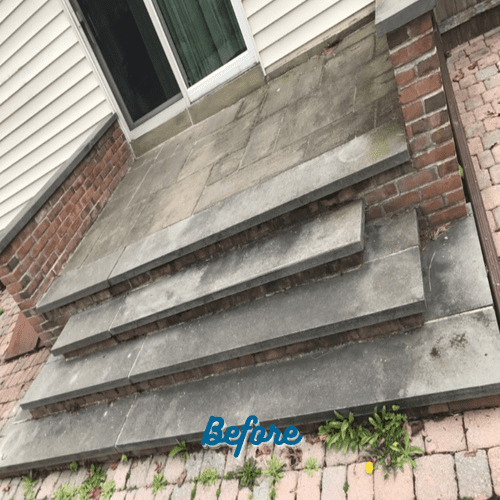
Before & After: Sinking Paver Repair Done Right in Nassau County, NY (Photo Guide)
Real before & after photos show how professional sinking paver repair transforms dangerous, uneven surfaces into safe, beautiful outdoor spaces across Nassau County.
Share:
Summary:
Why Pavers Sink in Nassau County (The Real Causes)
Sinking pavers typically result from improper compaction of base material that loosens over time, or insufficient gravel used during initial installation. But that’s just the beginning of what goes wrong.
In Nassau County’s freeze-thaw climate, the ground cycles between freezing and thawing create movement directly under patios and walkways, causing pavers to shift. Poor drainage, leaky plumbing, or overweight loads on non-load bearing surfaces all contribute to the problem.
The truth is, most paver failures trace back to shortcuts during installation. Proper excavation depth determined by soil type and drainage is critical—failing to excavate deep enough causes sunken pavers and ultimate patio failure.
Base Failure: The Hidden Problem Under Your Pavers
What you see on the surface—those sinking, uneven pavers—is actually the symptom, not the disease. The real problem is happening underneath, where you can’t see it.
Poor soils and construction debris left by builders must be removed during excavation, as proper stabilization of the patio site is extremely important to its integrity. When contractors skip this step or don’t dig deep enough, your pavers are doomed from day one.
Compaction is the most important aspect of keeping pavers from sinking—failure to compact properly causes the base to settle over time, especially within the first few feet along a foundation where material was excavated and backfilled without proper compaction.
Here’s what happens: Water finds its way into poorly compacted base material. Water erosion affects the natural soil under gravel and sand layers, and sand used for pavers can erode over time, increasing water flow between pavers and leading to unlevel surfaces. In Nassau County’s climate, this process accelerates during freeze-thaw cycles.
A well-constructed patio with properly compacted base materials and solid edge restraint will have little or no damage during freeze-thaw cycles. But when these fundamentals are missing, you get exactly what you’re dealing with now.
The fix isn’t just lifting pavers back into place. Proper preparation of the base is crucial for preventing future sinking. That means excavating down to stable soil, installing proper drainage, and rebuilding the foundation the right way.
Long Island Weather: Why Your Pavers Keep Getting Worse
What you see on the surface—those sinking, uneven pavers—is actually the symptom, not the disease. The real problem is happening underneath, where you can’t see it.
Poor soils and construction debris left by builders must be removed during excavation, as proper stabilization of the patio site is extremely important to its integrity. When contractors skip this step or don’t dig deep enough, your pavers are doomed from day one.
Compaction is the most important aspect of keeping pavers from sinking—failure to compact properly causes the base to settle over time, especially within the first few feet along a foundation where material was excavated and backfilled without proper compaction.
Here’s what happens: Water finds its way into poorly compacted base material. Water erosion affects the natural soil under gravel and sand layers, and sand used for pavers can erode over time, increasing water flow between pavers and leading to unlevel surfaces. In Nassau County’s climate, this process accelerates during freeze-thaw cycles.
A well-constructed patio with properly compacted base materials and solid edge restraint will have little or no damage during freeze-thaw cycles. But when these fundamentals are missing, you get exactly what you’re dealing with now.
The fix isn’t just lifting pavers back into place. Proper preparation of the base is crucial for preventing future sinking. That means excavating down to stable soil, installing proper drainage, and rebuilding the foundation the right way.
Professional Paver Leveling: The Right Way to Fix Sinking Pavers
Here’s what separates professional sinking paver repair from quick fixes that fail within a year or two. Real repair starts with understanding why your pavers sank in the first place, then addressing those root causes systematically.
We understand the impact of weather, soil, and usage patterns unique to Nassau County, offering tailored solutions to fix cracks, sunken stones, and joint issues. This isn’t about slapping some sand underneath and hoping for the best.
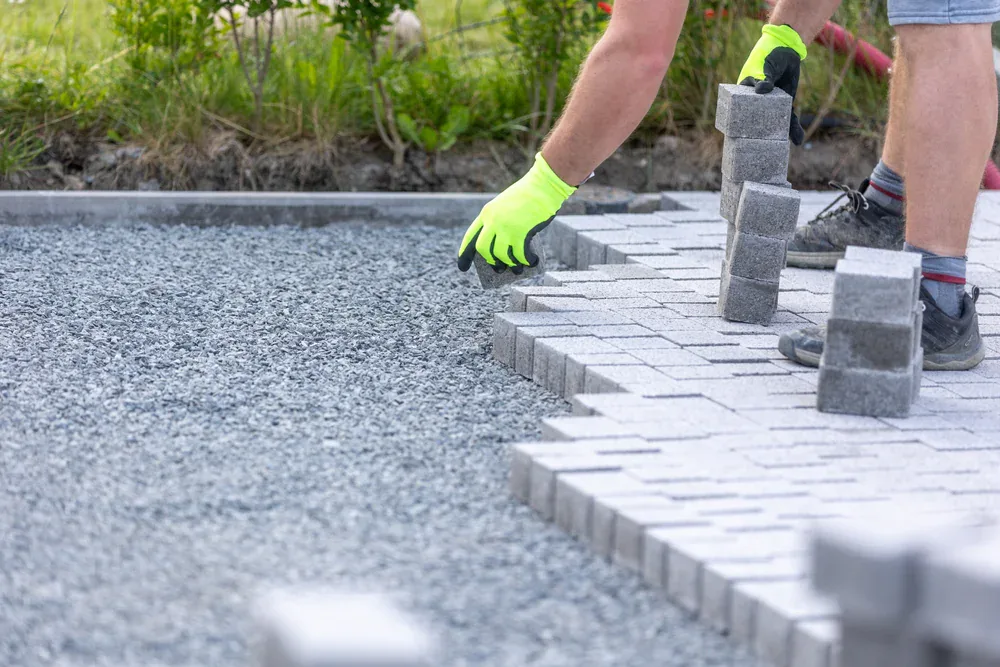
Professional paver leveling involves complete base reconstruction when necessary. The base must be replaced to create a level surface again, starting with gravel that’s compressed to sit tightly with the ground and carefully balanced, followed by a thin sand layer that acts as the paver’s base.
Step-by-Step: How Professional Paver Repair Actually Works
The process starts with careful assessment of your specific situation. First, it’s essential to identify how pavers were installed—some may be permanently cemented and grouted, requiring professional intervention. For complex situations, we can carefully cut stones and address the root cause of the problem.
Next comes the systematic removal and base repair. The first important step is cleaning all soil from holes on every side of the paver to help move and pull out the paver. The foundation must be dug out from below the paver, but without removing foundations from under surrounding pavers.
Base reconstruction follows proven methods. Start with gravel compressed to sit tightly with the ground and carefully balanced, then place a thin sand layer on top that acts as the paver’s base, compressed and guaranteed to be flat with surrounding pavers. Extend the area around the border and ensure the whole area is level.
The reinstallation requires precision. After addressing underlying issues, reinstall pavers using a rubber mallet to ensure they’re level and well-compacted, creating a stable surface that aligns with surrounding pavers. Apply sand to gaps around pavers and brush sand until the area is full.
Professional repair also addresses long-term protection. Quality sealants provide long-lasting protection against water, stains, and weeds, improving both appearance and safety of paved areas. This prevents the conditions that led to sinking in the first place.
Why DIY Paver Repair Usually Fails (And Costs More Long-Term)
Paver installation is very time-consuming, averaging around 40 to 50 hours, and repair work requires the same level of expertise and attention to detail. Beyond the labor required, you need knowledge of yard grading and drainage so rainwater doesn’t puddle.
Without sufficient expertise, you could encounter several problems, including improper placement and leveling of sand or improperly compacted soil, leading to an uneven surface. These mistakes don’t just waste your time—they make the original problem worse.
It’s very common for people to want to wait for spring to make repairs, and this is almost always a mistake—damage will only intensify after frequent freeze and thaw cycles, making repairs more extensive and costly. The same principle applies to DIY attempts that don’t address root causes.
We bring specialized knowledge about Nassau County conditions. Paver maintenance is crucial for preserving beauty and integrity in Long Island’s diverse climate, where harsh weather conditions require regular maintenance and timely repairs to prolong lifespan.
We have experience to identify root causes of damage and apply the best repair methods. Attempting DIY repairs might lead to uneven surfaces or ineffective protection—investing in skilled care extends paver life and maintains property value.
The equipment alone makes professional repair worthwhile. Compaction is the most important aspect of keeping pavers from sinking, and proper compaction requires commercial-grade equipment that most homeowners don’t have access to.
Protecting Your Investment: Long-Term Paver Care in Nassau County
With average paver patio costs ranging from $2,400 to $7,000, protecting your investment makes sense. Professional sinking paver repair isn’t just about fixing today’s problems—it’s about preventing tomorrow’s expensive failures.
Regular maintenance and timely repairs are essential to prolonging paver lifespan and enhancing appearance. Professional cleaning and sealing is much more cost-effective than replacing pavers, and proper maintenance helps avoid costly repairs or replacements in the future.
When you’re ready to fix your sinking pavers the right way, contact us at LI Paver Savers. With nearly 50 years of combined experience and comprehensive expertise in all paver materials, we understand exactly what it takes to make repairs last in Nassau County’s challenging climate.
Article details:
- Published by:
- Paver Savers
- Published to:
- Last modified:
- January 14, 2026
Share:
Continue learning: