Professional Paver Washing Equipment Matters
Not all paver washing is created equal. Here's what professional equipment and technique actually do that a rented pressure washer can't.
Share:
Summary:
You’ve probably looked at your driveway or patio and thought, “These need a good cleaning.” Maybe you’ve even tried handling it yourself. But there’s a real difference between rinsing surface dirt off pavers and actually restoring them — and that difference almost always comes down to equipment and technique.
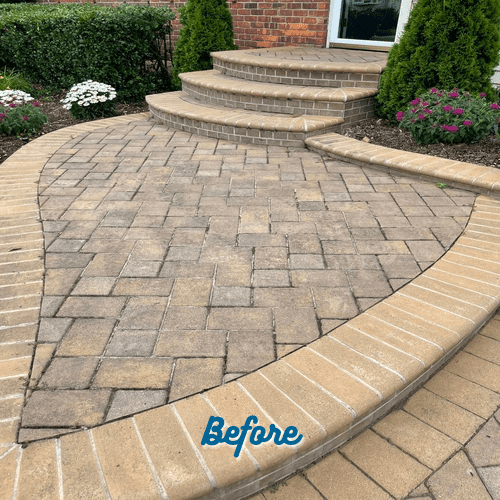
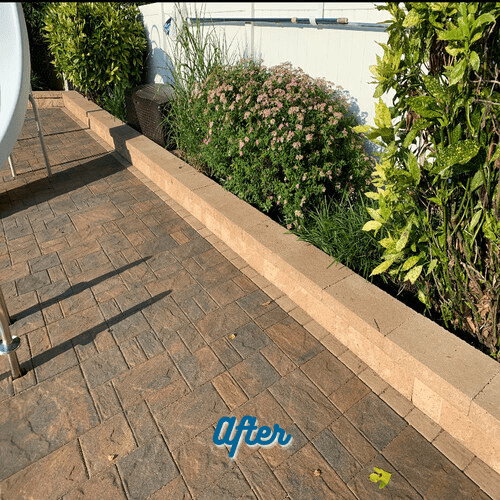
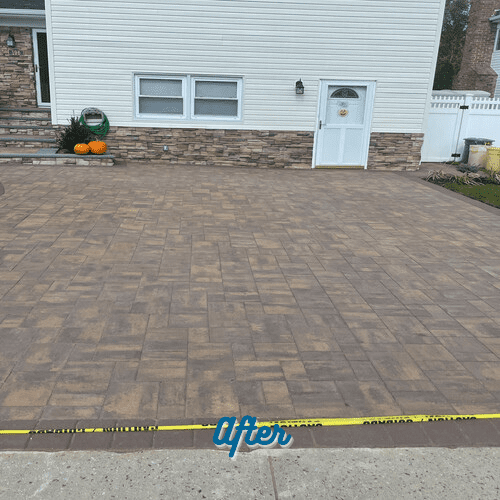
Paver washing done right removes years of embedded grime, biological growth, and salt residue without damaging the surface or blowing out the joint sand that holds everything in place. Here’s what that actually looks like in practice — and why it matters especially if you’re in Nassau County.
Professional Paver Washing Techniques for Different Paver Materials
Not every paver is the same, and cleaning them as if they were is one of the most common mistakes made in this industry. Concrete pavers, brick pavers, natural stone, and bluestone each respond differently to pressure, cleaning agents, and sealer — which means the approach has to change depending on what’s actually on the ground.
Getting this wrong isn’t just ineffective. It can etch soft stone surfaces, strip color from brick, or leave a residue that makes sealing impossible. That’s why material-specific technique isn’t a nice-to-have — it’s the baseline for doing this job correctly.
How Pressure Settings and Cleaning Agents Change by Paver Type
Concrete pavers are among the most durable and can handle higher pressure levels without issue. But natural stone — bluestone especially — is far more sensitive. Too much pressure on a bluestone patio doesn’t just clean it; it can pit the surface or dull the finish permanently. For those materials, a lower-pressure soft wash combined with the right chemical solution does the actual work, breaking down algae and mold through chemistry rather than force.
Brick pavers sit somewhere in between. They’re hardy, but they’re porous — which means the wrong cleaning agent can penetrate the surface and cause staining or efflorescence to worsen rather than improve. Acidic cleaners, for example, are fine on some concrete surfaces but can react badly with certain brick compositions. Knowing which product to use, and at what dilution, is the kind of knowledge that comes from years of working with these materials — not from reading the label on a bottle.
We’ve cleaned every paver type you’re likely to have across Nassau County properties, and we’ve seen what happens when the wrong method gets applied to the wrong surface. It’s not always dramatic, but it adds up. Surfaces wear faster, sealers don’t bond properly, and homeowners end up spending more down the road to fix what a hasty cleaning made worse.
One more thing worth knowing: the cleaning agent needs to be fully rinsed before any sealer goes on. Residue left behind — even something that looks clean to the eye — can cause the sealer to cloud, peel, or fail within a season. A thorough rinse is part of the process, not an afterthought.
Why a 20-Inch Surface Cleaner Outperforms a Standard Pressure Washer Wand on Pavers
If you’ve ever tried pressure washing pavers with a standard wand nozzle, you’ve probably noticed the results are uneven — streaks, lines, patches that look clean next to patches that don’t. That’s not a technique problem. It’s an equipment problem.
A standard wand concentrates pressure into a narrow stream. When you move it across a paver surface, you’re essentially cleaning in strips, and the pressure at the center of that stream is dramatically higher than at the edges. On pavers, that creates two problems. First, the uneven pressure means uneven cleaning. Second — and this is the bigger issue — that concentrated stream targets the joints between pavers and blasts out the sand that fills them.
Joint sand is what holds a paver surface together. It prevents individual stones from shifting, keeps weeds from taking root, and maintains the structural integrity of the entire installation. When it gets washed out, pavers start to wobble, settle unevenly, and become much more vulnerable to cracking. Replacing joint sand isn’t complicated, but it’s an extra step that a lot of homeowners don’t realize they need until they’re looking at a surface that’s starting to shift underfoot.
A professional 20-inch rotary surface cleaner solves both of these problems. The rotating head distributes water pressure evenly across the entire cleaning surface, which means consistent results without streaking. Because the pressure is spread out rather than concentrated, it cleans the paver surface without targeting the joints. The result is a thorough, even clean that doesn’t compromise the stability of the installation.
Beyond the quality of the clean itself, the efficiency difference is significant. A 20-inch surface cleaner covers far more ground per pass than a wand, which means larger driveways and patios get done properly without the job dragging on all day. For a driveway in Massapequa or a large patio in Plainview, that’s not a minor detail — it’s the difference between a half-day job and an all-day one.
What Nassau County's Climate Does to Pavers — and Why It Changes the Cleaning Equation
Long Island winters are hard on hardscapes. The freeze-thaw cycle alone — water seeping into paver joints, freezing, expanding, and contracting repeatedly from November through March — puts real mechanical stress on paver installations. Add road salt and de-icing chemicals into the mix, and you’ve got a combination that accelerates surface deterioration faster than most homeowners expect.
Nassau County’s proximity to the water makes this more pronounced in coastal communities. Salt air along the North Shore — Great Neck, Port Washington, Manhasset — and the South Shore — Long Beach, Freeport, Merrick, Bellmore — means pavers are dealing with airborne chlorides year-round, not just when the road crews come through. That kind of ongoing exposure oxidizes surfaces, promotes biological growth, and stains in ways that a quick rinse won’t fix.
How Nassau County's Tree Canopy and Humidity Affect How Often Pavers Need Cleaning
One of the things that makes Nassau County’s established neighborhoods so appealing — the mature trees, the canopy coverage, the shade — is also one of the main reasons pavers here need more attention than in sunnier, more exposed areas. Shade keeps pavers damp longer after rain, and damp pavers in warm weather are exactly the conditions algae and mold need to get established.
Pavers near or under trees also collect organic debris — leaves, seeds, sap — that breaks down over time and stains the surface. Root pressure from mature trees can cause individual pavers to shift or lift, which opens gaps in the joint sand and creates new entry points for weeds and water. It’s a slow process, but in neighborhoods like Levittown, Hicksville, or Rockville Centre where trees have had decades to grow, it’s a real and common maintenance issue.
For most Nassau County pavers, professional cleaning every two to three years is the right cadence. Pavers in heavily shaded areas, or near large trees, often need attention annually. That’s just the reality of what Long Island’s climate and landscape do to hardscape surfaces over time. Waiting longer doesn’t save money; it usually means a more involved restoration when you finally do address it.
Long Island summers are warm and wet, and that combination accelerates biological growth on paver surfaces significantly. The black staining you see on many driveways and patios isn’t dirt — it’s algae. It’s slippery when wet, it looks terrible, and it doesn’t respond well to a garden hose. Professional paver washing with the right equipment and cleaning agents removes it completely rather than just pushing it around.
Protecting Your Landscaping During Paver Washing — What Nassau County Homeowners Should Know
One of the more common concerns we hear from homeowners before a cleaning job is what happens to the plants, flowers, and lawn areas around the pavers. It’s a fair question. Cleaning agents that are effective on paver surfaces aren’t always gentle on landscaping, and pressure washing near garden beds creates obvious splash risk.
Protecting surrounding landscaping is part of the job — not an afterthought. Before any cleaning begins, we take steps to cover or wet down vulnerable plant areas, and we’re deliberate about where runoff goes during the process. When the job is done, all materials and debris are removed from the property. Your beds and lawn shouldn’t look like they’ve been through a cleanup — because they shouldn’t have been.
There’s also a regulatory dimension to this that’s specific to Nassau County. The county’s proximity to Long Island Sound, the South Shore bays, and the Atlantic Ocean means stormwater runoff is taken seriously here. Nassau County has environmental regulations governing how cleaning chemicals are managed on residential and commercial properties, specifically to prevent those chemicals from reaching storm drains and waterways. We know these requirements and work within them on every job.
Nassau County requires home improvement contractors to hold a county-issued license. It’s not a minor formality — it’s a meaningful standard that separates contractors who operate professionally from those who don’t. We’re fully licensed and insured in compliance with Nassau County and New York State requirements, and that applies to every job we take on, residential or commercial, large or small.
Is Professional Paver Washing Worth It for Nassau County Homeowners?
The honest answer is yes — but the reason matters. It’s not just about how your pavers look, though that’s a real benefit. It’s about what happens to a paver surface when it doesn’t get proper maintenance. Joint sand erodes. Biological growth deepens. Salt residue works its way into the surface. What starts as a cosmetic issue becomes a structural one, and what could have been a cleaning job turns into a restoration — or a replacement.
Professional paver washing, done with the right equipment and technique, stops that progression. It removes what’s damaging the surface, stabilizes the joints, and sets the stage for sealing that actually holds. For Nassau County homeowners who’ve invested in their outdoor spaces — driveways, patios, pool decks, walkways — it’s the kind of maintenance that protects that investment rather than letting it quietly deteriorate.
If your pavers are overdue for attention, or if you’re just not sure where they stand, reach out for a quote and we’ll give you a straight assessment of what your pavers actually need.
Article details:
- Published by:
- Paver Savers
- Published to:
- Last modified:
- August 17, 2026
Share:
Continue learning: