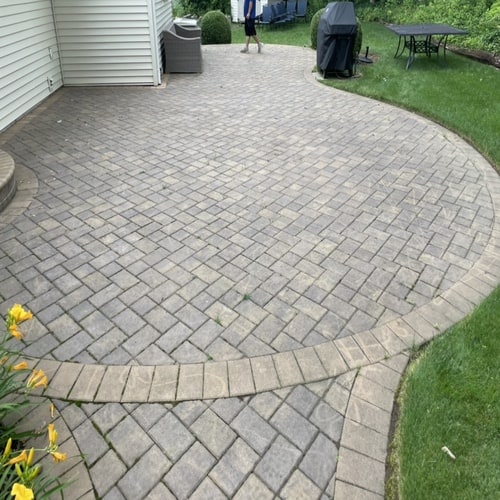
Essential Paver Maintenance for Long Island Homes
What Long Island homeowners need to know about keeping their pavers clean, sealed, and structurally sound — before small problems become expensive ones.
Share:
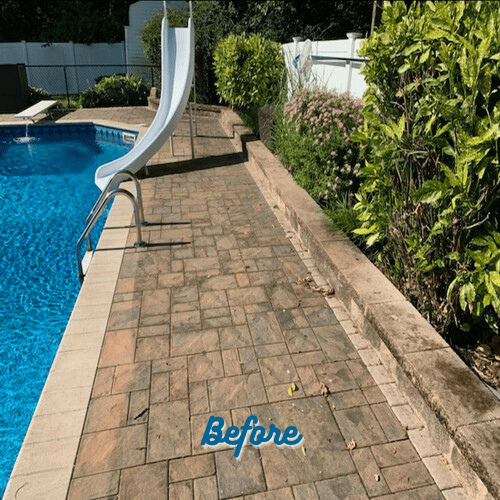
Summary:
If you’ve got pavers on your driveway, patio, or pool surround, you already know they’re one of the better investments you can make in a Nassau County home. What most homeowners don’t realize is how quickly that investment deteriorates without the right care — especially here, where the climate does its worst work quietly, season after season.
The reality of living near the Atlantic with winters that hover right around the freezing mark is that paver problems develop fast. The good news is that most paver problems are preventable — and even pavers that look like they’re past saving often aren’t. Here’s what you need to know.
Paver Maintenance Essentials for Nassau County Homeowners
Paver maintenance comes down to three things done consistently: keeping the surface clean, keeping the joints filled, and keeping a quality sealer on top. Miss any one of those, and the others start to fail faster than you’d expect.
The Nassau County climate makes this more urgent than it sounds. Our region gets roughly 45 to 50 inches of rain annually, which gradually washes polymeric sand out of the joints between pavers. Once that sand is gone, weeds move in, pavers start to shift, and water works its way under the base. Add in the freeze-thaw cycles that run through most of winter — temperatures bouncing above and below 32°F repeatedly — and you’ve got conditions that can crack solid concrete from the inside out.
The fix isn’t complicated, but it does need to be done right. Cleaning, resealing every two to five years, and replenishing joint sand before problems compound — that’s the core of a solid maintenance routine.
How Often Should You Clean and Seal Pavers in Nassau County?
The honest answer is: it depends on your specific situation, but most Nassau County homeowners should be looking at professional cleaning and resealing somewhere in the two-to-five year range. Pool surrounds and driveways that take heavy traffic tend to need attention on the shorter end of that window. A lightly used backyard patio in a shaded area might stretch closer to five years.
What accelerates the timeline here specifically is the coastal environment. If you’re in Long Beach, Atlantic Beach, or anywhere along the South Shore, salt air is working on your pavers year-round — not dramatically, but consistently. Salt penetrates unsealed paver surfaces, causes that white chalky residue called efflorescence, and breaks down the joint sand faster than rain alone would. Homeowners in these communities often find they’re resealing closer to every two or three years just to stay ahead of it.
Inland Nassau County isn’t off the hook either. Communities like Syosset, Garden City, and Plainview deal with heavy oak tree coverage, which means tannin staining from wet leaves sitting on paver surfaces through the fall and winter. That kind of staining is stubborn and gets worse the longer it sits. Regular cleaning — not just pressure washing, but professional surface cleaning with the right equipment — removes it before it sets into the paver permanently.
Timing matters too. The best window for sealing on Long Island is late spring through early fall, when temperatures are consistently above 50 degrees and rain isn’t in the forecast for at least 24 hours after application. Sealing in the wrong conditions — too cold, too humid, or with rain coming — leads to a finish that clouds, peels, or fails within a season. That’s why we schedule around the weather rather than just booking a date and hoping for the best.
One thing worth knowing: if your pavers were recently installed, wait at least 30 to 60 days before sealing. New concrete pavers naturally produce efflorescence as they cure, and sealing over it traps it beneath the coating permanently. Give it time to work its way out first.
What Happens When You Skip Paver Maintenance — and What It Costs
The progression is pretty predictable. It starts with the joint sand washing out — you might notice weeds poking through, or the pavers feeling slightly loose underfoot. Most homeowners pull the weeds and move on. But without replacing the sand and sealing the surface, you’re just clearing the symptom while the cause keeps getting worse.
Within a few seasons, those loose pavers start to shift. Water gets underneath the base layer. Freeze-thaw cycles do their work on any small cracks that have formed. What started as a cosmetic issue — weeds, some discoloration — becomes a structural one. Individual pavers crack or sink. The surface becomes uneven enough to be a tripping hazard.
By the time most homeowners call us, they’ve convinced themselves they’re looking at a full replacement. And sometimes that’s true — if the base has failed completely, restoration isn’t the right answer. But more often than not, if the base is still sound, restoration is entirely possible. We’ve restored pavers that are 20-plus years old to better condition than they were after the original installation. The difference in cost is significant: professional restoration typically runs $2 to $4 per square foot, while replacement comes in at $10 to $20 or more. On a 500-square-foot driveway, that’s the difference between a $2,000 job and a $10,000 one.
The math makes maintenance the obvious choice — but only if you stay ahead of it. Once the base is compromised, your options narrow and the cost goes up.
Paver Types and What Each One Actually Needs
Not all pavers are maintained the same way, and this is where a lot of DIY attempts go sideways. Using the wrong cleaner or sealer for your specific paver material can cause more damage than doing nothing at all. The three most common types we work with across Nassau County are concrete pavers, brick pavers, and natural stone — and each one has its own requirements.
Getting this right is the difference between a sealer that lasts four years and one that peels off in the first winter. It’s also why experience with specific materials matters more than just knowing how to run a pressure washer.
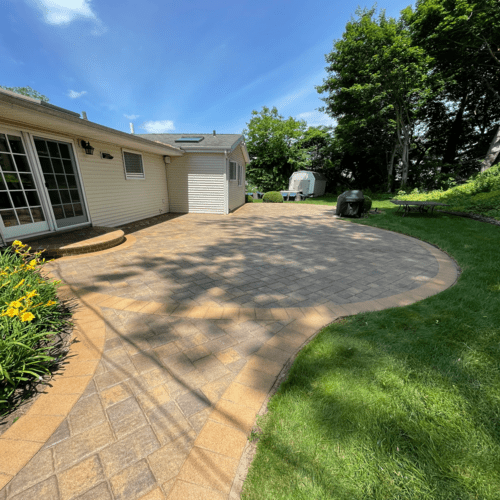
Concrete and Brick Paver Maintenance: What Nassau County Driveways Need Most
Concrete pavers are the most common type on Long Island, and they’re genuinely durable — compression strength up to 12,000 PSI, which is roughly three times stronger than poured concrete. But that durability assumes they’re being maintained. Unsealed concrete pavers absorb moisture, which is what makes freeze-thaw damage so destructive here. Water gets in, freezes, expands, and the cycle repeats until you’ve got surface spalling or cracking.
The sealing process for concrete pavers involves thorough cleaning first — removing all dirt, algae, and organic material — followed by polymeric sand compaction in the joints, and then the sealer itself applied in thin, even coats. We use professional 20-inch surface cleaner equipment rather than standard pressure washers, which matters more than most people realize. A regular pressure washer applied at the wrong angle or pressure can leave uneven cleaning patterns or actually damage the surface. The 20-inch surface cleaner delivers consistent results across the whole area without those risks.
Brick pavers are a bit different. They’re more porous than concrete, which means they absorb staining agents faster and need a sealer that’s compatible with their absorption rate. They’re also more susceptible to individual cracking — unlike concrete pavers, which tend to fail at the joints, brick can chip and crack in the body of the paver itself. When that happens, individual pavers can often be replaced without disturbing the surrounding surface, as long as the base is stable and matching material is available.
For both concrete and brick, the sealer finish choice matters for safety as well as aesthetics. High-gloss or wet-look sealers enhance color dramatically, but they can increase slipperiness when wet. For pool surrounds, steps, and walkways — which are common applications across Nassau County’s pool-heavy communities — a matte or natural finish is usually the smarter call.
Natural Stone and Bluestone Paver Care: What's Different and Why It Matters
Natural stone — bluestone, flagstone, granite, slate — is a staple on North Shore Nassau County properties, particularly in communities like Great Neck, Manhasset, and Garden City where high-end landscaping is the norm. It looks beautiful, it’s extremely durable, and it’s also the material most likely to be damaged by the wrong maintenance approach.
The core difference is that natural stone requires penetrating sealers, not film-forming ones. A film-forming sealer sits on top of the surface and creates a visible coating. On natural stone, that coating can trap moisture underneath, leading to spalling, discoloration, or a cloudy appearance that’s very difficult to reverse. A penetrating sealer absorbs into the stone, protects from within, and leaves the surface looking natural — which is usually what homeowners with bluestone or flagstone actually want.
Cleaning is equally specific. Natural stone is sensitive to pH — acidic cleaners that work fine on concrete will etch and dull stone surfaces permanently. This is one of the most common mistakes we see on Nassau County properties where a previous contractor used the wrong product. The damage isn’t always obvious immediately, but over time the surface loses its character and the repair options are limited.
Bluestone specifically is worth calling out because it’s so prevalent in Nassau County. It’s a beautiful material that weathers well in Long Island’s climate when properly maintained, but it does develop a natural patina over time that some homeowners mistake for damage. Regular cleaning and sealing with the right penetrating product keeps bluestone looking intentional rather than neglected — and protects it against the salt air and moisture that are unavoidable in this part of New York.
If you’re not sure what type of stone you have, or what’s been applied to it previously, that’s exactly the kind of thing we assess before starting any job. Applying the wrong product to the wrong surface is an expensive mistake, and it’s entirely avoidable.
When to Call a Paver Maintenance Professional in Nassau County
There’s a reasonable amount homeowners can handle themselves — keeping pavers clear of debris, rinsing off salt residue after winter storms, staying on top of leaf removal in the fall. But the cleaning, sand replenishment, and sealing work is where professional equipment and material knowledge make a real difference in how long the results last.
If your pavers are shifting, showing cracks, growing persistent weeds, or haven’t been sealed in more than five years, it’s worth getting an assessment before the problem compounds further. Most of the time, what looks like a replacement situation turns out to be a restoration — and that distinction saves homeowners thousands.
We’ve been doing this work across Nassau and Suffolk Counties for a long time, and we started Paver Savers specifically because Long Island had no shortage of beautiful paver installations and a real shortage of specialists to maintain them. If you’re ready to find out what your pavers actually need, reach out to us — we’ll give you a straight answer.
Article details:
- Published by:
- Paver Savers
- Published to:
- Last modified:
- July 21, 2026
Share:
Continue learning: