Roof Power Washing Safety: Expert Best Practices
Roof power washing can do more harm than good if done wrong. Here's what to know before you touch your shingles — or hire someone who will.
Share:
Summary:
There’s a reason that black streaking and green moss on Nassau County roofs is such a common sight by late spring — the combination of coastal humidity, salt air off the Atlantic, and back-to-back nor’easters creates ideal conditions for algae and organic growth to take hold. Most homeowners know it looks bad. What fewer realize is that leaving it alone, or cleaning it the wrong way, can quietly shorten the life of a roof that costs $15,000 or more to replace. This page breaks down what safe roof power washing actually looks like, what the risks are, and how to make a smart decision for your home.
How to Pressure Wash a Roof Without Causing Damage
The instinct makes sense — if a surface is dirty, hit it with water and pressure until it’s clean. That approach works fine on a concrete driveway. On a roof, it’s a different story entirely.
Asphalt shingles are coated with granules that protect the underlying material from UV exposure and moisture. High-pressure water strips those granules off. Once they’re gone, the shingles degrade faster, the roof loses its protective layer, and you’re looking at a premature replacement. Consumer-grade pressure washers typically run between 1,500 and 3,000 PSI — far above the 300 PSI threshold that can void most shingle manufacturer warranties.
The right approach isn’t about more pressure. It’s about the right chemistry applied at low pressure, which is exactly what professional soft washing delivers.
Soft Washing vs. Pressure Washing a Roof: What's the Actual Difference?
Soft washing uses low-pressure water — typically under 100 PSI at the nozzle — combined with biodegradable cleaning solutions, usually sodium hypochlorite-based, that kill algae, mold, mildew, and moss at the biological level. The organism dies. It doesn’t just get blasted off the surface to regrow next season.
That distinction matters more than most people realize. High-pressure washing knocks the visible growth off, but it leaves the root systems intact. Within a few months, you’re looking at the same problem. Soft washing results, done correctly, typically last three to six years. The difference isn’t just technique — it’s the longevity of the outcome.
The Asphalt Roofing Manufacturers Association, known as ARMA, is the industry authority on shingle care. Their guidelines specifically recommend a diluted sodium hypochlorite solution applied at low pressure as the approved method for removing algae and moss from asphalt shingles. Soft washing is the only method ARMA endorses. High-pressure washing is not on that list — and for good reason.
For Nassau County homeowners with homes built in the post-war boom of the 1950s and 60s, this matters even more. Older shingles have already lost some of their granule coating over decades of weather exposure. Applying high pressure to an aging roof isn’t just risky — it can accelerate deterioration that was already in progress.
If your roof has tile, slate, or metal instead of asphalt shingles, the calculus shifts slightly. Tile and metal can tolerate controlled low-pressure washing in some cases, but the technique still needs to be matched to the specific material. Slate, which appears on a number of older estate homes along Nassau County’s North Shore in towns like Old Westbury and Muttontown, is particularly fragile and requires a very different approach than standard asphalt. A contractor who treats every roof the same way regardless of material is one worth passing on.
Best Way to Clean Pavers Without Pressure Washer: The Same Logic Applies to Roofs
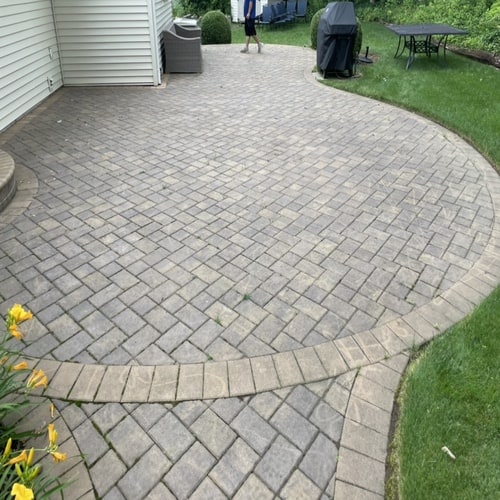
The same principle that makes soft washing safer for roofs applies to a lot of other surfaces around your property — including pavers, natural stone, and paving slabs. When people ask about the best way to clean pavers without a pressure washer, the answer usually involves a combination of appropriate cleaning solutions, controlled water application, and the right tools for the specific material. Forcing high pressure onto delicate surfaces doesn’t clean better. It just damages faster.
Concrete pavers, bluestone, and natural stone all have surface textures and joint structures that high-pressure water can erode, chip, or destabilize. Cleaning paving slabs the right way means understanding the material first — its porosity, its finish, its age — and choosing a method that removes the buildup without compromising what’s underneath.
This is actually where experience with hardscape cleaning translates directly to roof cleaning. The discipline of reading a surface before touching it, choosing the right pressure and chemistry for the job, and protecting surrounding areas during the process — that mindset doesn’t change whether you’re working on a patio or a roofline. It’s the same careful approach applied to a different surface.
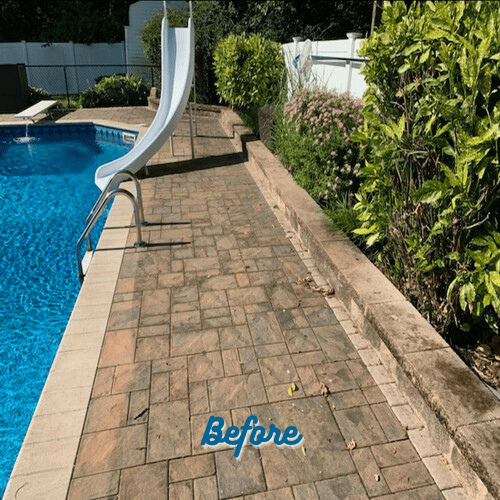
For Nassau County properties with a mix of surfaces — pavers around a pool, a bluestone walkway, an asphalt shingle roof — working with someone who understands all of them is more valuable than hiring separate specialists for each. The risk of damage is lower when the person doing the work has seen every material type and knows what each one can handle.
We’ve worked on properties across Nassau County, from the waterfront communities of Long Beach and Atlantic Beach where salt air accelerates surface buildup, to the tree-lined neighborhoods of Merrick and Bellmore where organic debris collects in paver joints and on rooflines alike. Our approach is never one-size-fits-all.
DIY vs. Professional Roof Cleaning in Nassau County: The Real Cost Comparison
Renting a pressure washer and spending a Saturday on the roof sounds like a reasonable way to save a few hundred dollars. But the math changes quickly when you factor in what can go wrong.
A professional roof cleaning for an average-sized home typically runs between $300 and $1,050. A botched DIY job that damages shingles or voids a warranty can put you in the position of replacing a roof that costs $15,000 or more. That’s not hypothetical — it’s the outcome when the wrong technique gets applied to the wrong surface by someone without the training to know the difference.
Beyond the equipment and technique, there’s the liability question. If an uninsured contractor gets hurt on your property, you can be held responsible for medical costs that easily exceed $25,000. That applies to unlicensed operators just as much as it applies to homeowners doing their own work.
What to Look for When Hiring a Roof Washing Contractor on Long Island
Nassau County enforces home improvement contractor licensing requirements at the county level. That means the bar for operating legally here is higher than in many other markets — but it also means unlicensed operators exist and are easy to stumble into if you’re not asking the right questions upfront.
The first thing to confirm is licensing and insurance. Ask for a certificate of general liability insurance and workers’ compensation before any work begins. A legitimate contractor provides this without hesitation. One who stalls or deflects is a risk you don’t need to take.
Beyond the paperwork, pay attention to how a contractor talks about their process. Do they distinguish between soft washing and pressure washing? Do they ask about your roofing material before quoting? Do they mention protecting your gutters and landscaping during the cleaning? These aren’t trick questions — they’re basic indicators of whether someone knows what they’re doing.
Reviews matter, but specificity matters more than star count. A review that describes the crew showing up on time, explaining the process, and producing a visible transformation on a 12-year-old asphalt shingle roof tells you quite a bit. Nassau County homeowners tend to be thorough researchers — the same instinct that drives that LIRR commuter to read every review before booking a restaurant applies here too.
We’ve been doing this work across Long Island for a long time, and the calls we get most often from homeowners in communities like Garden City, Rockville Centre, and Massapequa follow a similar pattern: someone hired the cheapest option, something went wrong, and now they need us to come in and assess the damage. Getting it right the first time is almost always cheaper than fixing it afterward.
How Nassau County's Climate Makes Regular Roof Cleaning Non-Negotiable
Long Island’s climate is genuinely hard on exterior surfaces. The combination of humid summers, coastal salt air, freeze-thaw winters, and periodic nor’easters creates conditions that accelerate organic growth and surface deterioration faster than most homeowners expect.
The black streaks you see on roofs across Nassau County are caused by Gloeocapsa magma — a specific strain of algae that thrives in humid, coastal environments. It’s not just cosmetic. Algae retains moisture against roofing materials, and that sustained moisture contact accelerates the breakdown of shingles over time. Moss does the same thing, and in freeze-thaw conditions, the moisture moss holds can work its way under shingles and cause lifting or cracking when temperatures drop.
In waterfront communities like Long Beach, Island Park, and Oceanside, salt air adds another layer of challenge. It deposits minerals on roofing surfaces, promotes specific algae growth, and accelerates the corrosion of metal roof components like flashing and gutters. A cleaning schedule that works for a home in Levittown may not be sufficient for a home three blocks from the water in Atlantic Beach.
Most roofs in Nassau County benefit from professional cleaning every one to two years, depending on the level of organic growth, the proximity to water, and the amount of tree coverage overhead. Wooded neighborhoods on the North Shore — places like Brookville, Oyster Bay, and the older sections of Jericho — tend to see faster moss accumulation because of the canopy above. A professional assessment takes all of that into account rather than applying a generic timeline.
The good news is that consistent maintenance is far less expensive than deferred maintenance. A roof that gets cleaned and monitored regularly lasts longer, holds its warranty coverage, and protects the home beneath it more effectively. For a county where the median home value sits close to $685,000, that’s not a minor consideration.
Choosing the Right Roof Power Washing Service in Nassau County, NY
The core takeaway here is straightforward: roof power washing done right is safe, effective, and worth the investment. Done wrong, it voids warranties, damages materials, and costs far more to fix than it would have cost to hire a qualified professional in the first place. The method matters. The experience behind it matters just as much.
For Nassau County homeowners, the local climate makes this a recurring maintenance need, not a one-time fix. Salt air, humidity, nor’easters, and freeze-thaw winters are not going away — and neither is the organic growth they encourage on roofing surfaces across the county.
If you’re ready to get a proper assessment and a cleaning done by people who know Long Island surfaces from the ground up, reach out to us at Paver Savers. We’ve been working on properties across Nassau and Suffolk Counties for a long time, and we’ll tell you honestly what your roof needs — and what it doesn’t.
Article details:
- Published by:
- Paver Savers
- Published to:
- Last modified:
- July 21, 2026
Share:
Continue learning: